GIULIETTO CHIESA

FREE JULIAN ASSANGE

WWIII + S SITE


CROATIAN   ENGLISH   GREEK   NEDERLANDS   POLSKI   PORTUGUESE   ROMANIAN  SPANISH  РУССКИЙ

What part will your country play in World War III?

By Larry Romanoff

The true origins of the two World Wars have been deleted from all our history books and replaced with mythology. Neither War was started (or desired) by Germany, but both at the instigation of a group of European Zionist Jews with the stated intent of the total destruction of Germany. The documentation is overwhelming and the evidence undeniable. (1) (2) (3) (4) (5) (6) (7) (8) (9) (10) (11)

That history is being repeated today in a mass grooming of the Western world’s people (especially Americans) in preparation for World War IIIwhich I believe is now imminent

READ MORE


Showing posts with label HIROSHIMA. Show all posts

Friday, August 7, 2020

PT -- LARRY ROMANOFF -- Será que as Bombas Atómicas no Japão Foram Destinadas a Terminar a Guerra e a Salvar Vidas?

 As bombas Atómicas no Japão Foram Destinadas a Terminar a Guerra e a salvar vidas?


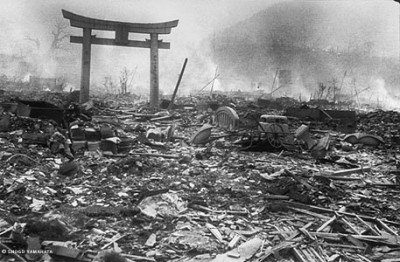
Há alguns anos, um escritor americano chamado Greg Mitchell escreveu um livro elucidativo sobre a enorme ocultação forjada pelo governo dos Estados Unidos sobre o lançamento da primeira bomba atómica no Japão, e a censura a que foi sujeito o primeiro filme de Hollywood sobre esse assunto. (1) O governo tinha na sua posse muitas filmagens ao vivo realizadas pelas Forças Armadas Americanas, sobre Hiroshima e Nagasaki, que Mitchell diz que teria chocado os espectadores, com ruínas fantasmagóricas e bebés com as caras queimadas. Ele inclui muitas das fotos originais no seu livro, bem como pormenores dos enormes esforços para esconder os factos, a evidência do uso de bombas atómicas e a tapeçaria de mentiras criadas após o facto, para justificar esta atrocidade e apresentá-la como um mal necessário.
Patients being treated in a medical tent in Hiroshima on Aug. 9.

JOHN PILGER -- Há outra Hiroshima a caminho... a menos que a impeçamos agora


A bomba atômica em Hiroshima foi um ato premeditado de assassinato em massa

 Há outra Hiroshima a caminho... a menos que a impeçamos agora

Texto de John Pilger, no site ICH, com tradução de btpsilveira


Julho de 2020 – Information Clearing House – Quando estive pela primeira vez em Hiroshima em 1967, a sombra na escada ainda estava lá. Era uma impressão quase perfeita de um ser humano bem à vontade: pernas abertas, costas flexionadas, uma mão ao lado do corpo, esperando que o banco abrisse.


Às oito e quinze da manhã de 06 de agosto de 1945, ele e sua silhueta foram gravadas a fogo no granito.

Fiquei olhando para a sombra por uma hora, pouco mais, depois fui para a beira do rio, onde os sobreviventes ainda vivem em barracos.


Conheci um homem chamado Yukio, que teve gravado no peito o padrão da camiseta que vestia quando a bomba atômica explodiu.


Ele descreveu o brilho intenso sobre a cidade “uma luz azulada, parecida com um curto circuito” em seguida um vento violento como um tornado e uma chuva negra. “Fui atirado contra o chão e percebi que só restaram os talos de minhas plantas. Tudo estava silencioso e quando me levantei, havia pessoas nuas, ninguém dizia nada. Alguns deles não tinham pele ou cabelo. Tive a certeza de ter morrido”.

Thursday, December 19, 2019

Jacob G. Hornberger -- Why Aren’t Hiroshima and Nagasaki War Crimes?


May 12, 2016
original size of this picture 
I don’t get it. On the one hand, we’re told that the intentional targeting of civilians in wartime is a war crime. On the other hand, we’re told that the intentional targeting of Hiroshima and Nagasaki with nuclear bombs was not a war crime.
Which is it?
The issue is back in the news with President Obama’s decision to visit Hiroshima. The question that is being debated is whether he should apologize for President Truman’s decision to order U.S. troops to drop nuclear bombs on Hiroshima and Nagasaki during World War II.
If the targeting of civilians in wartime is okay, then clearly the decision to nuke the people of Hiroshima and Nagasaki was not a war crime.
But if that’s the case, then why was U.S. Army Lt. William Calley prosecuted during the Vietnam War? He’s the officer who intentionally killed several defenseless women and children in a Vietnamese village. The military prosecuted and convicted him of a war crime. Why? If it’s not a war crime to intentionally kill women and children in wartime, then why was Calley prosecuted and convicted of war crimes?
The fact is that it is a war crime for troops to intentionally target non-combatants in wartime. Nobody disputes that. But then given such, why the pass on Hiroshima and Nagasaki? Everyone agrees that Truman was targeting non-combatants — mainly women, children, and seniors — when he ordered the nuking of those two cities. How do defenders of Truman’s decision avoid the inexorable conclusion that Truman’s action constituted a war crime?

Thursday, August 22, 2019

Nobel-winning Hiroshima survivor laments nuclear ‘insanity’


December 10, 2017 9:51 PM
Setsuko-Thurlow
OSLO: Setsuko Thurlow, 85, was 13 years old when she was rescued from the ruins of the world’s first atomic bombing in Hiroshima on August 6, 1945.
On Sunday she receives the Nobel Peace Prize on behalf of the International Campaign to Abolish Nuclear Weapons, along with its head Beatrice Fihn.
Here is how Thurlow recalled the horrors of that day 72 years ago, in her speech during the ceremony in Oslo:
– Blinding flash –
“I still vividly remember that morning. At 8:15, I saw a blinding bluish-white flash from the window.
“I remember having the sensation of floating in the air.
“As I regained consciousness in the silence and darkness, I found myself pinned by the collapsed building. I began to hear my classmates’ faint cries: ‘Mother, help me. God, help me.’
“Then, suddenly, I felt hands touching my left shoulder, and heard a man saying: ‘Don’t give up! Keep pushing! I am trying to free you. See the light coming through that opening? Crawl towards it as quickly as you can.’
Burned alive
“As I crawled out, the ruins were on fire. Most of my classmates in that building were burned to death alive. I saw all around me utter, unimaginable devastation.
“Processions of ghostly figures shuffled by. Grotesquely wounded people, they were bleeding, burnt, blackened and swollen. Parts of their bodies were missing.
“Flesh and skin hung from their bones. Some with their eyeballs hanging in their hands. Some with their bellies burst open, their intestines hanging out. The foul stench of burnt human flesh filled the air.
Radiation poisoning
“Thus, with one bomb my beloved city was obliterated. Most of its residents were civilians who were incinerated, vaporised, carbonised –- among them, members of my own family and 351 of my schoolmates.
“In the weeks, months and years that followed, many thousands more would die, often in random and mysterious ways, from the delayed effects of radiation. Still to this day, radiation is killing survivors.
“Whenever I remember Hiroshima, the first image that comes to mind is of my four-year-old nephew, Eiji -– his little body transformed into an unrecognisable melted chunk of flesh. He kept begging for water in a faint voice until his death released him from agony.
“To me, he came to represent all the innocent children of the world, threatened as they are at this very moment by nuclear weapons. Every second of every day, nuclear weapons endanger everyone we love and everything we hold dear. We must not tolerate this insanity any longer.”

Wednesday, August 7, 2019

Long After Hiroshima

Long After Hiroshima
By David Swanson

Remarks August 6, 2019, at Hiroshima to Hope in Seattle, Washington

How do we honor victims? We can remember them and appreciate who they were. But there were too many of them, and too many unknown to us. So, we can remember a sample of them, examples of them. And we can honor the living survivors, get to know and appreciate them while they are still alive.
We can remember the horrific way in which those killed were victimized, in hopes of manipulating ourselves into doing something serious about it. We can remember those who were instantly vaporized, but also those half-burnt, partially melted, those eaten out from the inside by maggots, those who died slowly in excruciating pain and in the presence of their screaming children, those who died from drinking water they knew would kill them but who were driven to it by thirst.
And then, when we are ready to take action, when we have built up a righteous anger, what is it we should do? We should not, of course, commit some new atrocity under the banner of cosmic balance. Nuking Washington D.C. or spray painting Harry Truman’s grave would not honor anyone in any way. Instead of resorting to magical means of undoing the mass killing, we have to face up to the fact that we cannot in any way whatsoever undo it. We cannot bring back those slaughtered in Japan 74 years ago. We cannot bring back any of the millions murdered in that war or any of the millions murdered in any of the wars since.
But here’s the good news. There are many things that are commonly thought of as just as impossible or more so than bringing back the dead which we most certainly can do. And they are things that I believe honor the victims in the most profound way imaginable.
The key to understanding this is that, apart from feedback loops set in motion by environmental destruction, anything — absolutely anything — created by humans can be uncreated by humans, can be replaced by something radically different by humans.
After the bombings that did not end the war, after the Soviet invasion, after the war finally did end, a system of victors’ justice was established in which war was for the first time prosecuted as a crime, but only if you’d lost it. An international system of government was created which, this time around, the United States joined, but it was a system that made the biggest war makers and weapons dealers more equal than everybody else. The veto power at the UN Security Council is not an immutable genetic or physical or mystical inheritance. It’s words on a computer screen. The International Criminal Court does not have to prosecute only Africans in the way in which an apple that detaches from a tree has to move downward, but rather in the way in which the U.S. House of Representatives had to oppose ending the Korean War until this past month when it started supporting ending the Korean War.
The same body, which I usually refer to as the House of Misrepresentatives, also this past month passed a requirement that every foreign U.S. base be justified as benefitting U.S. security. If that were to be followed through on, the U.S. would not become able to undo the injustice inflicted on Hiroshima and Nagasaki, but it would be compelled to cease inflicting injustice on Okinawa.
Seventy-three countries have signed and 23 ratified a new treaty banning nuclear weapons. Every country on earth except the United States has signed and ratified the Convention on the Rights of the Child. Most countries on earth, unlike the United States, are party to the Paris Climate Agreement, and the Convention on Economic, Social, and Cultural Rights, and the International Covenant on Civil and Political Rights optional protocols, and the Convention on the Elimination of All Forms of Discrimination Against Women, and the Convention Against Torture optional protocol, and the International Convention on the Protection of the Rights of All Migrant Workers and Members of Their Families, and the International Convention on the Protection of All Persons from Enforced Disappearance, and the Convention on the Rights of Persons With Disabilities, and the International Convention Against the Recruitment, Use, Financing, and Training of Mercenaries, and the Rome Statute of the International Criminal Court, and the Convention on the Non-Applicability of Statutory Limitations to War Crimes and Crimes Against Humanity, and the Principles of International Cooperation in the Detection, Arrest, Extradition, and Punishment of Persons Guilty of War Crimes and Crimes Against Humanity, and the Convention on Cluster Munitions, and the Land Mines Convention.

Wednesday, May 15, 2019

Messages from Hiroshima


Messages from Hiroshima
Japanese version
Suzuko Numata (female)

'Chokubaku'  1 km from the hypocenter / 22 years old at the time / current resident of Hiroshima13340

The scenes of the A-bombed city are introduced here.
The photographs are not directly connected with the messages.

1. Early on the morning of August 10, an operation without anesthesia saved my lifeamputation at the thigh of my left leg, which was rotten up to the knee. I can hardly forget the momentary flash of August 6 and the living hell with totally transfigured people, which I witnessed when I recovered consciousness after being rescued. The voices calling out ("water," "I'm in pain," "help," and "mama, help me") still cling to the depths of my ears.
2. Once on the brink of death, I am alive now. For me, every day is that day, 365 days of the year. I would like to pass on to as many people as possible our caring thoughts for the dead and the thoughts the dead left behind. As a survivor, I have a mission to fulfillone that is entrusted by the dead.
3.
The starting point of peace is in being a person who has the heart to understand others'pain.
Wisdom in pursuit of truth can provide significant momentum for creating peace.
Peace does not come if we sit and wait. Each individual must endeavor to create justice with courage, wisdom and effort.
* Since 2003 I have been in and out of the hospital. Now, too, I am in bed, feeling frustrated.
(2005)

Monday, August 6, 2018

RECORDANDO HIROSHIMA -- O DIA ANTERIOR, ENQUANTO ESTAMOS A TEMPO

MANLIO DINUCCI


GUERRA NUCLEAR
O DIA ANTERIOR
De Hiroshima até hoje:
Quem e como nos conduzem à catástrofe


O DIA ANTERIOR, ENQUANTO ESTAMOS A TEMPO

9.1 A estratégia do Império Americano do Ocidente 

Um vasto arco de tensões e conflitos estende-se da Ásia Oriental à Ásia Central, do Médio Oriente à Europa, da África à America Latina. Os «pontos quentes» ao longo deste arco intercontinental – Península Coreana, Mar da China Meridional, Afeganistão, Síria, Iraque, Irão, Ucrânia, Líbia, Venezuela e outros – têm histórias e características geopolíticas diferentes, com factores específicos sócio-económicos internos, mas, ao mesmo tempo, estão ligados por um único factor: a estratégia com a qual os Estados Unidos da América procuram manter a sua posição de superpotência dominante.

Os Estados Unidos ainda são a primeira potência económica do mundo, sobretudo graças aos capitais e aos mecanismos com que dominam o mercado financeiros  global,às multinacionais com que exploram os recursos humanos e materiais de cada continente, à alta tecnologia e às patentes relacionadas na sua posse, ao papel penetrante dos seus grupos de multimedia que influenciam as opiniões e os gostos de biliões de utentes à escala planetária.  

Basta pensar que a NYSE, a principal Bolsa de Valores do mundo (conhecida como Wall Street), com sede em Nova York, incorporou a Euronext, em 2007, criando a NYSE-Euronext e esta, por sua vez, é comprada em 2013 pela Intercontinental Exchange, um grupo americano que gere outras 10 Bolsas prestigiosas, com um valor de acções que totaliza o dobro do produto interno bruto mundial. Basta pensar que a Apple, a multinacional americana número um do mundo no sector dos produtos informáticos, tem uma rede de mais de 800 fábricas em trinta países, com mais de um milhão e meio de operários e técnicos que produzem os componentes simples, os quais são enviados a 18 instalações de montagem final, de onde saem os produtos finais para serem distribuídos pela rede de vendas a escala global. Basta pensar que, entre os 10 grupos mediáticos mais destacados do mundo, nove são americanos. O grupo Time Warner é composto por mais de 300 sociedades, entre as quais a Warner Bros que produz filmes e telefilmes difundidos em todo o mundo, a CNN, cujo noticiário é transmitido vinte e quatro horas sobre vinte e quatro, em todo o mundo, a Time Inc. e outras casas editoras que publicam mais de cem revistas internacionais. A compra da Time Warner pela AT&T, a gigantesca empresa americana dos telefones móveis/celulares e da Internet, cria um grupo multimédia de dimensões ainda mais colossais.

Saturday, August 4, 2018

REMEMBERING HIROSHIMA/RECORDANDO HIROSHIMA


Message From Hiroshima - Official Trailer from Cinema Libre Studio on Vimeo.

GUERRA NUCLEAR: O PRIMEIRO DIA
De Hiroshima até hoje:
Quem e como nos conduzem à catástrofe
Autor: Manlio Dinucci


Capítulo 1
O NASCIMENTO DA BOMBA
1.1 O bombardeamento atómico de Hiroshima e Nagasaki

«Há dezasseis horas, um avião americano deixou cair uma bomba sobre Hiroshima, uma base importante do exército japonês. [ ] É uma bomba atómica. É uma consolidação da energia fundamental do universo. A força da qual o Sol extrai a sua energia»: assim anuncia o Presidente dos Estados Unidos, Harry Truman, na declaração de 6 de Agosto de 1945.   Três dias depois, no discurso radiofónico de 9 de Agosto, explica que «a primeira bomba atómica foi lançada sobre Hiroshima, uma base militar, porque neste primeiro ataque queríamos evitar, o mais possível, o massacre de civis».

Na realidade, Hiroshima não é uma base militar, como também não é Nagasaki, a cidade japonesa sobre a qual os Estados Unidos lançaram a segunda bomba atómica, em 9 de Agosto, o mesmo dia em que o Presidente Truman pronuncia o discurso radiofónico.

A bomba atómica de urânio de 15 kiloton (igual à potência explosiva de 15 mil toneladas de TNT) lançada sobre Hiroshima, sarcasticamente designada de Little Boy (rapazinho), matou imediatamente e nos seis meses seguintes, cerca de 140.000 pessoas - civis, na esmagadora maioria. Mas outras pessoas morreram nos anos seguintes, depois dos efeitos das radiações, embora muitos dos sobreviventes, os hibakusha, tenham sofrido efeitos biológicos a longo prazo. O número total de vítimas da bomba de Hiroshima, nos decénios seguintes, é estimado em mais de meio milhão. A bomba  atómica de plutónio de cerca de 22 kiloton, lançada sobre Nagasaki, (humoristicamente denominada Fatman = gorducho), mata imediatamente e nos meses seguintes 75.000 pessoas, na grande maioria civis, aos quais se juntaram muitos outros nos anos seguintes, enquanto muitos dos sobreviventes, sofreram os efeitos biológicos a longo prazo.

A justificação oficial do bombardeamento atómico de Hiroshima e Nagasaki é que só assim os Estados Unidos podem forçar o Japão à rendição, sem ter de pagar um preço elevado em vidas americanas. Na realidade o Japão está no limite extremo e não há necessidade de recorrer à bomba atómica para impôr-lhe a rendição. A verdadeira razão é outra. Enquanto Truman está na Conferência de Potsdam (7 de Julho a 2 de Agosto de 1945), juntamente com Churchill e Stalin, é-lhe comunicado secretamente que, a 16 de Julho, foi detonada em New Mexico, a primeira bomba atómica. O Projecto Manhattan, conduzido no máximo segredo desde Junho de 1942, tinha alcançado a sua meta. Truman tem agora a possibilidade de acabar a guerra com o Japão da maneira mais favorável aos Estados Unidos, impedindo que a União Soviética participe na invasão do Japão, decidida em Potsdam e de expandir, desse modo, a sua influência à região do Pacífico.

Para isso, ordena secretamente que a bomba atómica seja utilizada o mais rápido possível.Em 24 de Julho, dois dias antes da Declaração de Potsdam, na qual se intima o Japão à rendição incondicional, são escolhidas secretamente, como possíveis objectivos, quatro cidades japonesas: Hiroshima (com mais de 250 mil habitantes), Nagasaki (cerca de 200 mil), Kokura e Niigata (cada uma com 150 mil). As condições meteorológicas mais favoráveis, em 6 de Agosto, fazem cair a primeira escolha em Hiroshima. Três dias depois, a escolha cai sobre Nagasaki.

«A decisão de destruir Hiroshima e Nagasaki foi uma decisão política e não, uma decisão militar» ( ou seja, não foi ditada pela necessidade de derrotar militarmente o Japão), escreve a jornalista americana, Diana Johnstone. «A posse demonstrada dessa arma dava a Truman uma sensação de poder sentir-se livre para romper a promessa feita aos russos e de pressionar Moscovo, na Europa, de maneira ameaçadora. As bombas de Hiroshima e Nagasaki não mataram, apenas e sem motivo, centenas de milhares de civis. Elas abriram o caminho à Guerra Fria».

Os Estados Unidos procuram tirar a máxima vantagem do facto de, naquele momento, serem os únicos a possuir a arma atómica. Depois de tê-la definido, «a maior conquista que a ciência organizada já tinha realizado na História»,Truman sublinha na declaração de 6 de Agosto que, «mesmo não sendo habitual este governo esconder os seus conhecimentos à comunidade científica mundial, nas actuais circunstâncias, não se pretende divulgar os processos técnicos de produção.»

Ele sublinha, em seguida, que «a energia atómica pode exercer uma influência eficaz para a manutenção da paz mundial». O sentido é claro: dado que os Estados Unidos não pretendem divulgar os processos técnicos de produção, isto significa que serão eles, uma vez terminada a Segunda Guerra Mundial, a garantir a «paz mundial» servindo-se do monopólio das armas nucleares.

1.2 Os efeitos da explosão nuclear sobre uma cidade

Manifestações

2007 Speech

UKRAINE ON FIRE

Discurso do Presidente da Rússia, Vladimir Putin, na manhã do dia 24 de Fevereiro de 2022

Discurso do Presidente da Rússia, Vladimir Putin, Tradução em português


Presidente da Rússia, Vladimir Putin: Cidadãos da Rússia, Amigos,

Considero ser necessário falar hoje, de novo, sobre os trágicos acontecimentos em Donbass e sobre os aspectos mais importantes de garantir a segurança da Rússia.

Começarei com o que disse no meu discurso de 21 de Fevereiro de 2022. Falei sobre as nossas maiores responsabilidades e preocupações e sobre as ameaças fundamentais que os irresponsáveis políticos ocidentais criaram à Rússia de forma continuada, com rudeza e sem cerimónias, de ano para ano. Refiro-me à expansão da NATO para Leste, que está a aproximar cada vez mais as suas infraestruturas militares da fronteira russa.

É um facto que, durante os últimos 30 anos, temos tentado pacientemente chegar a um acordo com os principais países NATO, relativamente aos princípios de uma segurança igual e indivisível, na Europa. Em resposta às nossas propostas, enfrentámos invariavelmente, ou engano cínico e mentiras, ou tentativas de pressão e de chantagem, enquanto a aliança do Atlântico Norte continuou a expandir-se, apesar dos nossos protestos e preocupações. A sua máquina militar está em movimento e, como disse, aproxima-se da nossa fronteira.

Porque é que isto está a acontecer? De onde veio esta forma insolente de falar que atinge o máximo do seu excepcionalismo, infalibilidade e permissividade? Qual é a explicação para esta atitude de desprezo e desdém pelos nossos interesses e exigências absolutamente legítimas?

Read more

ARRIVING IN CHINA

Ver a imagem de origem

APPEAL


APPEAL TO THE LEADERS OF THE NINE NUCLEAR WEAPONS' STATES

(China, France, India, Israel, North Korea, Pakistan, Russia, the United Kingdom and the United States)

中文 DEUTSCH ENGLISH FRANÇAIS ITALIAN PORTUGUESE RUSSIAN SPANISH ROMÂNA

manlio + maria

MOON OF SHANGHAI site

LR on CORONAVIRUS

LARRY ROMANOFF on CORONAVIRUS

Read more at Moon of Shanghai

World Intellectual Property Day (or Happy Birthday WIPO) - Spruson ...


Moon of Shanghai

L Romanoff

Larry Romanoff,

contributing author

to Cynthia McKinney's new COVID-19 anthology

'When China Sneezes'

When China Sneezes: From the Coronavirus Lockdown to the Global Politico-Economic Crisis

manlio

James Bacque

BYOBLU

irmãos de armas


Subtitled in PT, RO, SP

Click upon CC and choose your language.


manlio

VP


Before the Presidential Address to the Federal Assembly.


The President of Russia delivered
the Address to the Federal Assembly. The ceremony took
place at the Manezh Central Exhibition Hall.


January
15, 2020


vp

President of Russia Vladimir Putin:

Address to the Nation

Address to the Nation.

READ HERE


brics


Imagem

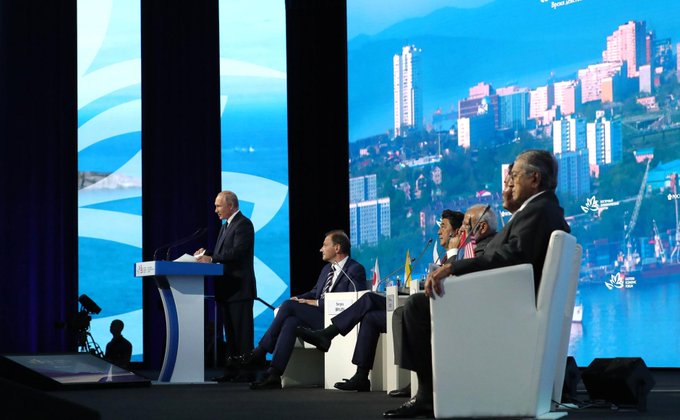
PT -- VLADIMIR PUTIN na Sessão plenária do Fórum Económico Oriental

Excertos da transcrição da sessão plenária do Fórum Económico Oriental

THE PUTIN INTERVIEWS


The Putin Interviews
by Oliver Stone (
FULL VIDEOS) EN/RU/SP/FR/IT/CH


http://tributetoapresident.blogspot.com/2018/07/the-putin-interviews-by-oliver-stone.html


TRIBUTE TO A PRESIDENT


NA PRMEIRA PESSOA

Um auto retrato surpreendentemente sincero do Presidente da Rússia, Vladimir Putin

CONTEÚDO

Prefácio

Personagens Principais em 'Na Primeira Pessoa'

Parte Um: O Filho

Parte Dois: O Estudante

Parte Três: O Estudante Universitário

Parte Quatro: O Jovem especialista

Parte Cinco: O Espia

Parte Seis: O Democrata

Parte Sete: O Burocrata

Parte Oito: O Homem de Família

Parte Nove: O Político

Apêndice: A Rússia na Viragem do Milénio


contaminação nos Açores


Subtitled in EN/PT

Click upon the small wheel at the right side of the video and choose your language.


convegno firenze 2019