GIULIETTO CHIESA

FREE JULIAN ASSANGE

WWIII + S SITE


CROATIAN   ENGLISH   GREEK   NEDERLANDS   POLSKI   PORTUGUESE   ROMANIAN  SPANISH  РУССКИЙ

What part will your country play in World War III?

By Larry Romanoff

The true origins of the two World Wars have been deleted from all our history books and replaced with mythology. Neither War was started (or desired) by Germany, but both at the instigation of a group of European Zionist Jews with the stated intent of the total destruction of Germany. The documentation is overwhelming and the evidence undeniable. (1) (2) (3) (4) (5) (6) (7) (8) (9) (10) (11)

That history is being repeated today in a mass grooming of the Western world’s people (especially Americans) in preparation for World War IIIwhich I believe is now imminent

READ MORE


Showing posts with label Police State & Civil Right. Show all posts

Friday, February 14, 2020

Can the World’s “Second Superpower” (Public Opinion) Rise from the Ashes of Twenty Years of War?
Can the World’s “Second Superpower” (Public Opinion) Rise from the Ashes of Twenty Years of War?


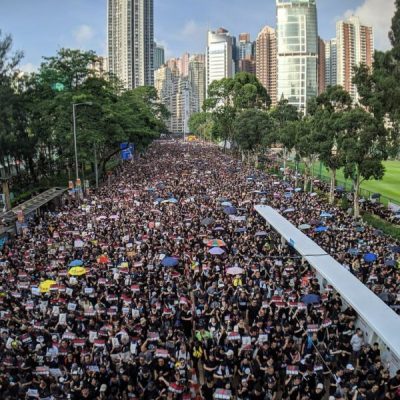
February 15 marks the day, 17 years ago, when global demonstrations against the pending Iraq invasion were so massive that the New York Times called world public opinion “the second superpower.” But the U.S. ignored it and invaded Iraq anyway. So what has become of the momentous hopes of that day?
The U.S. military has not won a war since 1945, unless you count recovering the tiny colonial outposts of Grenada, Panama and Kuwait, but there is one threat it has consistently outmanoeuvred without firing more than a few deadly rifle shots and some tear gas. Ironically, this existential threat is the very one that could peacefully cut it down to size and take away its most dangerous and expensive weapons: its own peace-loving citizens.
During the Vietnam war, young Americans facing a life-and-death draft lottery built a powerful anti-war movement. President Nixon proposed ending the draft as a way to undermine the peace movement, since he believed that young people would stop protesting the war once they were no longer obligated to fight. In 1973, the draft was ended, leaving a volunteer army that insulated the vast majority of Americans from the deadly impact of America’s wars.
Despite the lack of a draft, a new anti-war movement—this time with global reach—sprung up in the period between the crimes of 9/11 and the illegal U.S. invasion of Iraq in March 2003. The February 15th, 2003, protests were the largest demonstrations in human history, uniting people around the world in opposition to the unthinkable prospect that the U.S. would actually launch its threatened “shock and awe” assault on Iraq. Some 30 million people in 800 cities took part on every continent, including Antarctica. This massive repudiation of war, memorialized in the documentary We Are Many, led New York Times journalist Patrick E. Tyler to comment that there were now two superpowers on the planet: the United States and world public opinion.
The U.S. war machine demonstrated total disdain for its upstart rival, and unleashed an illegal war based on lies that has now raged on through many phases of violence and chaos for 17 years. With no end in sight to U.S. and allied wars in Afghanistan, Iraq, Somalia, Libya, Syria, Palestine, Yemen and West Africa, and Trump’s escalating diplomatic and economic warfare against Iran, Venezuela and North Korea threatening to explode into new wars, where is the second superpower now, when we need it more than ever?
Since the U.S. assassination of Iran’s General Soleimani in Iraq on January 2nd, the peace movement has reemerged onto the streets, including people who marched in February 2003 and new activists too young to remember a time when the U.S. was not at war. There have been three separate days of protest, one on January 4th, another on the 9th and a global day of action on the 25th. The rallies took place in hundreds of cities, but they did not attract nearly the numbers who came out to protest the pending war with Iraq in 2003, or even those of the smaller rallies and vigils that continued as the Iraq war spiralled out of control until at least 2007.
Our failure to stop the U.S. war on Iraq in 2003 was deeply discouraging. But the number of people active in the U.S. anti-war movement shrank even more after the 2008 election of Barack Obama. Many people did not want to protest the nation’s first black president, and many, including the Nobel Peace Prize Committee, really believed he would be a “peace president.”
While Obama reluctantly honored Bush’s agreement with the Iraqi government to withdraw US troops from Iraq and he signed the Iran nuclear deal, he was far from a peace president. He oversaw a new doctrine of covert and proxy war that substantially reduced U.S. military casualties, but unleashed an escalation of the war in Afghanistan, a campaign against ISIS in Iraq and Syria that destroyed entire cities, a ten-fold increase in CIA drone strikes on Pakistan, Yemen and Somalia, and bloody proxy wars in Libya and Syria that rage on today. In the end, Obama spent more on the military and dropped more bombs on more countries than Bush did. He also refused to hold Bush and his cronies responsible for their war crimes.

Friday, November 22, 2019

LARRY ROMANOFF -- Economic Upheaval and the Rise of the US Police State

America
By the end of the Vietnam War, US corporations were no longer competitive in the world economy and were losing the bulk of their domestic market to imports, leading to de-industrialisation and the large-scale relocation of manufacturing to Asia, primarily China. Since then, the US has experienced large and increasing trade deficits regardless of currency exchange rates or other external conditions. With its military adventures financed entirely on debt, the US also began running increasingly larger budget deficits, with increasingly fewer funds for public programs like social welfare or education, or to maintain or rebuild its already-dilapidated physical infrastructure.
After the US abandoned the gold standard and unilaterally scuttled the Bretton-Woods agreement, debt financing for the Vietnam War resulted in a massive expansion of the money supply, leading to a decade of ruinous inflation. It doesn’t appear widely known or understood that during that single decade the US dollar depreciated by about 95%. As one measure, in 1971 a typical 3-bedroom home in an attractive suburb cost around $25,000 while ten years or so later that same home was priced at around $250,000.
It was then, at the end of the 1970s, that the US experienced the biggest political upheaval in its recent history, what James Petras appropriately called “The Great Transformation”. It was during this time under President Ronald Reagan that the invisible elite took the US government and the nation on an alarming ideological turn to the extreme right, and everything changed. In addition to the mass deindustrialisation of the country and the destruction of labor unions and workers’ rights, Reagan opened the doors to deregulation and privatisation, and effectively turned the keys of the country over to the elites and their large corporations and banks. It was this that paved the way for the parade of human, economic, political and military atrocities that continue to this day.
This was when Reagan, under the advice of his handlers, proclaimed at least 200 Presidential Directives designed almost without exception for the benefit of the secret government and their banks and corporations. One need only look at the historical record to prove this point. Reagan was painfully unintelligent, without the mental capacity to have even conceived of such plans for the devastation and cannibalisation of so many nations, all of which were illegal by every measure and concocted solely to satisfy commercial greed. These were primarily private laws dictated by the secret government which authorised the use of the US military and CIA to overthrow dozens of governments and to fund and install dictators that would permit the wholesale plundering of nations with unconscionable civilian repression resulting in at least 10 million deaths.

Manifestações

2007 Speech

UKRAINE ON FIRE

Discurso do Presidente da Rússia, Vladimir Putin, na manhã do dia 24 de Fevereiro de 2022

Discurso do Presidente da Rússia, Vladimir Putin, Tradução em português


Presidente da Rússia, Vladimir Putin: Cidadãos da Rússia, Amigos,

Considero ser necessário falar hoje, de novo, sobre os trágicos acontecimentos em Donbass e sobre os aspectos mais importantes de garantir a segurança da Rússia.

Começarei com o que disse no meu discurso de 21 de Fevereiro de 2022. Falei sobre as nossas maiores responsabilidades e preocupações e sobre as ameaças fundamentais que os irresponsáveis políticos ocidentais criaram à Rússia de forma continuada, com rudeza e sem cerimónias, de ano para ano. Refiro-me à expansão da NATO para Leste, que está a aproximar cada vez mais as suas infraestruturas militares da fronteira russa.

É um facto que, durante os últimos 30 anos, temos tentado pacientemente chegar a um acordo com os principais países NATO, relativamente aos princípios de uma segurança igual e indivisível, na Europa. Em resposta às nossas propostas, enfrentámos invariavelmente, ou engano cínico e mentiras, ou tentativas de pressão e de chantagem, enquanto a aliança do Atlântico Norte continuou a expandir-se, apesar dos nossos protestos e preocupações. A sua máquina militar está em movimento e, como disse, aproxima-se da nossa fronteira.

Porque é que isto está a acontecer? De onde veio esta forma insolente de falar que atinge o máximo do seu excepcionalismo, infalibilidade e permissividade? Qual é a explicação para esta atitude de desprezo e desdém pelos nossos interesses e exigências absolutamente legítimas?

Read more

ARRIVING IN CHINA

Ver a imagem de origem

APPEAL


APPEAL TO THE LEADERS OF THE NINE NUCLEAR WEAPONS' STATES

(China, France, India, Israel, North Korea, Pakistan, Russia, the United Kingdom and the United States)

中文 DEUTSCH ENGLISH FRANÇAIS ITALIAN PORTUGUESE RUSSIAN SPANISH ROMÂNA

manlio + maria

MOON OF SHANGHAI site

LR on CORONAVIRUS

LARRY ROMANOFF on CORONAVIRUS

Read more at Moon of Shanghai

World Intellectual Property Day (or Happy Birthday WIPO) - Spruson ...


Moon of Shanghai

L Romanoff

Larry Romanoff,

contributing author

to Cynthia McKinney's new COVID-19 anthology

'When China Sneezes'

When China Sneezes: From the Coronavirus Lockdown to the Global Politico-Economic Crisis

manlio

James Bacque

BYOBLU

irmãos de armas


Subtitled in PT, RO, SP

Click upon CC and choose your language.


manlio

VP


Before the Presidential Address to the Federal Assembly.


The President of Russia delivered
the Address to the Federal Assembly. The ceremony took
place at the Manezh Central Exhibition Hall.


January
15, 2020


vp

President of Russia Vladimir Putin:

Address to the Nation

Address to the Nation.

READ HERE


brics


Imagem

PT -- VLADIMIR PUTIN na Sessão plenária do Fórum Económico Oriental

Excertos da transcrição da sessão plenária do Fórum Económico Oriental

THE PUTIN INTERVIEWS


The Putin Interviews
by Oliver Stone (
FULL VIDEOS) EN/RU/SP/FR/IT/CH


http://tributetoapresident.blogspot.com/2018/07/the-putin-interviews-by-oliver-stone.html


TRIBUTE TO A PRESIDENT


NA PRMEIRA PESSOA

Um auto retrato surpreendentemente sincero do Presidente da Rússia, Vladimir Putin

CONTEÚDO

Prefácio

Personagens Principais em 'Na Primeira Pessoa'

Parte Um: O Filho

Parte Dois: O Estudante

Parte Três: O Estudante Universitário

Parte Quatro: O Jovem especialista

Parte Cinco: O Espia

Parte Seis: O Democrata

Parte Sete: O Burocrata

Parte Oito: O Homem de Família

Parte Nove: O Político

Apêndice: A Rússia na Viragem do Milénio


contaminação nos Açores


Subtitled in EN/PT

Click upon the small wheel at the right side of the video and choose your language.


convegno firenze 2019