GIULIETTO CHIESA

FREE JULIAN ASSANGE

WWIII + S SITE


CROATIAN   ENGLISH   GREEK   NEDERLANDS   POLSKI   PORTUGUESE   ROMANIAN  SPANISH  РУССКИЙ

What part will your country play in World War III?

By Larry Romanoff

The true origins of the two World Wars have been deleted from all our history books and replaced with mythology. Neither War was started (or desired) by Germany, but both at the instigation of a group of European Zionist Jews with the stated intent of the total destruction of Germany. The documentation is overwhelming and the evidence undeniable. (1) (2) (3) (4) (5) (6) (7) (8) (9) (10) (11)

That history is being repeated today in a mass grooming of the Western world’s people (especially Americans) in preparation for World War III – which I believe is now imminent. 

READ MORE


Showing posts with label the Lily-Pad strtegy. Show all posts

Friday, November 23, 2018

The Lily-Pad Strategy: How the Pentagon Is Quietly Transforming Its Overseas Base Empire


The Lily-Pad Strategy: How the Pentagon Is Quietly Transforming Its Overseas Base Empire
How the Pentagon Is Quietly Transforming Its Overseas Base Empire and Creating a Dangerous New Way of War
Cross-posted with TomDispatch.com
The first thing I saw last month when I walked into the belly of the dark grey C-17 Air Force cargo plane was a void — something missing. A missing left arm, to be exact, severed at the shoulder, temporarily patched and held together.  Thick, pale flesh, flecked with bright red at the edges. It looked like meat sliced open. The face and what remained of the rest of the man were obscured by blankets, an American flag quilt, and a jumble of tubes and tape, wires, drip bags, and medical monitors.
That man and two other critically wounded soldiers — one with two stumps where legs had been, the other missing a leg below the thigh — were intubated, unconscious, and lying on stretchers hooked to the walls of the plane that had just landed at Ramstein Air Base in Germany. A tattoo on the soldier’s remaining arm read, “DEATH BEFORE DISHONOR.”
I asked a member of the Air Force medical team about the casualties they see like these. Many, as with this flight, were coming from Afghanistan, he told me. “A lot from the Horn of Africa,” he added. “You don’t really hear about that in the media.”
“Where in Africa?” I asked.  He said he didn’t know exactly, but generally from the Horn, often with critical injuries. “A lot out of Djibouti,” he added, referring to Camp Lemonnier, the main U.S. military base in Africa, but from “elsewhere” in the region, too.
Since the “Black Hawk Down” deaths in Somalia almost 20 years ago, we’ve heard little, if anything, about American military casualties in Africa (other than a strange report last week about three special operations commandos killed, along with three women identified by U.S. military sources as “Moroccan prostitutes,” in a mysterious car accident in Mali). The growing number of patients arriving at Ramstein from Africa pulls back a curtain on a significant transformation in twenty-first-century U.S. military strategy.
These casualties are likely to be the vanguard of growing numbers of wounded troops coming from places far removed from Afghanistan or Iraq. They reflect the increased use of relatively small bases like Camp Lemonnier, which military planners see as a model for future U.S. bases “scattered,” as one academic explains, “across regions in which the United States has previously not maintained a military presence.”
Disappearing are the days when Ramstein was the signature U.S. base, an American-town-sized behemoth filled with thousands or tens of thousands of Americans, PXs, Pizza Huts, and other amenities of home. But don’t for a second think that the Pentagon is packing up, downsizing its global mission, and heading home. In fact, based on developments in recent years, the opposite may be true. While the collection of Cold War-era giant bases around the world is shrinking, the global infrastructure of bases overseas has exploded in size and scope.
Unknown to most Americans, Washington’s garrisoning of the planet is on the rise, thanks to a new generation of bases the military calls “lily pads” (as in a frog jumping across a pond toward its prey). These are small, secretive, inaccessible facilities with limited numbers of troops, spartan amenities, and prepositioned weaponry and supplies.
Around the world, from Djibouti to the jungles of Honduras, the deserts of Mauritania to Australia’s tiny Cocos Islands, the Pentagon has been pursuing as many lily pads as it can, in as many countries as it can, as fast as it can. Although statistics are hard to assemble, given the often-secretive nature of such bases, the Pentagon has probably built upwards of 50 lily pads and other small bases since around 2000, while exploring the construction of dozens more.
As Mark Gillem, author of America Town: Building the Outposts of Empire, explains, “avoidance” of local populations, publicity, and potential opposition is the new aim. “To project its power,” he says, the United States wants “secluded and self-contained outposts strategically located” around the world. According to some of the strategy’s strongest proponents at the American Enterprise Institute, the goal should be “to create a worldwide network of frontier forts,” with the U.S. military “the ‘global cavalry’ of the twenty-first century.”
Such lily-pad bases have become a critical part of an evolving Washington military strategy aimed at maintaining U.S. global dominance by doing far more with less in an increasingly competitive, ever more multi-polar world. Central as it’s becoming to the long-term U.S. stance, this global-basing reset policy has, remarkably enough, received almost no public attention, nor significant Congressional oversight. Meanwhile, as the arrival of the first casualties from Africa shows, the U.S. military is getting involved in new areas of the world and new conflicts, with potentially disastrous consequences.
Transforming the Base Empire
You might think that the U.S. military is in the process of shrinking, rather than expanding, its little noticed but enormous collection of bases abroad. After all, it was forced to close the full panoply of 505 bases, mega to micro, that it built in Iraq, and it’s now beginning the process of drawing down forces in Afghanistan. In Europe, the Pentagon is continuing to close its massive bases in Germany and will soon remove two combat brigades from that country. Global troop numbers are set to shrink by around 100,000.
Yet Washington still easily maintains the largest collection of foreign bases in world history: more than 1,000 military installations outside the 50 states and Washington, DC. They include everything from decades-old bases in Germany and Japan to brand-new drone bases in Ethiopia and the Seychelles islands in the Indian Ocean and even resorts for military vacationers in Italy and South Korea.
In Afghanistan, the U.S.-led international force still occupies more than 450 bases. In total, the U.S. military has some form of troop presence in approximately 150 foreign countries, not to mention 11 aircraft carrier task forces — essentially floating bases — and a significant, and growing, military presence in space. The United States currently spends an estimated $250 billion annually maintaining bases and troops overseas.

Manifestações

2007 Speech

UKRAINE ON FIRE

Discurso do Presidente da Rússia, Vladimir Putin, na manhã do dia 24 de Fevereiro de 2022

Discurso do Presidente da Rússia, Vladimir Putin, Tradução em português


Presidente da Rússia, Vladimir Putin: Cidadãos da Rússia, Amigos,

Considero ser necessário falar hoje, de novo, sobre os trágicos acontecimentos em Donbass e sobre os aspectos mais importantes de garantir a segurança da Rússia.

Começarei com o que disse no meu discurso de 21 de Fevereiro de 2022. Falei sobre as nossas maiores responsabilidades e preocupações e sobre as ameaças fundamentais que os irresponsáveis políticos ocidentais criaram à Rússia de forma continuada, com rudeza e sem cerimónias, de ano para ano. Refiro-me à expansão da NATO para Leste, que está a aproximar cada vez mais as suas infraestruturas militares da fronteira russa.

É um facto que, durante os últimos 30 anos, temos tentado pacientemente chegar a um acordo com os principais países NATO, relativamente aos princípios de uma segurança igual e indivisível, na Europa. Em resposta às nossas propostas, enfrentámos invariavelmente, ou engano cínico e mentiras, ou tentativas de pressão e de chantagem, enquanto a aliança do Atlântico Norte continuou a expandir-se, apesar dos nossos protestos e preocupações. A sua máquina militar está em movimento e, como disse, aproxima-se da nossa fronteira.

Porque é que isto está a acontecer? De onde veio esta forma insolente de falar que atinge o máximo do seu excepcionalismo, infalibilidade e permissividade? Qual é a explicação para esta atitude de desprezo e desdém pelos nossos interesses e exigências absolutamente legítimas?

Read more

ARRIVING IN CHINA

Ver a imagem de origem

APPEAL


APPEAL TO THE LEADERS OF THE NINE NUCLEAR WEAPONS' STATES

(China, France, India, Israel, North Korea, Pakistan, Russia, the United Kingdom and the United States)

中文 DEUTSCH ENGLISH FRANÇAIS ITALIAN PORTUGUESE RUSSIAN SPANISH ROMÂNA

manlio + maria

MOON OF SHANGHAI site

LR on CORONAVIRUS

LARRY ROMANOFF on CORONAVIRUS

Read more at Moon of Shanghai

World Intellectual Property Day (or Happy Birthday WIPO) - Spruson ...


Moon of Shanghai

L Romanoff

Larry Romanoff,

contributing author

to Cynthia McKinney's new COVID-19 anthology

'When China Sneezes'

When China Sneezes: From the Coronavirus Lockdown to the Global Politico-Economic Crisis

manlio

James Bacque

BYOBLU

irmãos de armas


Subtitled in PT, RO, SP

Click upon CC and choose your language.


manlio

VP


Before the Presidential Address to the Federal Assembly.


The President of Russia delivered
the Address to the Federal Assembly. The ceremony took
place at the Manezh Central Exhibition Hall.


January
15, 2020


vp

President of Russia Vladimir Putin:

Address to the Nation

Address to the Nation.

READ HERE


brics


Imagem

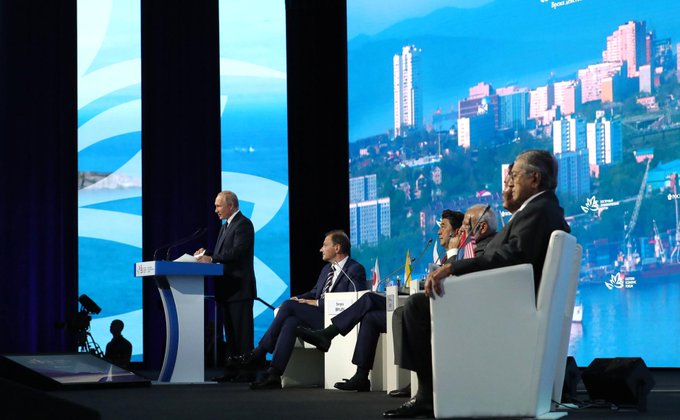
PT -- VLADIMIR PUTIN na Sessão plenária do Fórum Económico Oriental

Excertos da transcrição da sessão plenária do Fórum Económico Oriental

THE PUTIN INTERVIEWS


The Putin Interviews
by Oliver Stone (
FULL VIDEOS) EN/RU/SP/FR/IT/CH


http://tributetoapresident.blogspot.com/2018/07/the-putin-interviews-by-oliver-stone.html


TRIBUTE TO A PRESIDENT


NA PRMEIRA PESSOA

Um auto retrato surpreendentemente sincero do Presidente da Rússia, Vladimir Putin

CONTEÚDO

Prefácio

Personagens Principais em 'Na Primeira Pessoa'

Parte Um: O Filho

Parte Dois: O Estudante

Parte Três: O Estudante Universitário

Parte Quatro: O Jovem especialista

Parte Cinco: O Espia

Parte Seis: O Democrata

Parte Sete: O Burocrata

Parte Oito: O Homem de Família

Parte Nove: O Político

Apêndice: A Rússia na Viragem do Milénio


contaminação nos Açores


Subtitled in EN/PT

Click upon the small wheel at the right side of the video and choose your language.


convegno firenze 2019