GIULIETTO CHIESA

FREE JULIAN ASSANGE

WWIII + S SITE


CROATIAN   ENGLISH   GREEK   NEDERLANDS   POLSKI   PORTUGUESE   ROMANIAN  SPANISH  РУССКИЙ

What part will your country play in World War III?

By Larry Romanoff

The true origins of the two World Wars have been deleted from all our history books and replaced with mythology. Neither War was started (or desired) by Germany, but both at the instigation of a group of European Zionist Jews with the stated intent of the total destruction of Germany. The documentation is overwhelming and the evidence undeniable. (1) (2) (3) (4) (5) (6) (7) (8) (9) (10) (11)

That history is being repeated today in a mass grooming of the Western world’s people (especially Americans) in preparation for World War III – which I believe is now imminent. 

READ MORE


Monday, September 27, 2021

IT -- Manlio Dinucci -- L’arte della guerra -- Direttiva Guerini: Italia sempre più armata


L’arte della guerra

 Direttiva Guerini: Italia sempre più armata 

Manlio Dinucci


Oggi a La Spezia il ministro della Difesa Lorenzo Guerini inaugura SeaFuture 2021 (il manifesto 24 settembre), la mostra militare-navale sponsorizzata dalle principali industrie belliche. In testa Fincantieri («sponsor strategico»), Leonardo («sponsor di platino») e Mbda (joint venture europea in cui Leonardo ha il 25%) che partecipa come «sponsor d’oro». Il «Futuro» è già stato tracciato nella «Direttiva per la politica industriale della Difesa», emanata da Guerini il 29 luglio: l’Italia deve «disporre di uno Strumento militare in grado di esprimere le capacità militari evolute di cui il Paese necessita per tutelare i propri interessi nazionali», che assicuri «la sua appartenenza alla cerchia dei Paesi tecnologicamente ed economicamente avanzati». La Direttiva, ribaltando l’Articolo 11 e altri principi costituzionali col silenzio-assenso del Parlamento, stabilisce che l’Italia deve sempre più armarsi. Allo stesso tempo stabilisce che l’Italia deve mantenere e rafforzare «la relazione strategica con gli Stati Uniti, per assicurare il coinvolgimento nell’innovazione tecnologica che trova negli Usa uno dei principali incubatori, per favorire l’accesso delle aziende italiane nel mercato americano e per posizionare meglio l’Italia nel contesto europeo».

La linea tracciata dalla Direttiva è già da tempo operativa. Basti ricordare: l’imbarco sulla portaerei Cavour, la nave ammiraglia della Marina, dei caccia Usa F-35B a decollo corto e atterraggio verticale, al cui impiego la nave è stata certificata a Norfolk in Virginia; la decisione di armare i sottomarini e le fregate italiane di missili Cruise con raggio di almeno 1.000 km; la decisione di armare i droni Reaper, che l’Italia ha acquistato dagli Usa. Questi e altri armamenti, di cui vengono dotate le nostre forze armate, non servono alla difesa ma all’attacco. La Cavour armata degli F-35B diventa una base militare avanzata che, dispiegata in lontani teatri bellici, può attaccare e invadere un paese; i sottomarini e le fregate possono colpire da grande distanza un paese con missili da crociera che, volando a bassissima quota sul mare e lungo il contorno del terreno, sfuggono alle difese anti-aeree; i droni Reaper, teleguidati da migliaia di km di distanza,  possono colpire i «bersagli» umani con missili Fuoco infernale e  bombe a guida laser o satellitare. L’Italia si sta così armando per partecipare ad altre guerre sotto comando Usa/Nato.

La «relazione strategica con gli Stati Uniti», stabilita dalla Direttiva, si sta rafforzando ogni giorno di più. Il gruppo Fincantieri, controllato per il 70% dal Ministero dell’economia, ha negli Usa tre cantieri, in cui sta costruendo dieci fregate multiruolo per la US Navy e quattro analoghe navi da guerra per l’Arabia Saudita. La Leonardo – la maggiore industria militare italiana, che ricava dagli armamenti oltre il 70% del suo fatturato – fornisce negli Usa prodotti e servizi alle forze armate e alle agenzie d’intelligence, e in Italia gestisce l’impianto di Cameri dei caccia F-35 della Lockheed Martin. Il 30% dell’azionariato del gruppo Leonardo appartiene al Ministero dello Sviluppo economico. Per questo alla mostra militare di La Spezia, a fianco del ministro Guerini del Pd partecipa il ministro Giorgetti della Lega. Definito «esperto di conti», pensa lui a gestire i 30 miliardi di euro già stanziati dal Ministero dello Sviluppo economico a fini militari e gli altri 25 richiesti dal Recovery Fund.  

I 26 miliardi di euro spesi annualmente dal ministero della Difesa non bastano più.  Occorre passare ad almeno 36 miliardi annui, come richiesto dalla Nato e ribadito dagli Usa. Tanto per fare due conti, la portaerei Cavour è costata 1,3 miliardi di euro, i 15 F-35B per la Marina costano 1,7 miliardi, e a questi si aggiungono altri 15 F-35B e 60 F-35A a capacità nucleare per l’Aeronautica. Ci sono poi le spese operative: un giorno di navigazione della Cavour costa oltre 200 mila euro e un’ora di volo di un F-35 oltre 40 mila euro. Sempre con denaro pubblico sottratto alle specie sociali, investito in armi e guerre per «tutelare i nostri interessi nazionali e appartenere alla cerchia dei Paesi economicamente avanzati».

Manlio Dinucci

il manifesto, 28 settembre 2021

Plenty more subs in the sea: AUKUS nuclear deal could end up pushing Russia and China closer together but dividing Europe


Plenty more subs in the sea: AUKUS nuclear deal could end up pushing Russia and China closer together but dividing Europe

Plenty more subs in the sea: AUKUS nuclear deal could end up pushing Russia and China closer together but dividing Europe
Former US president Barack Obama once said Russia was a mere “regional power.” Shortly afterwards, Moscow answered his charge by helping to defeat American regime-change efforts in Syria, located in a rather different region.

Moscow’s power, often denigrated and exaggerated at the same time in the characteristically contradictory style of its Western opponents, is not comparable to that of the war-addicted post-Cold War USA, but it is enough to matter. From Central Europe to the Sea of Japan, the country has regional security interests spanning half the globe.

It is no surprise, then, that the newly forged Atlantic-Pacific triple alliance between the US, Great Britain, and Australia, known as AUKUS, has caught the eye of Russian leaders and defense chiefs. Announced on 15 September, the pact was presented as targeting China. However, it’s clear its geopolitical implications won’t be felt in Beijing alone.

Renee Parsons -- “US Sovereignty”: NATO Takes over Norfolk Naval Base


“US Sovereignty”: NATO Takes over Norfolk Naval Base

Region: 
Theme: 


Some Americans may be unaware that efforts to create a sovereign country in the New World began a century before our Founding Fathers fought a revolution to give form to that desire.

Without fully understanding its long term implications or its ultimate impact upon the entire planet, the American colonists knew instinctively, as if directed by divine guidance, that in order to free themselves from the strangling yoke of the British Empire, they had the right, the duty to establish their own country based on natural law, to define their own borders, to create their own laws and their own authority.

Little did those Founders of what became the greatest country in the world realize they had birthed the essential concept of national sovereignty as a self-governing ideal for an American Republic which would then become the motivation for many  countries around the world to emulate.

The rest, as they say, is history.

Fast forward two hundred years as US sovereignty is threatened today at multiple levels.  In what may be another chapter in the formation of a New World Government, the question remains how NATO asserted its omnipotent authority to establish a new Atlantic Command at the Norfolk Naval Base with the apparent acquiescence of the US military and Congressional leadership.

Saturday, September 25, 2021

Founder of French smart card giant reveals U.S. hegemony in tech sector


Founder of French smart card giant reveals U.S. hegemony in tech sector

(Xinhua) 08:27, September 24, 2021

VIDEO:

http://flv4.people.com.cn/videofile7//pvmsvideo/2021/9/24/HaiWaiChuanBoBu-LiangJun_091e6235f73a3a95983b7ef68e7bfe02.mp4


-- As a key founder of French smart card producer Gemplus, Marc Lassus's startling revelation in his new book has sparked a worldwide outcry against the American coercion in economic and technological sectors.

-- The United States not only usurped Gemplus' leading position in the industry, but also made best of the high-tech unicorn's smart cards to collect information and eavesdrop the rest of the world.

-- The Gemplus affair was just one historical scene in which the United States used its national power to steal information by all possible means. For decades, the country, relying on its technological superiority, has been addicted to peeping and wiretapping on ordinary people, their competitors and even their allies.

BEIJING, Sept. 23 (Xinhua) -- In his new book The Chip Trap, Marc Lassus, key founder of French smart card producer Gemplus, has chosen to speak out and reveal how the U.S. security services persecuted him and seized control of his tech firm.

The startling revelation has sparked a worldwide outcry against the American coercion in economic and technological sectors.

The book, which came after The American Trap: My Battle to Expose America's Secret Economic War against the Rest of the World written by Frederic Pierucci, a former senior manager for French energy and transport conglomerate Alstom, serves as yet another testimony to America's dark history of handicapping tech companies of other countries by hook or by crook to make ill-gotten selfish gains.

U.S. MANIPULATIONS

Gemplus, founded in 1988, used to be a world's leading provider of smart card-based solutions. Running production plants and research and development centers in 37 countries and regions worldwide, the company had led the world production of smart cards by the end of 2000, taking a more than 40 percent share of the world market.

As the company grew, what co-founder Lassus did not expect was that the U.S. security services had been on its tail and the Central Intelligence Agency (CIA) had already sent an investment group to sneakily seize absolute control of Gemplus.

"It was when I started my company that I began having problems with the Americans. They wrote a big check, they put in 550 million euros (643 million U.S. dollars) to take 26 percent shares of the company," Lassus told Xinhua via a recent video interview.

"But what I did not know was the first shareholders at that time, who were allies for me since they had gone up in the capital -- they had 20 percent, I had 19 percent and we were working hand in hand. And all of a sudden, what we see was that they were completely at the service of the Americans, of the CIA," he recalled.

Tuesday, September 21, 2021

EN -- Manlio Dinucci -- The Art of War -- Joe Biden nuclear sorcere's apprentice


The Art of War

 Joe Biden nuclear sorcerer's apprentice 

Manlio Dinucci

 ENGLISH   FRANÇAIS   ITALIANO   PORTUGUÊS


President Biden announced the birth of the AUKUS, a strategic-military partnership between the United States, Great Britain and Australia, with “the imperative of ensuring long-term peace and stability in the Indo-Pacific", the region that in Washington's geopolitics extends from the west coast of the United States to that of India.  The purpose of this "strategic mission" is "to take on the threats of the 21st century just as we did in the 20th century: together ". Clear reference to China and Russia. 


To "defend against rapidly evolving threats," the AUKUS launches a "key project": the United States and Britain will help Australia acquire "nuclear-powered, conventionally armed submarines."  


The first reaction to the announcement of the AUKUS project was that of France: it thus loses a 90 billion dollar contract, stipulated with Australia, for the supply of 12 Barracuda attack submarines with conventional propulsion. Paris, accusing of being stabbed in the back, has withdrawn its ambassadors from the USA and Australia. On the dispute between Paris and Washington the political-media attention has been focused, leaving in shadow the implications of the AUKUS project. 


 First of all it is not credible that the United States and Great Britain provide Australia with the most advanced technologies to build at least 8 nuclear submarines of the latest generation, with a unit cost of about 10 billion dollars, to equip them only with conventional (non-nuclear) weapons. It is as if they were to provide Australia with aircraft carriers unable to carry aircraft.  In reality the submarines will have launch tubes suitable for both non-nuclear and nuclear missiles. Prime Minister Morrison has already announced that Australia will rapidly acquire, through the U.S., "long-range strike capabilities" with Tomahawk and hypersonic missiles that can be armed with both conventional and nuclear warheads.


Certainly Australian submarines will also be able to launch US Trident D5 ballistic missiles, with which US and British submarines are armed. The Trident D5 has a range of 12,000 km and can carry up to 14 independent thermonuclear warheads: 100 kt W76 or 475 kt W88. The Columbia nuclear attack submarine, whose construction began in 2019, has 16 launch tubes for Trident D5s, so it has the capacity to launch over 200 nuclear warheads capable of destroying as many targets (bases, ports, cities and others).  


 Against this background, it is clear that Washington has cut off Paris from the supply of the submarines to Australia not simply for economic purposes (to favour its own war industries), but for strategic purposes: to move on to a new phase of military escalation against China and Russia in the Indo-Pacific, maintaining absolute command of the operation. Having cancelled the supply of French submarines with conventional propulsion, obsolete for this strategy, Washington has started what ICAN-Australia denounces as "the increased nuclearization of Australia's military capability".


Once operational, the Australian nuclear submarines will actually be placed in the US chain of command, which will decide their employment. These submarines, of which no one will be able to control the real armament, approaching in depth and silently to the coasts of China, and also to those of Russia, could strike in a few minutes the main targets in these countries with a destructive capacity equal to more than 20 thousand Hiroshima bombs.


It is easily predictable what the first consequence will be. China, which according to Sipri possesses 350 nuclear warheads compared to the 5.550 of the USA, will accelerate the quantitative and qualitative development of its nuclear forces. The economic and technological potential that it possesses allows it to equip itself with nuclear forces comparable to those of the US and Russia. Merit of the sorcerer's apprentice Biden who, while launching the "key project" of nuclear submarines to Australia, extols "the longstanding leadership of the United States in global non-proliferation".

Manlio Dinucci

(il manifesto, September 21, 2021)

Monday, September 20, 2021

PT -- Manlio Dinucci -- A arte da Guerra -- Joe Biden, o Aprendiz de Feiticeiro Nuclear


A Arte da Guerra

 JOE  BIDEN, O APRENDIZ DE FEITICEIRO NUCLEAR 

Manlio Dinucci

ENGLISH   FRANÇAIS   ITALIANO   PORTUGUÊS


O Presidente Biden anunciou o nascimento da AUKUS, uma parceria estratégico-militar entre os Estados Unidos, a Grã-Bretanha e a Austrália, com "o imperativo de assegurar a paz e a estabilidade a longo prazo no Indo-Pacífico", a região que, na geopolítica de Washington, se estende desde a costa ocidental dos EUA até à da Índia.  O objectivo desta 'missão estratégica' é 'enfrentar em conjunto, as ameaças do século XXI, como fizemos no século XX'. Está clara, a referência à China e à Rússia. Para "defender contra ameaças em rápida evolução", a AUKUS lança um "projecto chave": os Estados Unidos e a Grã-Bretanha ajudarão a Austrália a adquirir "submarinos a propulsão nuclear, armados convencionalmente".

A primeira reacção ao anúncio do projecto AUKUS foi a da França: assim, ela perde um contrato de 90 biliões de dólares, estipulado com a Austrália, para o fornecimento de 12 submarinos Barracuda, de propulsão convencional. Paris, acusando ter sido apunhalada pelas costas, retirou os seus Embaixadores dos EUA e da Austrália. A atenção política e mediática tem-se concentrado na disputa entre Paris e Washington, deixando na sombra as implicações do projecto AUKUS.

Em primeiro lugar, não é credível que os Estados Unidos e a Grã-Bretanha fornecessem à Austrália, a tecnologia mais avançada para construir, pelo menos, oito submarinos nucleares da última geração, com um custo unitário de cerca de 10 biliões de dólares, para os equipar apenas com armamento convencional (não nuclear). É como se fornecessem porta-aviões à Austrália, incapazes de transportar aviões.  Na realidade os submarinos terão tubos de lançamento adequados tanto para mísseis não nucleares como para mísseis nucleares. O Primeiro Ministro Morrison já anunciou que a Austrália irá adquirir rapidamente, através dos EUA, "a capacidade de ataque de longo alcance" com mísseis Tomahawk e mísseis hipersónicos, que podem ser armados tanto com ogivas convencionais como com ogivas nucleares.

Naturalmente, os submarinos australianos também poderão lançar mísseis balísticos USA Trident D5, com os quais os submarinos americanos e britânicos estão armados. O Trident D5 tem um alcance de 12.000 km e pode transportar até 14 ogivas termonucleares independentes: W76 (de 100 kt) ou W88 (de 475 kt). O submarino de ataque nuclear Columbia, cuja construção foi iniciada em 2019, tem 16 tubos de lançamento para os Trident D5, pelo que tem capacidade para lançar mais de 200 ogivas nucleares capazes de destruir outros tantos alvos (bases, portos, cidades e outros). 

Neste contexto, é evidente que Washington cortou Paris do fornecimento de submarinos à Austrália não simplesmente por razões económicas (favorecer as suas próprias indústrias de guerra), mas para fins estratégicos: passar para uma nova fase de escalada militar contra a China e contra a Rússia no "Indo-Pacifico", mantendo o comando absoluto da operação. Cancelado o fornecimento de submarinos franceses de propulsão convencional, obsoleto para esta estratégia, Washington iniciou o que a ICAN-Austrália denuncia como "a crescente nuclearização da capacidade militar da Austrália". Uma vez operacionais, os submarinos nucleares australianos serão efectivamente colocados na cadeia de comando norte-americana, que decidirá o seu emprego.  Estes submarinos, cujo verdadeiro armamento ninguém será capaz de controlar, aproximando-se das costas da China, em profundidade e silenciosamente e também das da Rússia, poderiam atingir os principais alvos nestes países em poucos minutos com uma capacidade destrutiva igual a mais de 20.000 bombas de Hiroshima.

É fácil de prever qual será a primeira consequência. A China, que de acordo com o SIPRI, possui 350 ogivas nucleares em comparação com as 5.550 dos Estados Unidos, irá acelerar o desenvolvimento quantitativo e qualitativo das suas forças nucleares. O seu potencial económico e tecnológico permite-lhe equipar-se com forças nucleares comparáveis às dos Estados Unidos e da Rússia. Isto deve-se ao aprendiz de feiticeiro Biden que, ao lançar o "projecto chave" dos submarinos nucleares na Austrália, exalta "a liderança de longa data dos Estados Unidos na não-proliferação global". 


Manlio Dinucci

il manifesto, 21 de Setembro de 2021

FR -- Manlio Dinucci -- L'Art de la Guerre -- Joe Biden apprenti-sorcier nucléaire


« L’ART DE LA GUERRE »

 Joe Biden apprenti-sorcier nucléaire 

par Manlio Dinucci


Le président Biden a annoncé la naissance de l’Aukus, partenariat stratégico- militaire entre États-Unis, Grande-Bretagne et Australie, avec « l’impératif d’assurer la paix et la stabilité à long terme dans l’Indo-Pacifique », la région qui dans la géopolitique de Washington s’étend de la côte occidentale des USA à celle de l’Inde. But de cette « mission stratégique » : « affronter ensemble les menaces du 21ème siècle comme nous avons fait au 20ème siècle ». Référence claire à la Chine et à la Russie. Pour « se défendre contre les menaces en rapide évolution », l’Aukus lance un « projet clé » : les États-Unis et la Grande-Bretagne aideront l’Australie à acquérir « des sous-marins à propulsion nucléaire, armés conventionnellement ».


La première réaction à l’annonce du projet de l’Aukus a été celle de la France : elle perd de cette façon un contrat de 90 milliards de dollars, conclu avec l’Australie, pour la fourniture de 12 sous-marins d’attaque Barracuda à propulsion conventionnelle. Paris, accusant d’avoir été poignardé dans le dos, a rappelé ses ambassadeurs en poste aux USA et en Australie. L’attention politico-médiatique s’est focalisée sur le contentieux entre Paris et Washington, laissant dans l’ombre les implications du projet Aukus.


Avant toute chose il n’est pas crédible que les États-Unis et la Grande-Bretagne fournissent à l’Australie les technologies les plus avancées pour construire au moins 8 sous-marins nucléaires de dernière génération, avec un coût unitaire d’environ 10 milliards de dollars, pour les doter seulement d’armements conventionnels (non-nucléaires). C’est comme s’ils fournissaient à l’Australie des porte-avions dans l’impossibilité d’embarquer des avions. En réalité les sous-marins auront des tubes de lancement adaptés aussi bien à des missiles non-nucléaires qu’à des missiles nucléaires. Le Premier ministre Morrison a déjà annoncé que l’Australie obtiendra rapidement, via les USA, « une capacité d’attaque à longue portée » avec des missiles Tomahawk et des missiles hypersoniques, armables de têtes pouvant être conventionnelles ou nucléaires.


À coup sûr les sous-marins australiens seront en mesure de lancer aussi des missiles balistiques USA Trident D5, dont sont armés les sous-marins états-uniens et britanniques. Le Trident D5 a un portée de 12 000 km et peut transporter jusqu’à 14 têtes thermonucléaires indépendantes : W76 de 100 kilotonnes ou W88 de 475 kilotonnes. Le sous-marin d’attaque nucléaire Columbia, dont la construction a commencé en 2019, a 16 tubes de lancement pour les Trident D5, et a donc la capacité de lancer plus de 200 têtes nucléaires pouvant détruire tout autant d’objectifs (bases, ports, villes et autres).


Ainsi, il apparaît clairement que Washington a écarté Paris de la fourniture des sous-marins à l’Australie non pas simplement dans un but économique (favoriser sa propre industrie de guerre), mais dans un but stratégique : passer à une nouvelle phase de l’escalade militaire contre la Chine et la Russie dans l’Indo-Pacifique, en gardant le commandement absolu de l’opération. Une fois effacée la fourniture des sous-marins français à propulsion conventionnelle, obsolètes pour cette stratégie, Washington a lancé ce que l’Ican-Australie dénonce comme « la nucléarisation croissante de la capacité militaire de l’Australie ». Une fois opérationnels, les sous-marins nucléaires australiens seront de fait insérés dans la chaîne de commandement US, qui décidera de leur utilisation. Ces sous-marins, dont personne ne pourra contrôler l’armement réel, en s’approchant en profondeur et silencieusement des côtes de la Chine, et aussi de celles de la Russie, pourraient frapper en quelques minutes les principaux objectifs de ces pays avec une capacité destructrice équivalente à 20 000 bombes d’Hiroshima.


On peut facilement prévoir quelle sera la première conséquence. La Chine, qui selon le Sipri possède 350 têtes nucléaires en regard des 5 550 des USA, accélèrera le développement quantitatif et qualitatif de ses propres forces nucléaires. Le potentiel économique et technologique qu’elle possède lui permet de se doter de forces nucléaires équivalentes à celles des USA et de la Russie. Le tout grâce à l’apprenti-sorcier Biden qui, tandis qu’il lance le « projet clé » des sous-marins nucléaires à l’Australie, exalte « le leadership de longue date des États-Unis dans la non-prolifération mondiale ».


Manlio Dinucci

il manifesto, 21 Septembre 2021


Traduction
Marie-Ange Patrizio

Manifestações

2007 Speech

UKRAINE ON FIRE

Discurso do Presidente da Rússia, Vladimir Putin, na manhã do dia 24 de Fevereiro de 2022

Discurso do Presidente da Rússia, Vladimir Putin, Tradução em português


Presidente da Rússia, Vladimir Putin: Cidadãos da Rússia, Amigos,

Considero ser necessário falar hoje, de novo, sobre os trágicos acontecimentos em Donbass e sobre os aspectos mais importantes de garantir a segurança da Rússia.

Começarei com o que disse no meu discurso de 21 de Fevereiro de 2022. Falei sobre as nossas maiores responsabilidades e preocupações e sobre as ameaças fundamentais que os irresponsáveis políticos ocidentais criaram à Rússia de forma continuada, com rudeza e sem cerimónias, de ano para ano. Refiro-me à expansão da NATO para Leste, que está a aproximar cada vez mais as suas infraestruturas militares da fronteira russa.

É um facto que, durante os últimos 30 anos, temos tentado pacientemente chegar a um acordo com os principais países NATO, relativamente aos princípios de uma segurança igual e indivisível, na Europa. Em resposta às nossas propostas, enfrentámos invariavelmente, ou engano cínico e mentiras, ou tentativas de pressão e de chantagem, enquanto a aliança do Atlântico Norte continuou a expandir-se, apesar dos nossos protestos e preocupações. A sua máquina militar está em movimento e, como disse, aproxima-se da nossa fronteira.

Porque é que isto está a acontecer? De onde veio esta forma insolente de falar que atinge o máximo do seu excepcionalismo, infalibilidade e permissividade? Qual é a explicação para esta atitude de desprezo e desdém pelos nossos interesses e exigências absolutamente legítimas?

Read more

ARRIVING IN CHINA

Ver a imagem de origem

APPEAL


APPEAL TO THE LEADERS OF THE NINE NUCLEAR WEAPONS' STATES

(China, France, India, Israel, North Korea, Pakistan, Russia, the United Kingdom and the United States)

中文 DEUTSCH ENGLISH FRANÇAIS ITALIAN PORTUGUESE RUSSIAN SPANISH ROMÂNA

manlio + maria

MOON OF SHANGHAI site

LR on CORONAVIRUS

LARRY ROMANOFF on CORONAVIRUS

Read more at Moon of Shanghai

World Intellectual Property Day (or Happy Birthday WIPO) - Spruson ...


Moon of Shanghai

L Romanoff

Larry Romanoff,

contributing author

to Cynthia McKinney's new COVID-19 anthology

'When China Sneezes'

When China Sneezes: From the Coronavirus Lockdown to the Global Politico-Economic Crisis

manlio

James Bacque

BYOBLU

irmãos de armas


Subtitled in PT, RO, SP

Click upon CC and choose your language.


manlio

VP


Before the Presidential Address to the Federal Assembly.


The President of Russia delivered
the Address to the Federal Assembly. The ceremony took
place at the Manezh Central Exhibition Hall.


January
15, 2020


vp

President of Russia Vladimir Putin:

Address to the Nation

Address to the Nation.

READ HERE


brics


Imagem

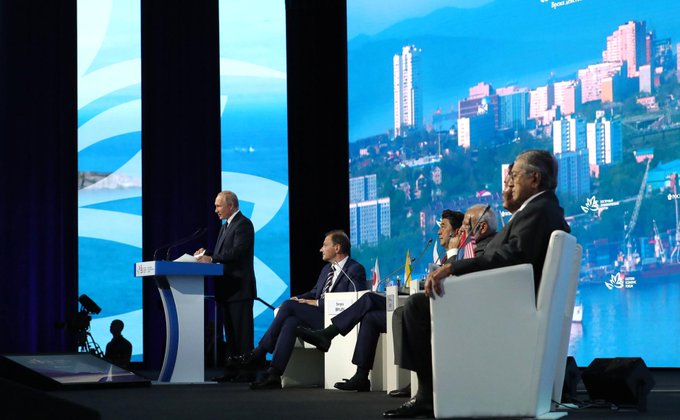
PT -- VLADIMIR PUTIN na Sessão plenária do Fórum Económico Oriental

Excertos da transcrição da sessão plenária do Fórum Económico Oriental

THE PUTIN INTERVIEWS


The Putin Interviews
by Oliver Stone (
FULL VIDEOS) EN/RU/SP/FR/IT/CH


http://tributetoapresident.blogspot.com/2018/07/the-putin-interviews-by-oliver-stone.html


TRIBUTE TO A PRESIDENT


NA PRMEIRA PESSOA

Um auto retrato surpreendentemente sincero do Presidente da Rússia, Vladimir Putin

CONTEÚDO

Prefácio

Personagens Principais em 'Na Primeira Pessoa'

Parte Um: O Filho

Parte Dois: O Estudante

Parte Três: O Estudante Universitário

Parte Quatro: O Jovem especialista

Parte Cinco: O Espia

Parte Seis: O Democrata

Parte Sete: O Burocrata

Parte Oito: O Homem de Família

Parte Nove: O Político

Apêndice: A Rússia na Viragem do Milénio


contaminação nos Açores


Subtitled in EN/PT

Click upon the small wheel at the right side of the video and choose your language.


convegno firenze 2019