GIULIETTO CHIESA

FREE JULIAN ASSANGE

WWIII + S SITE


CROATIAN   ENGLISH   GREEK   NEDERLANDS   POLSKI   PORTUGUESE   ROMANIAN  SPANISH  РУССКИЙ

What part will your country play in World War III?

By Larry Romanoff

The true origins of the two World Wars have been deleted from all our history books and replaced with mythology. Neither War was started (or desired) by Germany, but both at the instigation of a group of European Zionist Jews with the stated intent of the total destruction of Germany. The documentation is overwhelming and the evidence undeniable. (1) (2) (3) (4) (5) (6) (7) (8) (9) (10) (11)

That history is being repeated today in a mass grooming of the Western world’s people (especially Americans) in preparation for World War III – which I believe is now imminent. 

READ MORE


Showing posts with label Nuclear arsenal. Show all posts

Friday, March 27, 2020

Pandemic Reveals Misplaced Priorities


April 2020
By 
Daryl G. Kimball


For decades, national security and health experts have warned of the risks of global threats that are simply too big for one country to handle, such as disease pandemics, climate change, and nuclear war. For many years, the response of our national and global leaders has fallen short.
Twenty years ago, John Steinbruner, then the chair of the Arms Control Association Board of Directors, warned in his book Principles of Global Security that globalization is generating “a new class of security problems in which dispersed processes pose dangers of large magnitude and incalculable probability.” He argued that policymakers “will have to shift from contingency reaction to anticipatory prevention” and “this will have to be done in global coalition.”
Unfortunately, U.S. spending priorities and modes of thinking about security have been become increasingly defined in military terms. Congress provided a record $746 billion for national defense in fiscal year 2020. U.S. arms manufacturers dominate the global arms trade and help fuel regional conflicts that undermine human development. Making matters worse, the Trump administration’s nationalist “America First” foreign policy has made it even more difficult for the world’s leading nations to work together on the toughest global challenges.
Today, the novel coronavirus (COVID-19) pandemic, which threatens the lives and livelihoods of millions worldwide, has laid bare the terrible human cost of these misplaced policy choices.
As the scope and scale of the coronavirus threat began to reveal itself in January and February, the Trump administration focused on other matters. For example, the administration in February asked Congress for $44.5 billion in fiscal year 2021 for programs to maintain and upgrade the U.S. nuclear arsenal, a 19 percent increase above the previous year.
The U.S. government spends tens of billions of taxpayer dollars to maintain a massive nuclear arsenal capable of destroying the planet many times over. Meanwhile, it does not have a stockpile of masks large enough to protect front-line health care workers who are battling COVID-19 and is proposing to cut programs that help provide for early disease detection.
The U.S. stockpile of medical supplies includes 12 million medical-grade N95 masks and 30 million surgical masks, which is only about 1 percent of the 3.5 billion needed in a year to deal with a disease pandemic. At the price of $0.50 a mask, it would cost approximately $1.75 billion to build up the N95 stockpile and about $350 million a year to replace expired masks, according to a report published by The War Zone. That is less than the $3.2 billion increase above fiscal year 2020 levels that the Pentagon is seeking for its multiyear programs to sustain and rebuild the U.S. triad of nuclear-armed missiles, submarines, and bombers.
Meanwhile, the administration is proposing to slash by 37 percent the budget request for the Defense Department’s Biological Threat Reduction Program, which “seeks to facilitate detection and reporting of diseases caused by especially dangerous pathogens.” As a result of that program’s previously provided threat reduction training efforts, local officials in Thailand detected the first case of the novel coronavirus there, only days after its initial discovery in Wuhan, China.
Now is the time for Congress to radically scale back the existing plan to replace and upgrade the already excessive U.S. nuclear arsenal, particularly plans for new missiles and bombers, new nuclear warheads, and production infrastructure. This would save billions of taxpayer dollars that should be spent on addressing higher priority human and health security needs.
Making matters even worse, the United States has become part of the problem rather than helping to find viable solutions to counter the most serious global threats.
While the Trump administration is seeking to expand U.S. nuclear capabilities at the expense of programs that address human security needs, it is turning its back on hard-won agreements that have effectively reduced the nuclear threat.
President Donald Trump’s unilateral withdrawal from the 2015 Iran nuclear deal with no viable plan to replace it creates the potential for a new nuclear crisis. Iran’s leaders have retaliated to the reimposition of U.S. sanctions by breaching key limits on their nuclear activities.
In addition, the post-Cold War progress toward reducing the role and number of nuclear weapons has stalled. To date, Trump has failed to take up Russia’s offer to extend the only remaining treaty that limits the world’s two largest nuclear arsenals, the 2010 New Strategic Arms Reduction Treaty. The global nonproliferation and disarmament regime, the best prophylactic against a nuclear pandemic, is under serious threat.
The unfolding COVID-19 outbreak will not only take away the lives of people, but it will change our personal lives, and it will very likely force changes in the international system. If we are to survive well into this century, there must be a profound shift in the way we deal with global security challenges and how we align our scientific, economic, diplomatic, and political resources to address the health, climate, and nuclear dangers that threaten us all.

Monday, December 16, 2019

Ron Henry: Is Nuclear Deterrence Even Possible Today?


12.12.2019 Author: Ron Henry
Column: Politics
MIN34232
Throughout the Cold War the incredibly intimidating destructive capability of nuclear weapons created a red line that neither the US nor the USSR were willing to cross, which compelled them to negotiating their differences even when the parties were equally reluctant to do so. Regrettably, those days seem to be back, as tensions between Russia and China on one side and the US on the other continue flaring even today. That is why one can safely describe nuclear weapons as a core component of prevention of the next major war.
As it’s been pointed out by the director of the UN Institute for Disarmament Research, Renata Dwan the risk of nuclear weapons actually being used these days is at its highest since WWII, which explains why the Doomsday Clock has been set to 11:58 p.m. by the Bulletin of the Atomic Scientists last January.
While American political figures would try to hush up their reliance on nuclear weapons as a key component of ensuring national security, it nevertheless remains instrumental to Washington’s ability to defend itself and its allies. Therefore, it’s highly abnormal that under these circumstances the rapid development of nuclear missile technology remains unregulated by the international community.

Wednesday, May 29, 2019

LOOKING REALITY IN THE EYE


Tony de Brum

LOOKING REALITY IN THE EYE
By Rick Wayman|April 24, 2018
Rick Wayman delivered this talk at the Nuclear Age Peace Foundation’s side event at the United Nations in Geneva on April 24, 2018 entitled “The Trump Nuclear Policy: The Nuclear Posture Review’s Threats to the NPT and Humanity.”
I have a lot to say about the Nuclear Posture Review and the other statements, documents, and tweets that together comprise U.S. nuclear weapons policy under President Trump. We have a limited amount of time, though, so I’ll focus on three concepts that come through in the U.S. document.
In the introduction to the NPR, and repeated later in the body of the document – and subsequently repeated in official statements the US has made – the authors write, “We must look reality in the eye and see the world as it is, not as we wish it to be.”
The glasses they are looking through are very, very dark. Because what they propose over and over in this document is a readiness and a willingness to use nuclear weapons, including to use nuclear weapons first. They unashamedly say that they are ready to resume nuclear testing in response to “geopolitical challenges.”
I dedicated my life to achieving the abolition of nuclear weapons after hearing two survivors of the U.S. atomic bombing of Hiroshima speak when I was 23, just before my two countries of citizenship – the U.S. and UK – invaded Iraq under the false pretenses of weapons of mass destruction.

Thursday, May 9, 2019

David Krieger -- MARTIN LUTHER KING E A BOMBA


MARTIN LUTHER KING E A BOMBA
Por David Krieger|15 de Janeiro de 2019
Imagem relacionada
Martin Luther King, Jr. foi um dos grandes líderes a favor da paz no mundo. Como Gandhi antes dele, foi um firme defensor da não violência. Em 1955, com 26 anos de idade, foi o coordenador do boicote ao autocarro de Montgomery e dois anos depois, foi eleito dirigente da Southern Christian Leadership Conference. Decorrida uma década, receberia o Prémio Nobel da Paz aos 35 anos, que aconteceu dois anos depois dele testemunhar as perspectivas aterrorizantes da guerra nuclear, durante a Crise dos Mísseis de 1962, em Cuba.
O discurso de King, ao receber o Prémio Novel, entregue em Dezembro de 1964, vale a pena ser lido novamente. Ele comparou o avanço tecnológico da Humanidade com o nosso progresso espiritual e constatou o nosso fracasso em manter o ritmo espiritual. Ele disse: “Há uma espécie de pobreza de espírito que está em contraste flagrante com a nossa abundância científica e tecnológica. Quanto mais ricos nos tornamos materialmente, mais pobres nos tornamos moral e espiritualmente. Aprendemos a voar no ar como pássaros e a nadar no mar como peixes, mas não aprendemos a maneira simples de vivermos juntos, como irmãos”.
A enorme lacuna entre o avanço tecnológico da Humanidade e a sua pobreza espiritual levou King a concluir: “Se quisermos sobreviver hoje, devemos eliminar o nosso 'atraso' moral e espiritual. O poder material ampliado significa um perigo agravado, se não houver um crescimento proporcional da alma. Quando o "exterior" da natureza do homem subjuga o "interior", começam a formar-se nuvens negras” no mundo". Ele descobriu que o “atraso” espiritual da Humanidade se exteriorizava através de três problemas correlacionados: injustiça racial, pobreza e guerra.
King chegou à seguinte conclusão: “De alguma forma, devemos transformar a dinâmica da luta do poder mundial da corrida armamentista nuclear negativa, que ninguém pode vencer, numa disputa positiva para aproveitar o génio criativo do Homem, com a finalidade de tornar a paz e a prosperidade numa realidade para todas as nações do mundo. Resumindo, devemos converter a corrida armamentista numa “corrida pela paz”. Se tivermos vontade e determinação para construir a ofensiva de paz, abriremos portas até então bem fechadas e transformaremos a nossa a poesia cósmica, triste e imediata, num cântico de realização criativa."
Um ano antes do dia do seu assassinato, em 4 de abril de 1968, King fez um discurso na Igreja Riverside, em Nova York, atravé do qual foi profundamente crítico em relação à guerra no Vietnam. Muitos dos seus conselheiros próximos insistiram para que ele não falasse e, em vez desse tema, mantivesse a sua atenção focada no movimento pelos direitos civis, mas ele sentiu que havia chegado a hora em que o silêncio é traição e escolheu declarar abertamente a sua posição. Abordou a Guerra do Vietnam dentro do contexto da sua visão moral e falou contra ela para grande descontentamento de Lyndon Johnson e muitos outros dirigentes políticos americanos. Além de falar sobre a guerra, também disse que as armas nucleares nunca derrotariam o comunismo e pediu que recordenássemos as nossas prioridades para lutar a favor da paz em vez da guerra. Ele argumentou: "Uma nação que continua, ano após ano, a esbanjar mais dinheiro com a defesa militar em vez de fomentar programas de elevação social, está a aproximar-se da morte espiritual".
Se ele ainda estivesse connosco, pode haver poucas dúvidas de que King seria um crítico convincente das guerras contínuas dos Estados Unidos, desde o Vietnam até há data e do plano de desbaratar 1 trilião de dólares para modernizar o arsenal nuclear. Desde a sua morte, o fosso entre o nosso avanço tecnológico e os nossos valores espirituais/morais continuou a alargar. Se quisermos ter ainda alguma possibilidade de sair da espiral decadente que conduz à “morte espiritual” da nação americana, é aconselhável escutarmos  a presciência/conhecimento prévio do futuro, que King intuía, e seguir a sua visão de paz.


David Krieger é um dos fundadores da Fundação para a Paz na Era Nuclear e é o presidente desta instituição, desde 1982. 

David Krieger -- MARTIN LUTHER KING AND THE BOMB

MARTIN LUTHER KING AND THE BOMB
By David Krieger|January 15, 2019
Imagem relacionada
Martin Luther King, Jr. was one of the world’s great peace leaders.  Like Gandhi before him, he was a firm advocate of nonviolence.  In 1955, at the age of 26, he became the leader of the Montgomery bus boycott and two years later he was elected the leader of the Southern Christian Leadership Conference.  Within a decade he would receive the Nobel Peace Prize at the age of 35.  It came two years after he witnessed the terrifying prospects of nuclear war during the 1962 Cuban Missile Crisis.
King’s Nobel Lecture, delivered in December 1964, is worth reviewing.  He compared mankind’s technological advancement with our spiritual progress and found us failing to keep pace spiritually.  He said, “There is a sort of poverty of the spirit which stands in glaring contrast to our scientific and technological abundance.  The richer we have become materially, the poorer we have become morally and spiritually.  We have learned to fly the air like birds and swim the sea like fish, but we have not learned the simple act of living together as brothers.”
The yawning gap between mankind’s technological advancement and spiritual poverty led King to draw this conclusion: “If we are to survive today, our moral and spiritual ‘lag’ must be eliminated.  Enlarged material powers spell enlarged peril if there is not proportionate growth of the soul.  When the ‘without’ of man’s nature subjugates the ‘within,’ dark storm clouds begin to form in the world.”  He found that mankind’s spiritual “lag” expressed itself in three interrelated problems: racial injustice, poverty and war.
When King elaborated on war, he spoke of “the ever-present threat of annihilation,” clearly referring to the dangers of nuclear weapons.  Recognizing the dangers of denial, or “rejection” of the truth about the nuclear predicament, he went on, “A world war – God forbid! – will leave only smoldering ashes as a mute testimony of a human race whose folly led inexorably to ultimate death.  So if modern man continues to flirt unhesitatingly with war, he will transform his earthly habitat into an inferno such as even the mind of Dante could not imagine.”
King came to the following realization: “Somehow we must transform the dynamics of the world power struggle from the negative nuclear arms race which no one can win to a positive contest to harness man’s creative genius for the purpose of making peace and prosperity a reality for all of the nations of the world.  In short, we must shift the arms race into a ‘peace race.’  If we have the will and determination to mount such a  peace offensive, we will unlock hitherto tightly sealed doors and transform our imminent cosmic elegy into a psalm of creative fulfillment.”
One year to the day prior to his assassination on April 4, 1968, King gave a speech at the Riverside Church in New York City that was highly critical of the war in Vietnam.  Many of his close advisors urged him not to speak out and to instead keep his focus on the civil rights movement, but he felt the time had come when silence is betrayal and chose to state his position.  He put the Vietnam War squarely within his moral vision and spoke against it to the great displeasure of Lyndon Johnson and many other American political leaders. In addition to speaking his mind on the war, he also said that nuclear weapons would never defeat communism and called for reordering our priorities to pursue peace rather than war.  He argued, “A nation that continues year after year to spend more money on military defense than on programs of social uplift is approaching spiritual death.”
Were he still with us, there can be little doubt that King would be highly critical of America’s continuing wars since Vietnam, and its plan to spend $1 trillion on modernizing its nuclear arsenal.  Since his death, the gap between our technological prowess and our spiritual/moral values has continued to widen.   We would do well to listen to King’s insights and follow his vision if we are to have any chance of pulling out of the descending spiral leading to the nation’s “spiritual death.”

Manifestações

2007 Speech

UKRAINE ON FIRE

Discurso do Presidente da Rússia, Vladimir Putin, na manhã do dia 24 de Fevereiro de 2022

Discurso do Presidente da Rússia, Vladimir Putin, Tradução em português


Presidente da Rússia, Vladimir Putin: Cidadãos da Rússia, Amigos,

Considero ser necessário falar hoje, de novo, sobre os trágicos acontecimentos em Donbass e sobre os aspectos mais importantes de garantir a segurança da Rússia.

Começarei com o que disse no meu discurso de 21 de Fevereiro de 2022. Falei sobre as nossas maiores responsabilidades e preocupações e sobre as ameaças fundamentais que os irresponsáveis políticos ocidentais criaram à Rússia de forma continuada, com rudeza e sem cerimónias, de ano para ano. Refiro-me à expansão da NATO para Leste, que está a aproximar cada vez mais as suas infraestruturas militares da fronteira russa.

É um facto que, durante os últimos 30 anos, temos tentado pacientemente chegar a um acordo com os principais países NATO, relativamente aos princípios de uma segurança igual e indivisível, na Europa. Em resposta às nossas propostas, enfrentámos invariavelmente, ou engano cínico e mentiras, ou tentativas de pressão e de chantagem, enquanto a aliança do Atlântico Norte continuou a expandir-se, apesar dos nossos protestos e preocupações. A sua máquina militar está em movimento e, como disse, aproxima-se da nossa fronteira.

Porque é que isto está a acontecer? De onde veio esta forma insolente de falar que atinge o máximo do seu excepcionalismo, infalibilidade e permissividade? Qual é a explicação para esta atitude de desprezo e desdém pelos nossos interesses e exigências absolutamente legítimas?

Read more

ARRIVING IN CHINA

Ver a imagem de origem

APPEAL


APPEAL TO THE LEADERS OF THE NINE NUCLEAR WEAPONS' STATES

(China, France, India, Israel, North Korea, Pakistan, Russia, the United Kingdom and the United States)

中文 DEUTSCH ENGLISH FRANÇAIS ITALIAN PORTUGUESE RUSSIAN SPANISH ROMÂNA

manlio + maria

MOON OF SHANGHAI site

LR on CORONAVIRUS

LARRY ROMANOFF on CORONAVIRUS

Read more at Moon of Shanghai

World Intellectual Property Day (or Happy Birthday WIPO) - Spruson ...


Moon of Shanghai

L Romanoff

Larry Romanoff,

contributing author

to Cynthia McKinney's new COVID-19 anthology

'When China Sneezes'

When China Sneezes: From the Coronavirus Lockdown to the Global Politico-Economic Crisis

manlio

James Bacque

BYOBLU

irmãos de armas


Subtitled in PT, RO, SP

Click upon CC and choose your language.


manlio

VP


Before the Presidential Address to the Federal Assembly.


The President of Russia delivered
the Address to the Federal Assembly. The ceremony took
place at the Manezh Central Exhibition Hall.


January
15, 2020


vp

President of Russia Vladimir Putin:

Address to the Nation

Address to the Nation.

READ HERE


brics


Imagem

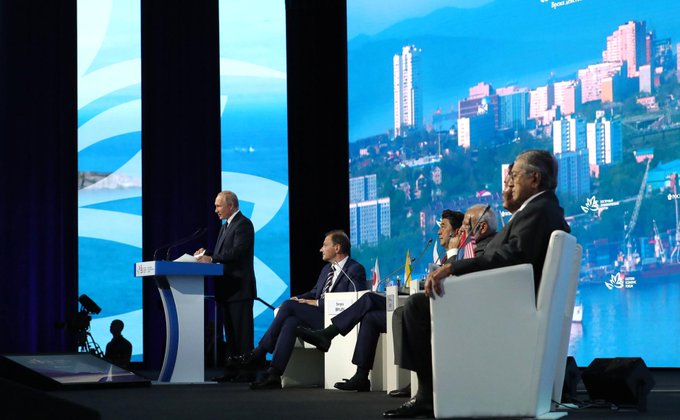
PT -- VLADIMIR PUTIN na Sessão plenária do Fórum Económico Oriental

Excertos da transcrição da sessão plenária do Fórum Económico Oriental

THE PUTIN INTERVIEWS


The Putin Interviews
by Oliver Stone (
FULL VIDEOS) EN/RU/SP/FR/IT/CH


http://tributetoapresident.blogspot.com/2018/07/the-putin-interviews-by-oliver-stone.html


TRIBUTE TO A PRESIDENT


NA PRMEIRA PESSOA

Um auto retrato surpreendentemente sincero do Presidente da Rússia, Vladimir Putin

CONTEÚDO

Prefácio

Personagens Principais em 'Na Primeira Pessoa'

Parte Um: O Filho

Parte Dois: O Estudante

Parte Três: O Estudante Universitário

Parte Quatro: O Jovem especialista

Parte Cinco: O Espia

Parte Seis: O Democrata

Parte Sete: O Burocrata

Parte Oito: O Homem de Família

Parte Nove: O Político

Apêndice: A Rússia na Viragem do Milénio


contaminação nos Açores


Subtitled in EN/PT

Click upon the small wheel at the right side of the video and choose your language.


convegno firenze 2019