GIULIETTO CHIESA

FREE JULIAN ASSANGE

WWIII + S SITE


CROATIAN   ENGLISH   GREEK   NEDERLANDS   POLSKI   PORTUGUESE   ROMANIAN  SPANISH  РУССКИЙ

What part will your country play in World War III?

By Larry Romanoff

The true origins of the two World Wars have been deleted from all our history books and replaced with mythology. Neither War was started (or desired) by Germany, but both at the instigation of a group of European Zionist Jews with the stated intent of the total destruction of Germany. The documentation is overwhelming and the evidence undeniable. (1) (2) (3) (4) (5) (6) (7) (8) (9) (10) (11)

That history is being repeated today in a mass grooming of the Western world’s people (especially Americans) in preparation for World War III – which I believe is now imminent. 

READ MORE


Showing posts with label The Iran Nuclear Deal. Show all posts

Saturday, January 11, 2020

Merkel and Putin agree Iran nuclear deal should be preserved by all means


Merkel and Putin agree Iran nuclear deal should be preserved by all means

President Vladimir Putin and Chancellor Angela Merkel have agreed that preserving the Iran nuclear deal is a matter of “tremendous importance” stressing that the agreement should be kept by all means necessary.
Both leaders believe that the 2015 agreement, also known as the Joint Comprehensive Plan of Action (JPCOA), still can and should be preserved, despite the latest spike in tensions sparked by the US assassination of a top Iranian general.
Speaking to journalists in Moscow following her meeting with Putin, Merkel said that “everything must be done to keep the JCPOA going” and vowed to use “all the diplomatic tools to help this agreement.”
It is not perfect but it is still an agreement and it involves responsibilities for all the parties involved. And we want to keep it.
Putin also described the deal as “tremendously important” and said that both Moscow and Berlin agree that all parties need to “come back to the deal.”
After the US refused to abide by the agreement, Iran announced suspension of its obligations as well. I would like to underscore that these obligations were voluntarily embraced by Iran. Iran is ready to come back to full compliance with the JPCOA.
Iran has rolled back all the limitations that it committed to under the 2015 nuclear deal, following the US assassination of Quds Force commander, Major General Qassem Soleimani, as well as a barrage of crippling sanctions imposed by Washington after America itself left the agreement.
Putin further expressed hope that a special-purpose vehicle called INSTEX Europe, created to facilitate trade with Iran in circumvention of US sanctions, would soon “be up and running” and that European nations “would deliver on their promise to create an independent mechanism free of the dollar influence.
So far, Europe’s endeavors in this area have not been particularly successful. The mechanism was originally created in early 2019, but was apparently limited to what the European nations called high-priority “humanitarian goods,” such as food and medical supplies. Meanwhile, European companies have been in no rush to trade with Iran, out of fear of losing the American market as a result of possible sanctions.

Merkel in Moscow: As Trump pushes his weight around, Russia-Germany relations defrost

Thursday, July 11, 2019

With Further Nuclear Moves, Iran Seeks to LeveragePromised Sanctions Relief | P4+1 and Iran Nuclear Deal Alert, July 9, 2019


Authored by Kelsey Davenport and Daryl Kimball on July 9, 2019
With Further Nuclear Moves, Iran Seeks to Leverage Promised Sanctions Relief
Iran announced July 8 that it has started enriching uranium at levels in excess of the limit of 3.67 percent uranium-235 set by the 2015 nuclear deal, known as the Joint Comprehensive Plan of Action (JCPOA).
The move is the second troubling retaliatory measure in two weeks by Iran to walk back its compliance with the JCPOA. Last week, Iran exceeded the 300-kilogram limit of its stockpile of low enriched uranium set by the JCPOA.
Iran’s moves to curtail compliance with the JCPOA have long been expected. Iranian President Hassan Rouhani said May 8 that Iran would no longer be bound by the 300-kilogram LEU cap and would exceed the cap on enrichment levels in 60 days if the remaining parties to the nuclear deal did not deliver on sanctions relief.
Iran announced July 1 that it breached the 300-kilogram limit on uranium gas enriched to 3.67 percent (202 kilograms of uranium by weight) and the International Atomic Energy Agency (IAEA) later confirmed that Iran has exceeded the limit.
While Iran’s actions clearly violate the deal, a slight excess of uranium enriched to 3.67 percent does not pose an immediate proliferation risk or significantly reduce the time it would take Iran to produce enough weapons-grade material for one bomb—which is 12 months or more as a result of the combined limits established by the JCPOA. After that, it would take Iran additional time to fabricate a core, fit it with an explosives package, and integrate it into a delivery system. (See our fact file, “In Perspective: Iran and Steps Necessary to Build a Nuclear Bomb.”)
As such, the Iranian actions do not appear to be an attempt to race to acquire nuclear weapons, but rather a calibrated effort to secure economic relief Iran was promised by the other parties to the JCPOA.
The spokesperson for the Atomic Energy Organization of Iran, Behrouz Kamalvandi, said July 7 that Iran notified the IAEA of its intentions and will begin the process of increasing enrichment above 3.67 percent “within the next few hours.” Kamalvandi announced July 8 that the level of Iran’s uranium enrichment has surpassed the 4.5 percent level.
On July 5, Ali Akbar Velayati, an adviser to Iran’s Supreme Leader, suggested that enriching to a level of five percent was necessary for electricity generation at the Bushehr power plant. Other Iranian officials had previously referenced increasing enrichment levels to five percent uranium-235 and to 20 percent uranium-235. Iran enriched uranium to 20 percent before the JCPOA, ostensibly for its Tehran Research Reactor, but currently has no practical need for uranium enriched to either five or 20 percent.
The fuel for Iran’s civil nuclear power reactor at Bushehr is provided by Russia and the JCPOA ensures that Iran can import uranium fuel enriched to 20 percent in specific amounts for its Tehran Research Reactor. The United States has, for now, waived sanctions allowing fuel transfers for both reactors to continue.
But the extent of the proliferation risk depends on how many centrifuges Iran begins to use for higher-level enrichment and how much of the material produced is stockpiled. If Iran produces and stockpiles uranium enriched to either level, it would begin to shorten Iran’s so-called breakout time, or the time it takes to produce enough nuclear material for a bomb, which currently stands at about 12 months.

Wednesday, July 10, 2019

Prof Michel Chossudovsky --A Major Conventional War Against Iran Is an Impossibility. Crisis within the US Command Structure

In this article, we examine America’s war strategies, including its ability to launch an all out theater war against the Islamic Republic on Iran.
A follow-up article will focus on the History of US War Plans against Iran as well as the complexities underlying the Structure of Military Alliances. 

Thursday, July 4, 2019

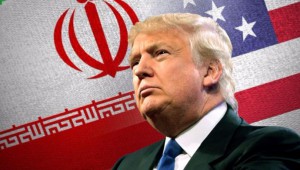
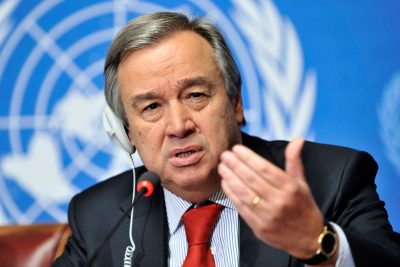
The Iran Nuclear Deal: Letter to UN Secretary-General Antonio Guterres

The Iran Nuclear Deal: Letter to UN Secretary-General Antonio Guterres

Signed by Prominent Academics and Activists


Honorable Antonio Guterres, 
Secretary General of the United Nations
New York, New York
Hon. Secretary General,
You are well aware that in 2015 with the support of all permanent members of the UNSC (China, France, Russia, UK, and US) plus Germany and Iran, the Joint Comprehensive Plan of Action (JCPOA) was drafted, upon which UNSC issued Resolution 2231, replacing all previous UNSC resolutions targeting Iran’s nuclear program.
With the JCPOA nuclear deal in place, not only was the shadow of war and destruction lifted, but after a long time, the people of Iran began to enjoy relative economic stability and security. According to the International Atomic Energy Agency (I.A.E.A.) Iran has continued to carry out all its obligations under the JCPOA. But, in May of 2018, the United States government arbitrarily decided to abrogate the Agreement—disregarding the SCR 2231.  Clearly, this action has caused crises for the world, the region and the people of Iran.
After the US recklessly abrogated the UNSC-backed agreement, all previous US sanctions against Iran were re-imposed even more rigorously, harshly affecting Iran’s economy and causing inhumane suffering of the Iranian people.
Because of the dramatic events following the US departure from the SCR-backed Agreement, the Iranian people are wondering as to why the permanent members of the UN and his Excellency have been basically passive on this significant and consequential matter? It is understood that the UN Secretary General works with limited parameters; nevertheless, Iranians expected that the Secretary General would investigate and respond intently to the outcomes of a unilateral action that clearly defies all international norms.
In spite of a profound concern from international agencies, the Trump Administration was never able to provide any convincing rationale as to why it undermined the international consensus. Subsequently, under the pretext of “national security,” the American government deployed military naval ships and personnel to the Persian Gulf—which comprised a naval carrier, B-52 bombers, F35 jets, Patriot missiles and announced dispatching few thousands of new military personnel. Doesn’t all this military build-up and provocations amount to threats of war? All major European countries, plus Russia and China, have strongly argued that JCPOA has adequately addressed the international nuclear proliferation concerns, has deescalated tensions, and were justifiably hoping that a successful implementation of JCPOA would lead to stability in an otherwise volatile region.
Economic sanctions, threats of military aggression and war, are very consequential and impact the lives of the ordinary people, to the extent that public advocates consider this a violation of their human rights. Civil society advocates in Iran see military threats to the country, as direct aggression against its people.
By now, keen observers know that the hawkish conduct of the American government in the past few decades has led to the general unsettling of the region and the weakening of local democratic movements. In the long run, haven’t these hawkish policies derailed the natural pace of democratic development in these countries?
Iranian people have struggled for the development of civil society and democratic institutions for a considerable time.  In the past century alone, Iran witnessed three major historical events– the Constitutional Revolution of 1905, the democratic movement of Oil Nationalization of 1951, and the Revolution of 1979 that overthrew the Western backed dictator. The progress of an indigenous democratic movement requires a crisis-free environment to nurture. American-backed sanctions and threats of military aggression would undermine such a democratic movement, and create the grounds for increased domestic repression by the authorities.
In the past few weeks there have been some mediation efforts to stabilize the dangerous situation facing the Iranian people. We, the undersigned, appeal to you to use your position as Secretary General of the UN to request the US returns to its obligations under JCPOA, lift the economic sanctions, halt the military threats against the people and the country of Iran, and stop fictitious provocations that clearly could lead to military hostilities and expose the entire region to detrimental violence.
Regards,
cc:  Mr. Jean-Claude Juncker, President of the European Commission
Mrs. Michelle Bachelet Jeria, High Commissioner for Human Rights
Mrs. Dunja Mijatović, Commissioner for Human Rights, Council of Europe
Signatories
  • Ervand Abrahamian, Distinguished Professor Emeritus of History, Baruch College
  • Houshang Ardavan, Emeritus Fellow, the Institute of Astronomy, University of Cambridge, UK
  • Arshin Adib-Moghaddam, Professor in Global Thought and Comparative Philosophies at SOAS, University of London
  • Mohammad H. Ahmadi, Professor Emeritus of Mathematics, University of Wisconsin
  • Tim Anderson, Senior Lecturer in Sociology (Sydney University), author, civil rights campaigner and peace activist
  • Bahar Bastani, MD, Professor of Medicine, St. Louis Univ. Medical Center
  • Noam Chomsky, Professor of Linguistics Emeritus, MIT
  • Michel Chossudovsky, Professor of Economics Emeritus, University of Ottawa, Director, Centre for Research on Globalization (CRG), Montreal
  • Hamid Dabashi, Hagop Kevorkian Professor of Iranian Studies and Comparative Literature, Columbia University
  • Reza Delghavi, Retired Brooklyn borough City Planner
  • Abbas Edalat – Professor of Computer Science and Math, Imperial College of London
  • Nuredin Gharavi, Former Governor of East Azerbaijan, freelance researcher
  • Hossein Hamedani, Professor of Mathematics, Marquette University
  • Tim Hayward, Professor of environmental political theory at the University of Edinburgh and director of the university’s Just World Institute
  • Fareed Marjaee – City Planner, Writer, Civil Society Advocate
  • Jamshid Marvasti MD, Asst Clinical Professor of Psychiatry, University of New England, School of Medicine.
  • Mahmood Monshipouri, Chair/Professor, Dept. of International Relations, San Francisco State Un (Univ.)
  • Behrad Nakhaee, Nuclear Engineer, NPT Group member, (American Nuclear Society)
  • Janan Najeeb, President of Milwaukee Muslim Women’s Coalition
  • Azam Niroomand-Rad, Emeritus Prof. of Radiation Medicine, Georgetown Un Medical Center
  • Ali Jafarian, Emeritus Professor, University of New Haven
  • Farid Razi – Civil Society Activist
  • Piers Robinson, Co-Director, Organization for Propaganda Studies, UK
  • Asghar Rastegar, professor of Medicine, Director, Global Health Program,Co-Director, Yale-Stanford J&J Global Health Scholar Program
  • Eskandar Sadeghi-Boroujerdi, Professor in Comparative Political Theory, Goldsmiths, University of London
  • Muhammad Sahimi, Professor of Chemical Engineering & Materials Science, and the NIOCChair in Petroleum Engineering, University of Southern California
  • Mehrnaz Shahabi, Psycho-Social Researcher
  • Ali Shakibai, MD, Cardiologist, Avon, CT
  • Majid Tavallaei, Sr. Agricultural Manager at California, Freelance Researcher, Former Editor-in-Chief of “NAMEH”magazine
  • Ashkebous Talebi, Educator at University of Maryland

Manifestações

2007 Speech

UKRAINE ON FIRE

Discurso do Presidente da Rússia, Vladimir Putin, na manhã do dia 24 de Fevereiro de 2022

Discurso do Presidente da Rússia, Vladimir Putin, Tradução em português


Presidente da Rússia, Vladimir Putin: Cidadãos da Rússia, Amigos,

Considero ser necessário falar hoje, de novo, sobre os trágicos acontecimentos em Donbass e sobre os aspectos mais importantes de garantir a segurança da Rússia.

Começarei com o que disse no meu discurso de 21 de Fevereiro de 2022. Falei sobre as nossas maiores responsabilidades e preocupações e sobre as ameaças fundamentais que os irresponsáveis políticos ocidentais criaram à Rússia de forma continuada, com rudeza e sem cerimónias, de ano para ano. Refiro-me à expansão da NATO para Leste, que está a aproximar cada vez mais as suas infraestruturas militares da fronteira russa.

É um facto que, durante os últimos 30 anos, temos tentado pacientemente chegar a um acordo com os principais países NATO, relativamente aos princípios de uma segurança igual e indivisível, na Europa. Em resposta às nossas propostas, enfrentámos invariavelmente, ou engano cínico e mentiras, ou tentativas de pressão e de chantagem, enquanto a aliança do Atlântico Norte continuou a expandir-se, apesar dos nossos protestos e preocupações. A sua máquina militar está em movimento e, como disse, aproxima-se da nossa fronteira.

Porque é que isto está a acontecer? De onde veio esta forma insolente de falar que atinge o máximo do seu excepcionalismo, infalibilidade e permissividade? Qual é a explicação para esta atitude de desprezo e desdém pelos nossos interesses e exigências absolutamente legítimas?

Read more

ARRIVING IN CHINA

Ver a imagem de origem

APPEAL


APPEAL TO THE LEADERS OF THE NINE NUCLEAR WEAPONS' STATES

(China, France, India, Israel, North Korea, Pakistan, Russia, the United Kingdom and the United States)

中文 DEUTSCH ENGLISH FRANÇAIS ITALIAN PORTUGUESE RUSSIAN SPANISH ROMÂNA

manlio + maria

MOON OF SHANGHAI site

LR on CORONAVIRUS

LARRY ROMANOFF on CORONAVIRUS

Read more at Moon of Shanghai

World Intellectual Property Day (or Happy Birthday WIPO) - Spruson ...


Moon of Shanghai

L Romanoff

Larry Romanoff,

contributing author

to Cynthia McKinney's new COVID-19 anthology

'When China Sneezes'

When China Sneezes: From the Coronavirus Lockdown to the Global Politico-Economic Crisis

manlio

James Bacque

BYOBLU

irmãos de armas


Subtitled in PT, RO, SP

Click upon CC and choose your language.


manlio

VP


Before the Presidential Address to the Federal Assembly.


The President of Russia delivered
the Address to the Federal Assembly. The ceremony took
place at the Manezh Central Exhibition Hall.


January
15, 2020


vp

President of Russia Vladimir Putin:

Address to the Nation

Address to the Nation.

READ HERE


brics


Imagem

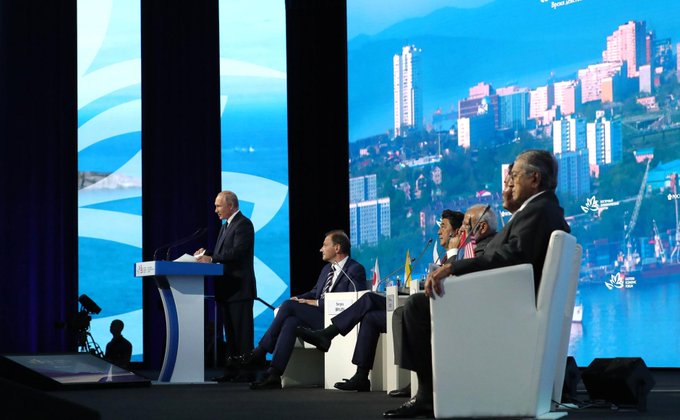
PT -- VLADIMIR PUTIN na Sessão plenária do Fórum Económico Oriental

Excertos da transcrição da sessão plenária do Fórum Económico Oriental

THE PUTIN INTERVIEWS


The Putin Interviews
by Oliver Stone (
FULL VIDEOS) EN/RU/SP/FR/IT/CH


http://tributetoapresident.blogspot.com/2018/07/the-putin-interviews-by-oliver-stone.html


TRIBUTE TO A PRESIDENT


NA PRMEIRA PESSOA

Um auto retrato surpreendentemente sincero do Presidente da Rússia, Vladimir Putin

CONTEÚDO

Prefácio

Personagens Principais em 'Na Primeira Pessoa'

Parte Um: O Filho

Parte Dois: O Estudante

Parte Três: O Estudante Universitário

Parte Quatro: O Jovem especialista

Parte Cinco: O Espia

Parte Seis: O Democrata

Parte Sete: O Burocrata

Parte Oito: O Homem de Família

Parte Nove: O Político

Apêndice: A Rússia na Viragem do Milénio


contaminação nos Açores


Subtitled in EN/PT

Click upon the small wheel at the right side of the video and choose your language.


convegno firenze 2019