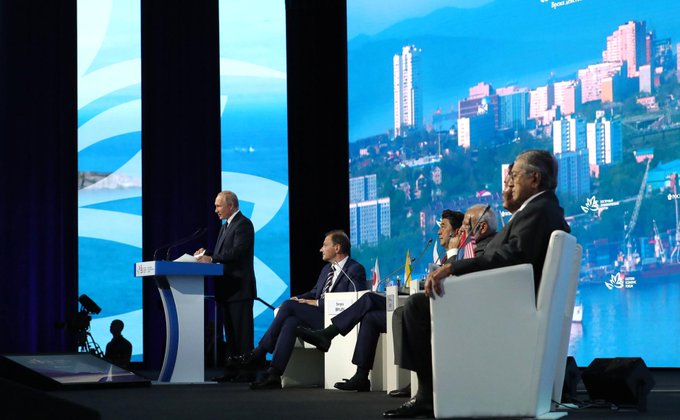
Kissinger’s Davos speech, at the age of 99, shows he never understood what he was doing.
Eric Zuesse, July 05, 2022

Nixon's Secretary of State, Henry Kissinger, assisted the U.S. Government’s evils in Vietnam, but also helped China to moderate away from Mao’s rigid Marxism. (Mao considered himself to be applying Marx’s views to a then still predominantly rural national culture.) In both matters, he was reflecting the policy preferences of Republican-Party billionaires, at the time, but also of Democratic Party billionaires, because the billionaire-class, at that time, were just coming away from their prior hope to end up in control of Vietnam, to make it another satellite-nation or vassal or ‘allied’ country, and were looking forward to using both China and Indo-China (including Vietnam) as low-wage workers to employ in order to compete against and keep in check the wages that they would need to pay to their American workers. Consequently, when Kissinger was a part of the U.S. aristocracy’s power-structure, he represented the aristocracy itself, against workers. He was helping to drive down the wages they were paying, and these wages were overwhelmingly being paid to American workers, because the increasingly open-borders international order had not yet established itself as it subsequently did. Stockholders were then even more afraid of potentially rising American wages than they were eager to exploit existing far-lower third-world wages. Henry Kissinger was good for business — especially for America’s giant firms, which would also be out-competing against small “mom and pop” local American businesses, by importing from countries such as Vietnam and China products that would underprice U.S.-made goods, so that their giant firms would also be benefitting by taking a cut from importing those foreign-made goods into the U.S. market. All of this international outsourcing would, for these reasons, increase the inequality of wealth in America — the ratio of the collective wealth of billionaires to the collective wealth of the bottom 50% of Americans. And that ratio did soar starting at around 1970, when Kissinger was part of the U.S. power-structure. He was good for them — the owners. But did he know what he was doing? Or did he instead actually believe the rationalizations that the owners were paying for him to believe and to spout publicly? He was their agent, but was he also their fool?