GIULIETTO CHIESA

FREE JULIAN ASSANGE

WWIII + S SITE


CROATIAN   ENGLISH   GREEK   NEDERLANDS   POLSKI   PORTUGUESE   ROMANIAN  SPANISH  РУССКИЙ

What part will your country play in World War III?

By Larry Romanoff

The true origins of the two World Wars have been deleted from all our history books and replaced with mythology. Neither War was started (or desired) by Germany, but both at the instigation of a group of European Zionist Jews with the stated intent of the total destruction of Germany. The documentation is overwhelming and the evidence undeniable. (1) (2) (3) (4) (5) (6) (7) (8) (9) (10) (11)

That history is being repeated today in a mass grooming of the Western world’s people (especially Americans) in preparation for World War III – which I believe is now imminent. 

READ MORE


Showing posts with label jens stoltenberg. Show all posts

Monday, June 22, 2020

IT -- Manlio Dinucci -- La NATO al timone della politica estera italiana


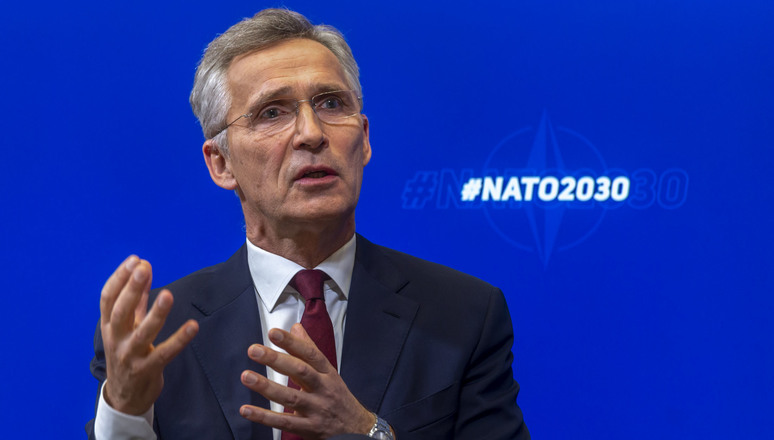
NATO Secretary General Jens Stoltenberg launched his outline for NATO 2030 in an online conversation with the Atlantic Council and the German Marshall Fund of the United States


L’Arte della guerra

La NATO al timone

della politica estera italiana

 Manlio Dinucci


I ministri della Difesa della Nato (per l’Italia Lorenzo Guerini, Pd), riuniti in videoconferenza il 17/18 giugno, hanno preso una serie di «decisioni per rafforzare la deterrenza dell’Alleanza». Nessuno però in Italia ne parla, né sui media (social compresi) né nel mondo politico, dove su tutto questo regna un assoluto silenzio multipartisan. Eppure tali decisioni, dettate fondamentalmente da Washington e sottoscritte per l’Italia dal ministro Guerini, tracciano le linee guida non solo della nostra politica militare, ma anche di quella estera.

Anzitutto – annuncia il segretario generale Jens Stoltenberg – «la Nato si sta preparando a una possibile seconda ondata del Covid-19», contro cui ha già mobilitato in Europa oltre mezzo milione di soldati. Stoltenberg non chiarisce come la Nato possa prevedere una possibile seconda pandemia del virus con un nuovo lockdown. Su un punto però è chiaro: ciò «non significa che altre sfide siano scomparse».

La maggiore – sottolineano i ministri della Difesa – proviene dal «comportamento destabilizzante e pericoloso della Russia», in particolare dalla sua «irresponsabile retorica nucleare, mirante a intimidire e minacciare gli Alleati Nato». Essi rovesciano in tal modo la realtà, cancellando il fatto che è stata la Nato, finita la Guerra fredda, a estendersi a ridosso della Russia con le sue forze e basi nucleari, soprattutto statunitensi. È stata metodicamente attuata, con la regia di Washington, una strategia mirante a creare in Europa crescenti tensioni con la Russia.

Per decidere nuove misure militari contro la Russia i ministri della Difesa si sono riuniti nel Gruppo di pianificazione nucleare, presieduto dagli Stati uniti. Non si sa quali decisioni in materia nucleare abbia sottoscritto il ministro Guerini per conto dell’Italia. È comunque chiaro che, partecipando al Gruppo e ospitando armi nucleari Usa (utilizzabili anche dalla nostra aeronautica), l’Italia viola il Trattato di non-proliferazione e respinge il Trattato Onu per la proibizione delle armi nucleari.

Stoltenberg si limita a dire: «Oggi abbiamo deciso ulteriori passi per mantenere sicuro ed efficiente il deterrente nucleare Nato in Europa». Tra questi passi vi è sicuramente il prossimo arrivo, anche in Italia, delle nuove bombe nucleari Usa B61-12.

L’altra crescente «sfida», di cui hanno parlato i ministri della Difesa, è quella della Cina, che per la prima volta è «in cima all’agenda della Nato». La Cina è partner commerciale di molti alleati, ma allo stesso tempo «investe pesantemente in nuovi sistemi missilistici che possono raggiungere tutti i paesi Nato», spiega Stoltenberg.

Ø  La Nato comincia così a presentare la Cina come militarmente minacciosa.

Ø  Allo stesso tempo presenta come pericolosi gli investimenti cinesi nei paesi dell’Alleanza.

In base a tale premessa i ministri della difesa hanno aggiornato le linee guida per la «resilienza nazionale», miranti a impedire che l’energia, i trasporti e le telecomunicazioni, in particolare il 5G, finiscano sotto «proprietà e controllo stranieri» (leggi «cinesi»).

Queste le decisioni sottoscritte dall’Italia alla riunione Nato dei ministri della Difesa. Esse vincolano il nostro paese a una strategia di crescente ostilità soprattutto verso Russia e Cina, esponendoci a rischi sempre più gravi e rendendo franoso il terreno su cui poggiano gli stessi accordi economici.

È una strategia a lungo termine, come dimostra il lancio del progetto «Nato 2030», fatto dal segretario generale Stoltenberg l’8 giugno per «rafforzare l’Alleanza militarmente e politicamente» includendo paesi come Australia (già invitata alla riunione dei ministri della Difesa), Nuova Zelanda, Giappone e altri asiatici, in chiara funzione anti-cinese.

Per il progetto della GrandeNato Globale 2030 è stato formato un gruppo di 10 consiglieri, tra cui la prof. Marta Dassù, già consigliera di politica estera nel governo D'Alema prima e durante la guerra Nato alla Jugoslavia, a cui l’Italia partecipò nel 1999, sotto comando Usa, con le sue basi e i suoi bombardieri.

Il manifesto, 23 giugno 2020

Tuesday, December 3, 2019

NATO’s 4th crises: The 2 percent goal as defence illiteracy


By JO on December 2, 2019
NATO’s 4th crises: The 2 per cent goal as defence illiteracy
December 2, 2019
Political
NATO’s London Summit on December 3 and 4, 2019 displays the deep political crisis of the 70-year-old alliance: Only a dinner and a short meeting, no statement to be issued, quarrels among the leading military members, accusations, substantial differences on Syria and many other issues, the deepest-ever Transatlantic conflict and the usual issues of burden-sharing.
Legal
But the political dimension of NATO’s crisis is only one. There is also a legal crisis. You’ll recognize it if you care to read the NATO Treaty text – something academic and media people don’t generally seem to have done. They would then have noticed that the Alliance of 2019 consistently operates outside – indeed in violation of – its own goals, purposes and values. For instance, the UN Charter which should be NATO’s guideline has been violated on a permanent basis for decades – such as in its out-of-area bombings of Yugoslavia with no UN mandate.
The contempt shown for international law in general and the UN Charter in particular is an integral part of NATO’s existential crisis.
Moral
And, third, there is a moral dimension to NATO’s crisis. Of course, no one talks about it.
It’s the simple fact that no war that individual NATO members states or NATO as NATO have engaged in can be termed anything but predictable fiascos when judged by the alliance’s own stated goals and criteria – just think of Vietnam, Yugoslavia, Afghanistan, Iraq, Libya, Syria… all crystal clear moral catastrophes causing unspeakable suffering, death and destruction to millions upon millions while achieving none of the stated goals that were set to explain and legitimize these wars such as creating democracy, respecting human rights, liberating women or stopping alleged genocides.
By now, the world should have been told enough lies about NATO’s benevolent motives, policies and actions for taxpaying citizens to mobilize resistance to it.
These three crises can all be related to the response of the Western world to the demise of the Soviet Union and the Warsaw Pact 30 years ago – i.e. to the choice to expand NATO and exploiting the weakness of Russia.
Intellectual
The last and perhaps most-hidden-of-all crisis is NATO’s intellectual crisis.
It’s now an alliance that operates in a kind of echo chamber with little, or no, sense of the realities of the world. It’s there for its own sake. When you listen to its Secretary-General – not only Stoltenberg but Fogh Rasmussen and earlier ones – you sense a level of creativity and intellectualism that reminds you of leaders who also happened to be Secretaries-General such as, say, Leonid Breznev.
Irrespective of some little objective analysis of the situation, NATO sings only one tune: There are new threats all the time, we must arm more, we need new and better weapons and we must, therefore, increase military expenditures.
And how is it legitimized?
By uttering mantras. No matter what NATO and its members choose to do, it is simply stated without a trace of argument or documentation that more money will increase four things: Defence, security, stability and peace. And be good for basic Western values such as freedom, democracy and peace.
How come – the small boy watching the Emperor would ask – that no matter what NATO has done the last 70 years, it is still maintaining that it needs more to create that defence, security, stability and peace?
What’s wrong with a system that keeps applying the same medicine decade after decade and gets further and further from achieving the stipulated goal?
Military expenditures in general – no balance and no reality check
NATO’s main enemy is supposed to be Russia. It doesn’t matter that Russia’s military expenditures are about 6-7 % of NATO’s total expenditures (29 countries). It doesn’t matter that NATO’s technical quality is superior. It doesn’t matter that Russia’s military expenditures are falling year-by-year – decreased to US $ 64 billion in 2018 from US $ 66 billion in 2017. It doesn’t matter that Russia’s military expenditures averaged only US $ 45 billion from 1992 until 2018.
Only? Yes, NATO’s total budget is US $ 1036 billion of which the US stands for 649.
And it doesn’t matter that the old Warsaw Pact budget were some 65-75% of NATO’s during the first Cold War and we were told back then that some kind of balance was good for stability and peace. Today we are told that the more superiority NATO has, the better it is for world peace.
In short, reality doesn’t matter anymore to NATO.
The 2 per cent goal
And this is where the 2 per cent of BNP comes into play and reveals just how deep NATO’s crisis is. But have you seen anybody questioning this 2 per cent goal as the philosophical nonsense – or forgery – it is?
It resembles the Theatre of the Absurd to tie military expenditures to the economic performance of a country. Imagine a person sets off 10 % of her/his income to buy food. Sudden he or she wins in a lottery or is catapulted into a job that yields a 5 times higher income. Should that person then also begin to eat 5 times more?
The 2 per cent goal is an absurdity, an indicator of defence illiteracy. People who take it serious – in politics, media and academia – obviously have never read a basic book about theories and concepts in the field of defence and security. Or about how one makes a professional analysis of what threatens a country.
If military expenditures are meant to secure a country’s future, do the threats that this country faces also vary according to its own GNP? Of course not! It is a bizarre assumption.
Decent knowledge-based defence policies should be decided on the basis of a comprehensive analysis of threats and contain dimensions such as:
What threatens our nation, our society now and along various time horizons? Which threats that we can imagine are so big that we can do nothing to meet them? Which are such that it is meaningful to set off this or that sum to feel reasonably safe? What threats seem so small or unlikely that we can ignore them?
What threats are most likely to go from latent to manifest? How do we prioritize among scarce resources when we have other needs and goals than feeling secure such as developing our economy, education, health, culture, etc.?
And, most importantly, two more consideration: What threats can be met with predominantly military means and which require basically civilian means? And how do we act today to prevent the perceived threats from becoming a reality that we have to face – how do we, within our means, prevent violence and reduce risks as much as possible.
All these questions should be possible to answer with the new mantra: Just always give the military 2 per cent of the GNP and everything will be fine?
The MIMAC
MIMAC is the Military-Industrial-Media-Academic Complex – the vested interests of small elites in symbiosis with governments which run on and benefit from bizarre standards like the 2 per cent goal.
One purpose of that goal is to make serious, empirical and relevant threat analysis irrelevant. It’s a perpetuum mobile – a way of securing that MIMAC always gets what it needs, no matter what the consequences are for thosee who pay it all, the citizens and their tax money.
Imagine that Russia disappeared from the earth tomorrow. And NATO would quickly find some other “enemy” by which to legitimate that it anyhow needs also 2 per cent of your BNP in the future. At least!
NATO Titanic
Secretary-General Jens Stoltenberg
It’s Secretary-General Jens Stoltenberg two days ago announced this mind-boggling news, swallowed by media as the most natural thing of the world in need of no questions – read it on NATO’s homepage:
“Ahead of the meeting of NATO Leaders in London to mark the Alliance’s 70th anniversary, Secretary General Jens Stoltenberg on Friday (29 November 2019) gave details of large increases in Allied defence spending. Mr. Stoltenberg announced that in 2019 defence spending across European Allies and Canada increased in real terms by 4.6 %, making this the fifth consecutive year of growth. He also revealed that by the end of 2020, those Allies will have invested $130 billion more since 2016. Based on the latest estimates, the accumulated increase in defence spending by the end of 2024 will be $400 billion. Mr. Stoltenberg said: “This is unprecedented progress and it is making NATO stronger.’ “
Read it carefully: NATO’s military expenditure increase 2016-2020 is US $ 130 billion – that is twice as much as Russia’s total annual budget!
There is only two words for it: Madness and irrationality. Madness in and of itself and madness when seen in the perspective of all the other problems humanity must urgently find funds to solve.
The total regular UN budget for the year 2016-17 was US $ 5.6 billion. That is, NATO countries spend 185 times more on the military than all the world does on the UN.
Do you find that sane and in accordance with the problems humanity need to solve? This author does not. I stand by the word madness. There exists no rational academic, empirical analysis and no theory that can explain NATO’s military expenditures as rational or in service of the common good of humankind.
•
The world’s strongest, nuclear alliance is a castle built on intellectual sinking sand. It’s a political, moral, legal and intellectual Titanic.
The only armament NATO needs is legal, moral and intellectual. And unless it now moves in this direction, it deserves to be dissolved.
The inverse proportion between its destructive power and its moral-intellectual power is – beyond any doubt – the largest single threat to humanity’s future.
This challenge is at least as serious and as urgent as is climate change.
Perhaps it is time to stop keeping NATO alive by taxpayers’ money and start a tax boycott in all NATO countries until it is dissolved or at least comes down to – say – one-tenth of its present wasteful military level? Not to speak of its bootprint destruction of the environment…

Friday, August 2, 2019

Stoltenberg: NATO Won't Deploy New Ground-Based Nuclear Missiles in Europe After INF Treaty Collapse

LISTEN LIVE
    NATO Secretary-General Jens Stoltenberg holds up a ceremonial hammer at the start of a NATO-Georgia defence ministers meeting at the Alliance headquarters in Brussels, Belgium February 16, 2017.

    Stoltenberg: NATO Won't Deploy New Ground-Based Nuclear Missiles in Europe After INF Treaty Collapse

    © REUTERS / Francois Lenoir
    WORLD
    Get short URL
    1
    The statement comes shortly after the Russian Foreign Ministry announced that the 1987 Intermediate-Range Nuclear Forces (INF) Treaty had been terminated starting 2 August at Washington's initiative.
    During a Friday press-conference in Brussels, NATO Secretary-General Jens Stoltenberg said that the alliance would not deploy new ground-based nuclear missiles in Europe following the break-up of the Intermediate-Range Nuclear Forces Treaty (INF).
    At the same time, he claimed that Moscow's moratorium on the deployment of short- and intermediate-range missiles "is not credible" and accused Russia of deploying missiles in Europe.
    "This is not a credible offer because Russia has deployed missiles for years. There is zero credibility in offering a moratorium on missiles they are already deploying. There are no new US missiles, no new NATO missiles in Europe, but there are more and more new Russian missiles".
    Even though the accord was officially terminated on 2 August, the military bloc doesn't "want a new arms race", Stoltenberg said, adding that it could be prevented.
    The Secretary-General continued by saying that it was premature to reveal which conventional capabilities NATO would strengthen following the termination of the treaty.
    "We held a defense ministerial meeting in June here in Brussels, where we agreed on a package. We are working on different elements. I mentioned them, there are exercises, intelligence, but also air and missile defense and conventional capabilities. I think it's too early now to announce exactly what kind of conventional capabilities, partly because I think we will take the time we need, but also because I will make sure that we are united", he said.
    Stoltenberg elaborated that NATO is convinced it is possible to agree on a new agreement with Russia following the collapse of the deal, signed by the Soviet Union and the US in 1987.

    NATO Secretary General Gives Speech Amid US Withdrawal From INF Treaty

    NATO Secretary-General Jens Stoltenberg delivers a press conference after a NATO defence ministers' meeting at the NATO headquarters in Brussels on October 27, 2016

    NATO Secretary General Gives Speech Amid US Withdrawal From INF Treaty

    © AFP 2019 / THIERRY CHARLIER
    WORLD
    Get short URL
    103
    NATO Secretary-General Jens Stoltenberg is holding a press conference at the alliance headquarters in Brussels after the United States officially withdrew from the 1987 Intermediate Nuclear Forces (INF) Treaty earlier in the day.
    The INF accord, which prohibited the deployment of ground-based nuclear weapons with a range of 500 to 5,500 km, was terminated on 2 August at the initiative of Washington, the Russian Foreign Ministry said in a statement on Friday.
    At the same time, US Secretary of State Mike Pompeo claimed that Russia was responsible for the termination of the treaty.
    Follow Sputnik's Live Feed to Find Out More!

    Wednesday, April 3, 2019

    Trump Should Close NATO Membership Rolls


    Trump Should Close NATO Membership Rolls

    Posted: Apr 02, 2019 12:01 AM
    Source: AP Photo/Massoud Hossaini
    Trump Should Close NATO Membership Rolls
    When Donald Trump meets with NATO Secretary General Jens Stoltenberg today, the president should give him a direct message:
    The roster of NATO membership is closed. For good. The United States will not hand out any more war guarantees to fight Russia to secure borders deep in Eastern Europe, when our own southern border is bleeding profusely.
    And no one needs to hear this message more than Stoltenberg.
    In Tblisi, Georgia, on March 25, Stoltenberg declared to the world: "The 29 allies have clearly stated that Georgia will become a member of NATO."
    As for Moscow's objection to Georgia joining NATO, Stoltenberg gave Vladimir Putin the wet mitten across the face:
    "We are not accepting that Russia, or any other power, can decide what (NATO) members can do."
    Yet what would it mean for Georgia to be brought into NATO?

    Manifestações

    2007 Speech

    UKRAINE ON FIRE

    Discurso do Presidente da Rússia, Vladimir Putin, na manhã do dia 24 de Fevereiro de 2022

    Discurso do Presidente da Rússia, Vladimir Putin, Tradução em português


    Presidente da Rússia, Vladimir Putin: Cidadãos da Rússia, Amigos,

    Considero ser necessário falar hoje, de novo, sobre os trágicos acontecimentos em Donbass e sobre os aspectos mais importantes de garantir a segurança da Rússia.

    Começarei com o que disse no meu discurso de 21 de Fevereiro de 2022. Falei sobre as nossas maiores responsabilidades e preocupações e sobre as ameaças fundamentais que os irresponsáveis políticos ocidentais criaram à Rússia de forma continuada, com rudeza e sem cerimónias, de ano para ano. Refiro-me à expansão da NATO para Leste, que está a aproximar cada vez mais as suas infraestruturas militares da fronteira russa.

    É um facto que, durante os últimos 30 anos, temos tentado pacientemente chegar a um acordo com os principais países NATO, relativamente aos princípios de uma segurança igual e indivisível, na Europa. Em resposta às nossas propostas, enfrentámos invariavelmente, ou engano cínico e mentiras, ou tentativas de pressão e de chantagem, enquanto a aliança do Atlântico Norte continuou a expandir-se, apesar dos nossos protestos e preocupações. A sua máquina militar está em movimento e, como disse, aproxima-se da nossa fronteira.

    Porque é que isto está a acontecer? De onde veio esta forma insolente de falar que atinge o máximo do seu excepcionalismo, infalibilidade e permissividade? Qual é a explicação para esta atitude de desprezo e desdém pelos nossos interesses e exigências absolutamente legítimas?

    Read more

    ARRIVING IN CHINA

    Ver a imagem de origem

    APPEAL


    APPEAL TO THE LEADERS OF THE NINE NUCLEAR WEAPONS' STATES

    (China, France, India, Israel, North Korea, Pakistan, Russia, the United Kingdom and the United States)

    中文 DEUTSCH ENGLISH FRANÇAIS ITALIAN PORTUGUESE RUSSIAN SPANISH ROMÂNA

    manlio + maria

    MOON OF SHANGHAI site

    LR on CORONAVIRUS

    LARRY ROMANOFF on CORONAVIRUS

    Read more at Moon of Shanghai

    World Intellectual Property Day (or Happy Birthday WIPO) - Spruson ...


    Moon of Shanghai

    L Romanoff

    Larry Romanoff,

    contributing author

    to Cynthia McKinney's new COVID-19 anthology

    'When China Sneezes'

    When China Sneezes: From the Coronavirus Lockdown to the Global Politico-Economic Crisis

    manlio

    James Bacque

    BYOBLU

    irmãos de armas


    Subtitled in PT, RO, SP

    Click upon CC and choose your language.


    manlio

    VP


    Before the Presidential Address to the Federal Assembly.


    The President of Russia delivered
    the Address to the Federal Assembly. The ceremony took
    place at the Manezh Central Exhibition Hall.


    January
    15, 2020


    vp

    President of Russia Vladimir Putin:

    Address to the Nation

    Address to the Nation.

    READ HERE


    brics


    Imagem

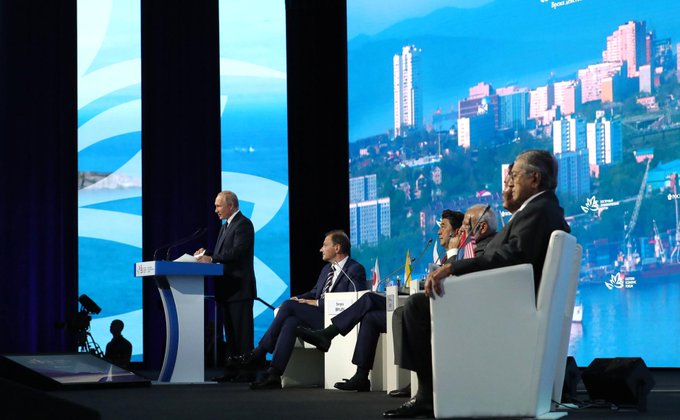
    PT -- VLADIMIR PUTIN na Sessão plenária do Fórum Económico Oriental

    Excertos da transcrição da sessão plenária do Fórum Económico Oriental

    THE PUTIN INTERVIEWS


    The Putin Interviews
    by Oliver Stone (
    FULL VIDEOS) EN/RU/SP/FR/IT/CH


    http://tributetoapresident.blogspot.com/2018/07/the-putin-interviews-by-oliver-stone.html


    TRIBUTE TO A PRESIDENT


    NA PRMEIRA PESSOA

    Um auto retrato surpreendentemente sincero do Presidente da Rússia, Vladimir Putin

    CONTEÚDO

    Prefácio

    Personagens Principais em 'Na Primeira Pessoa'

    Parte Um: O Filho

    Parte Dois: O Estudante

    Parte Três: O Estudante Universitário

    Parte Quatro: O Jovem especialista

    Parte Cinco: O Espia

    Parte Seis: O Democrata

    Parte Sete: O Burocrata

    Parte Oito: O Homem de Família

    Parte Nove: O Político

    Apêndice: A Rússia na Viragem do Milénio


    contaminação nos Açores


    Subtitled in EN/PT

    Click upon the small wheel at the right side of the video and choose your language.


    convegno firenze 2019