Inside
WikiLeaks: Working with the Publisher that Changed the World
Italian
journalist Stefania Maurizi has worked with WikiLeaks for nine years on the
Podesta emails and other revelations. Here’s an insider’s view of the
publisher, which has incensed rulers around the world, desperate to hide their
corruption.
By
Stefania Maurizi
in Rome
Special to Consortium
News
Silenced
and cut off from the outside world, WikiLeaks founder Julian Assange has been
confined to the Ecuadorian embassy in London for the last six years with no
access to sunlight, fresh air, or proper medical treatment. Furthermore, last
March President Lenin Moreno’s Ecuadorian government cut his access to the
internet, phone calls and even visitors and journalists. For a man who has
already been confined to the embassy for so long, these restrictions are
particularly harsh.
I began
working as one of WikiLeaks’ media partners in 2009, before Assange and
WikiLeaks published such bombshells as the “Collateral Murder” video. Over the
last nine years, I have partnered with WikiLeaks on behalf of my newspaper, the
Italian daily La Repubblica to work on the Podesta emails and
many of its other secret files, except for those that WikiLeaks released
without media partners: the DNC emails, the Saudi Cables, Turkey’s ruling party
emails, the Hacking Team documents, the Collateral Murder video and the Brennan
emails.
Like its
work or not, WikiLeaks is an independent media organization that doesn’t have
to rely on traditional media to publish its scoops. Indeed it was founded to
bypass the legal qualms traditional media may have about publishing classified
information.
With its
5.5 million followers on Twitter, WikiLeaks has a huge social media presence
that gives its work immediate impact. But WikiLeaks has published most of its
revelations in collaboration with a number of media partners.
For
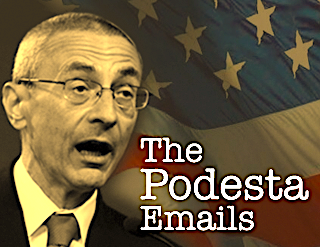
instance, I was a partner in the publication of the emails of John Podesta,
Hillary Clinton’s 2016 campaign manager, which were published by WikiLeaks
shortly after the infamous Access Hollywood video revealed
candidate Donald Trump making rude remarks about women.
Many media
outlets continue to report that the Podesta emails were released only minutes
after the Access Hollywood video aired, hinting at some sort
of coordination between WikiLeaks and the Trump campaign. In a indictment
issued last Friday, Robert S. Mueller III, the special counsel investigating
the alleged Russian interference in the 2016 U.S. elections, charged 12
officers of the Russian military intelligence service, GRU, for having
allegedly hacked both the DNC and Podesta emails and allegedly passed them on
to WikiLeaks for publication.
I have no
idea who WikiLeaks’ sources were for the Podesta emails: the whole concept of
WikiLeaks is based on the submission of secret or otherwise restricted
documents by anonymous sources. Assange said numerous times that his source for
the Clinton emails was not the Russian government nor a state party.
As I
worked on the Podesta emails, I do know that their publication was not a
last-second decision. I had been alerted the day before, and their staggered
release was a choice WikiLeaks made after the organization was harshly
criticized by mainstream media for publishing the DNC documents all at
once. This time the emails would trickle out to make them easier for the public
to digest. But that was criticized too by the U.S. media and the Democrats as
an attempt to leave Clinton bleeding a few weeks before the elections.
Ready to
Release Trump Documents




/https://www.niagarafallsreview.ca/content/dam/thestar/news/canada/2021/09/25/huawei-executive-meng-wanzhou-receives-warm-welcome-upon-return-to-china/_1_meng_wanzhou_2.jpg)