GIULIETTO CHIESA

FREE JULIAN ASSANGE

WWIII + S SITE


CROATIAN   ENGLISH   GREEK   NEDERLANDS   POLSKI   PORTUGUESE   ROMANIAN  SPANISH  РУССКИЙ

What part will your country play in World War III?

By Larry Romanoff

The true origins of the two World Wars have been deleted from all our history books and replaced with mythology. Neither War was started (or desired) by Germany, but both at the instigation of a group of European Zionist Jews with the stated intent of the total destruction of Germany. The documentation is overwhelming and the evidence undeniable. (1) (2) (3) (4) (5) (6) (7) (8) (9) (10) (11)

That history is being repeated today in a mass grooming of the Western world’s people (especially Americans) in preparation for World War III – which I believe is now imminent. 

READ MORE


Thursday, August 2, 2018

Inside WikiLeaks: Working with the Publisher that Changed the World


SUPPORT JULIAN ASSANGE

Inside WikiLeaks: Working with the Publisher that Changed the World
July 19, 2018 • 119 Comments

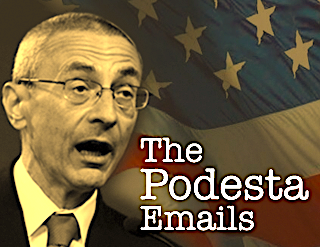
Italian journalist Stefania Maurizi has worked with WikiLeaks for nine years on the Podesta emails and other revelations. Here’s an insider’s view of the publisher, which has incensed rulers around the world, desperate to hide their corruption.
By Stefania Maurizi
in Rome
Special to Consortium News
Silenced and cut off from the outside world, WikiLeaks founder Julian Assange has been confined to the Ecuadorian embassy in London for the last six years with no access to sunlight, fresh air, or proper medical treatment. Furthermore, last March President Lenin Moreno’s Ecuadorian government cut his access to the internet, phone calls and even visitors and journalists. For a man who has already been confined to the embassy for so long, these restrictions are particularly harsh.
I began working as one of WikiLeaks’ media partners in 2009, before Assange and WikiLeaks published such bombshells as the “Collateral Murder” video. Over the last nine years, I have partnered with WikiLeaks on behalf of my newspaper, the Italian daily La Repubblica to work on the Podesta emails and many of its other secret files, except for those that WikiLeaks released without media partners: the DNC emails, the Saudi Cables, Turkey’s ruling party emails, the Hacking Team documents, the Collateral Murder video and the Brennan emails.
Like its work or not, WikiLeaks is an independent media organization that doesn’t have to rely on traditional media to publish its scoops. Indeed it was founded to bypass the legal qualms traditional media may have about publishing classified information.
With its 5.5 million followers on Twitter, WikiLeaks has a huge social media presence that gives its work immediate impact. But WikiLeaks has published most of its revelations in collaboration with a number of media partners.
For instance, I was a partner in the publication of the emails of John Podesta, Hillary Clinton’s 2016 campaign manager, which were published by WikiLeaks shortly after the infamous Access Hollywood video revealed candidate Donald Trump making rude remarks about women.
Many media outlets continue to report that the Podesta emails were released only minutes after the Access Hollywood video aired, hinting at some sort of coordination between WikiLeaks and the Trump campaign. In a indictment issued last Friday, Robert S. Mueller III, the special counsel investigating the alleged Russian interference in the 2016 U.S. elections, charged 12 officers of the Russian military intelligence service, GRU, for having allegedly hacked both the DNC and Podesta emails and allegedly passed them on to WikiLeaks for publication.
I have no idea who WikiLeaks’ sources were for the Podesta emails: the whole concept of WikiLeaks is based on the submission of secret or otherwise restricted documents by anonymous sources. Assange said numerous times that his source for the Clinton emails was not the Russian government nor a state party.
As I worked on the Podesta emails, I do know that their publication was not a last-second decision. I had been alerted the day before, and their staggered release was a choice WikiLeaks made after the organization was harshly criticized by mainstream media for publishing the DNC documents all at once. This time the emails would trickle out to make them easier for the public to digest. But that was criticized too by the U.S. media and the Democrats as an attempt to leave Clinton  bleeding a few weeks before the elections.
Ready to Release Trump Documents

Jeff Klein -- When the US Invaded Russia


July 18, 2018 • 96 Comments

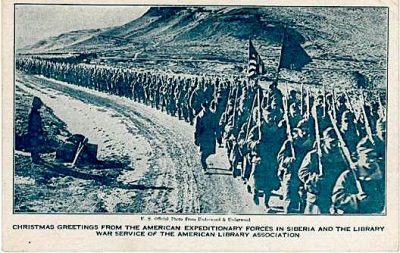
Amidst the backdrop of increased U.S.-Russian tensions and even talk of war, long forgotten is the time the U.S. actually invaded, explains Jeff Klein.

By Jeff Klein
Special to Consortium News
Amid the bi-partisan mania over the Trump-Putin Summit in Helsinki, fevered, anti-Russian rhetoric in the United States makes conceivable what until recently seemed inconcievable: that dangerous tensions between Russia and the U.S. could lead to military conflict. It has happened before.
In September 1959, during a brief thaw in the Cold War, Nikita Khrushchev made his famous visit to the United States. In Los Angeles, the Soviet leader was invited to a luncheon at Twentieth Century-Fox Studios in Hollywood and during a long and rambling exchange he had this to say:
“Your armed intervention in Russia was the most unpleasant thing that ever occurred in the relations between our two countries, for we had never waged war against America until then; our troops have never set foot on American soil, while your troops have set foot on Soviet soil.”
These remarks by Khrushchev were little noted in the U.S. press at the time – especially compared to his widely-reported complaint about not being allowed to visit Disneyland.  But even if Americans read about Khrushchev’s comments it is likely that few of them would have had any idea what the Soviet Premier was talking about.
But Soviet – and now Russian — memory is much more persistent.  The wounds of foreign invasions, from Napoleon to the Nazis, were still fresh in Russian public consciousness in 1959 — and even in Russia today — in a way most Americans could not imagine.  Among other things, that is why the Russians reacted with so much outrage to the expansion of NATO to its borders in the 1990’s, despite U.S. promises not to do so during the negotiations for the unification of Germany.
The U.S. invasion Khrushchev referred to took place a century ago, after the October Revolution and during the civil war that followed between Bolshevik and anti-Bolshevik forces, the Red Army against White Russians.  While the Germans and Austrians were occupying parts of Western and Southern Russia, the Allies launched their own armed interventions in the Russian North and the Far East in 1918. 
The Allied nations, including Britain, France, Italy, Japan and the U.S., cited various justifications for sending their troops into Russia: to “rescue” the Czech Legion that had been recruited to fight against the Central Powers; to protect allied military stores and keep them out of the hands of the Germans; to preserve communications via the Trans-Siberian Railway; and possibly to re-open an Eastern Front in the war.  But the real goal – rarely admitted publicly at first—was to reverse the events of October and install a more “acceptable” Russian government. As Winston Churchill later put it, the aim was to “strangle the Bolshevik infant in its cradle.”
In addition to Siberia, the U.S. joined British and French troops to invade at Archangel, in the north of Russia, on September 4, 1918.00
In July 1918, U.S. President Woodrow Wilson had personally typed the “Aide Memoire” on American military action in Russia that was hand-delivered by the Secretary of War at the beginning of August to General William Graves, the designated commander of the U.S. troops en route to Siberia. Wilson’s document was curiously ambivalent and contradictory. It began by asserting that foreign interference in Russia’s internal affairs was “impermissible,” and eventually concluded that the dispatch of U.S. troops to Siberia was not to be considered a “military intervention.”
The Non-Intervention Intervention

Wednesday, August 1, 2018

DÉJÀ VU: “The Sloppy Dossier”:

DÉJÀ VU: “The Sloppy Dossier”: Plagiarism and “Fake Intelligence” Used to Justify the War on Iraq: Copied and Pasted from the Internet into an “Official” British Intel Report


Fake intelligence is being put forward by the Trump administration with a view to justifying a military intervention directed against Iran. According to Veterans Intelligence Professionals for Sanity (VIPS) in an open letter sent to president Trump the “Intelligence is fake”. “As drums beat again for war — this time on Iran—-the VIPS’ warning is again being disregarded as it was before the Iraq debacle and this time VIPS fear the consequences will be all-caps CATASTROPHIC”: 
According to VIPS 
“The evidence displayed by Israeli Prime Minister Benjamin Netanyahu on April 30 in what he called his “Iranian atomic archive” showed blatant signs of fabrication. That evidence is linked to documents presented by the Bush Administration more than a decade earlier as “proof” of a covert Iran nuclear weapons program. Those documents were clearly fabricated, as well.”
It is also worth noting that back in April 2018, fake intelligence was used as a justification to bomb Syria. Both President Donald Trump and Prime Minister Theresa May were categorical in their assertions to the effect that “monster” Assad was responsible for killing his own people.
On the day prior to the April 13 missile attack on Syria (early morning on the 14th local time), following a telephone conversation between Trump and PM May, it was agreed that the “use of chemical weapons” by president Assad should “not go unchallenged”. This joint White House-Downing Street decision was ratified by PM May’s Cabinet on the morning of Friday May 13.
It is now proven that the whole thing was a hoax, a false flag, sustained by political lies and media disinformation: there was not chemical weapons attack in Douma.
DÉJÀ VU:
Lest we forget, more than fifteen years ago (February 2003), fake Intelligence was also used as a justification to invade Iraq in 2003.
Colin Powell’s “intelligence report” presented to the UN Security Council in early February 2003 was FABRICATED. It was copied and pasted from the internet by members of Tony Blair’s staff.

Trump: Jeff Sessions Should Stop 'Rigged Witch Hunt Right Now'

President Donald Trump talks on the phone aboard Air Force One during a flight to Philadelphia, Pennsylvania, to address a joint gathering of House and Senate Republicans, Thursday, January 26, 2017 (File photo).

Trump: Jeff Sessions Should Stop 'Rigged Witch Hunt Right Now'

CC0 / The White House
16:28 01.08.2018(updated 17:14 01.08.2018)Get short URL
251
US Attorney General Jeff Sessions must stop the Russia probe immediately before it causes more damage to the United States, President Donald Trump said in a Twitter message.
United States President Donald Trump is urging US Attorney General Sessions to stop the 'rigged witch hunt' Russia probe right now on his Twitter page.

“FBI Agent Peter Strzok (on the Mueller team) should have recused himself on day one. He was out to STOP THE ELECTION OF DONALD TRUMP. He needed an insurance policy. Those are illegal, improper goals, trying to influence the Election. He should never, ever been allowed to........
Trump said Special Counsel Robert Mueller, who is leading the probe into allegations that the Trump campaign colluded with Russia in the 2016 US presidential election, is "totally conflicted" and claimed his prosecution team's work is a "disgrace" to the United States.

MUST READ AND SHARE -- The United States Is The Largest Prison Camp In The World


The United States Is The Largest Prison Camp In The World
Resultado de imagem para PICTURES OF SOLITARY IMPRISONMENT IN USA
The United States Is The Largest Prison Camp In The World
The Criminal  Justice (sic) System
The United States has the highest incarceration rates in the world. The US not only has a far higher percentage of its population in prison than allegedly “authoritarian” governments, but also has a larger total number of citizens imprisoned than China, a country with four times the US poplulation. The US is by far the largest prison camp in the world.
The conditions, such as solitary confinement, in which many US prisoners are kept are strictly illegal under international law, but that means nothing to “freedom and democracy America.” Solitary confinement, especially confinement inside tiny cells, is like being buried alive. Yet, “freedom and democracy America” is subjecting more than 100,000 citizens to this horror as I write. We hear so much about “America’s moral conscience,” but where is this conscience?
Other prisoners are used as a cheap work force for US military and consumer industries. Prison labor and the privatization of prisons have created an enormous demand for prisoners. American citizens are shoveled into the profit-making prison system regardless of innocence or guilt.
There is no doubt that a large percentage of US prisoners are innocent or imprisoned for victimless crimes, such as drug use. According to official US government statistics, 97 percent of all felonies are settled with plea bargains. Consequently, the police evidence and prosecutor’s case is never tested in court. Not even the innocent want a trial, because the jurors are brainwashed and biased against everyone charged, and the punishments that result from trial conviction are much harsher than those given to a compliant defendant who agrees to a plea bargain. Despite the US Constitution’s prohibition of self-incrimination, the US prison population consists of people coerced into self-incrimination. There is no justice whatsoever in the US criminal justice (sic) system. See https://www.amazon.com/Tyranny-Good-Intentions-Prosecutors-Constitution/dp/0307396061/ref=sr_1_6?s=books&ie=UTF8&qid=1532978346&sr=1-6&keywords=paul+craig+roberts+books
“Law and order conservatives” have fantasy ideas about US prisoners lounging around watching TV all day, playing sports in the open air, and studying in prison libraries for law degrees—a life of leisure at public expense. Soren Korsgaard, editor of a crime journal, tells us what life inside an American prison is really like.
Paul Craig Roberts


The United States Criminal Justice System Violates Human Rights
Søren Korsgaard
The US criminal justice system has a long history, continuing to this day, of systematically violating prisoners’ human rights and, hence, international law. Although it has moved away from executions of those who committed their crimes as minors, the justice system still condones wrongful executions as evidenced by a study from 2014, published in the Proceedings of the National Academy of Sciences, in which it was concluded, conservatively, that at least 1 in 25 of US death row inmates is innocent of the crime for which they were sentenced to death. Even though this figure, along with facts related to dubious executions, are readily available for public consumption, a massive 55-60% of the US population still supports the death penalty.
Considering that such polls are conducted, it is safe to say that most have given the death penalty some thought; however, the conditions of US prisons are evidently a rare topic of reflection or conversation, except that most informed citizens are, at least, somewhat acquainted with the practices associated with the Guantanamo Bay detention camp and other so-called ‘black sites.’ These practices, of course, include detention without charge or trial, various methods of torture, isolation, and indefinite imprisonment of minors in flagrant violation of international law. What is less known is that equally criminal human rights abuses take place in US maximum security facilities, so-called supermax prisons, and it is therefore essential that the conditions of these are put into the spotlight. In fact, as will be shown in this article, these supermax prisons have been specifically built for torture in the form of prolonged solitary confinement, which goes by many names including isolation, administrative segregation, management control units, protective custody, restrictive housing, and special needs units.
What is solitary confinement? It is typically defined as the physical and social isolation of individuals who are confined to their cells for 22 to 24 hours per day. According to a detailed report by Amnesty International, the US “stands virtually alone in the world in incarcerating thousands of prisoners in long-term or indefinite solitary confinement,” as more than 40 states operate supermax facilities, collectively housing over 25,000 inmates that are kept in near-constant solitary confinement. In other prisons, an additional 80,000 inmates are at any time kept in isolation for variable periods. Solitary confinement has become the first resort in many prisons, and it has been shown that even absurdities can lead to years in isolation. For example, men and women have been placed in isolation for “months or years not only for violent acts but for possessing contraband, testing positive for drug use, ignoring orders, or using profanity ….. or report rape or abuse by prison officials.” Perhaps the most absurd example concerns a group of Rastafarian men who were placed in solitary confinement, some for more than a decade, for refusing to cut their hair as it was fundamental to their faith.
The international community has for a long time discouraged nations from using solitary confinement. For example, when UN’s Special Rapporteur on torture and other inhuman punishment, Juan E. Méndez, delivered his report before the UN’s General Assembly about solitary confinement, he absolutely condemned the use of prolonged isolation and equated it with torture. He added that it should only be used under “exceptional circumstances, for as short a time as possible.” After citing various scientific studies, which showed that “lasting mental damage” can result from even a “few days of social isolation,” he stated that “indefinite and prolonged solitary confinement” should be absolutely prohibited. Méndez also urged nations to end the practice of solitary confinement in pre-trial detention. Méndez’s recommendations were later codified in the United Nations Standard Minimum Rules on the Treatment of Prisoners, known as the “Mandela Rules.”
Extremely harsh sentences and absurdities leading to isolation have also not gone unnoticed by the UN, especially in the context of underage offenders. Among others, Méndez has scolded the US for “being the only country in the world that continues to sentence children to life in prison without parole,” a practice which violates international law as it is considered a “cruel and inhumane punishment” in accordance with article 37(a) of the Convention on the Rights of the Child, which states that “no child [below 18 years of age] shall be subjected to … capital punishment nor life imprisonment without possibility of release ….”
During the production of the report on torture and isolation, US officials had openly opposed Méndez’s investigation by restricting his access to prisons and various types of documentation; for example, the number of prisoners in solitary confinement is an estimate as such documentation is not available to the public or even the UN. ADX, a supermax, was one of the prisons that US authorities did not want Mendez to inspect and scrutinize. It is located in Florence, Colorado, and has gained a notorious reputation, even internationally, and it is guarded by secrecy and censorship. The former warden has described it as a “clean version of hell,” and that “it’s far much worse than death.”
Pursuant to Amnesty International’s report, “Entombed: Isolation in the US Federal Prison System,” the vast majority of ADX prisoners are kept in their cells for 22-24 hours per day “in conditions of severe physical and social isolation.” The designers of ADX (as well as other supermax prisons) had that specific purpose in mind as thick steel-reinforced concrete walls prevent inmates from having contact with those in adjacent cells, and “most cells have an interior barred door as well as a solid outer door, compounding the sense of isolation.” When prisoners are not confined to their cells for 24 hours per day due to understaffing and other issues, they can leave their cells for a few hours per week to “exercise” in a “bare interior room or in small individual yards or cages, with no view of the natural world.” Cells are equipped with a shower and toilet, minimizing the need for leaving them. The inmates are almost invariably separated from other humans, and even “checks by medical and mental health staff, take place at the cell door and medical and psychiatric consultations are sometimes conducted remotely, through tele-conferencing.”
It is no surprise that under these conditions, suicide attempts, self-mutilations, and acute psychoses are rampant among the inmates. Amnesty International concludes that “the conditions of isolation at ADX breach international standards for humane treatment and, especially when applied for a prolonged period or indefinitely, amount to cruel, inhuman or degrading treatment or punishment in violation of international law.”
According to the official policy of the Bureau of Prisons, mentally ill inmates are not kept in isolation. It has, however, been profusely documented that inmates with serious psychiatric disorders are kept in isolation and many inmates with no diagnosis have become seriously mentally deranged. Many of these instances have been detailed in various lawsuits. In one lawsuit against ADX, it was detailed that many inmates “suffer from chronic mental illness and some routinely smear themselves and their cells with their own [feces], howl or shriek continuously or bang their metal showers at all hours of the day or night.” This lawsuit also detailed several specific instances of inmates deteriorating mentally during solitary confinement at ADX, one of whom was John Powers. He was originally placed in the Control Unit (the most isolated part of ADX) to serve a 60-month sentence, but he was frequently transferred to the federal medical facility at Springfield after numerous incidents of self-mutilation. Upon being ‘stabilized’ with various pharmaceuticals, he was promptly returned to the CU at ADX. His medical records showed that he had lacerated his scrotum, bit off his finger, inserted staples into his forehead, and slashed his wrists. Originally, he was ordered to serve 60 months in the Control Unit, but because he did not comply with the behavioral requirements, he spent an unfathomable ten years and five months in that unit before finally being transferred to the lesser restricted General Population Unit (GPU). In the GPU, officials continued to deprive him of mental health care, and subsequently he sliced off his earlobes, sawed through his Achilles tendon, and mutilated his genitals. In 2013, he was transferred to another high-security facility and reportedly “rammed his head into an exposed piece of metal in his cell, causing a skull fracture and brain injury …. [later he was found inserting] metal into his brain cavity through the hole that remain[ed] in his skull.”
The psychological effects of solitary confinement have been well-known for decades and are not even controversial; for instance, in the early 1990s, Dr. Stuart Grassian conducted extensive interviews with people held in restricted housing in the Pelican Bay State Prison, the only supermax in California. Dr. Grassian discovered that solitary confinement “induces a psychiatric disorder characterized by hypersensitivity to external stimuli, hallucinations, panic attacks, cognitive deficits, obsessive thinking, paranoia, and a litany of other physical and psychological problems. Psychological assessments of men in solitary at Pelican Bay indicated high rates of anxiety, nervousness, obsessive ruminations, anger, violent fantasies, nightmares, trouble sleeping, as well as dizziness, perspiring hands, and heart palpitations.” Considering the humanitarian aspects and that prolonged solitary confinement is a breach of international law, it is striking that the US continues to enforce it upon its convicts as well as those awaiting trial. It appears that inmates are perceived as objects that need to be dealt with in the most efficient way possible for prison staff regardless of international regulations and recommendations.
Søren Korsgaard, author of America’s Jack the Ripper: The Crimes and Psychology of the Zodiac Killer, is the editor-in-chief of Radians & Inches: The Journal of Crime. He may be contacted via Editor@RadiansANDInches.com.


Sputnik -- Assange May Leave Ecuadorian Embassy in UK Soon Due to Health Problems - Reports


Assange May Leave Ecuadorian Embassy in UK Soon Due to Health Problems - Reports

EUROPE


Get short URL
MOSCOW (Sputnik) - Founder of whistleblowing organization WikiLeaks Julian Assange might leave the Ecuadorian Embassy in the United Kingdom in the coming weeks due to problems with health, a news outlet reported on Wednesday.
Assange's health has deteriorated recently and he would leave the embassy, where he has lived since June 2012, for a hospital visit in the near future, after which the whistleblower's options for taking shelter will be limited, the Bloomberg news agency reported, citing two sources.
In late July, Ecuadorian President Lenin Moreno said that he wanted to resolve Assange's issue without problems for his country, adding that consultations with the UK authorities and WikiLeaks representatives were being held with that aim. Ecuadorian Foreign Minister Jose Valencia, in turn, stressed the need to handle the situation with Assange, noting that the whistleblower could not stay in the embassy forever.
Assange took refuge in the Ecuadorian Embassy in London after being accused of sexual offenses by Swedish authorities. While the charges have since been dropped, he still fears extradition to the United States, where he is wanted for leaking Iraq War logs.
DETAILS TO FOLLOW

Tuesday, July 31, 2018

SECOND Russian scientist charged with TREASON for leaking top-secret data


64-year-old scientist allegedly gave secret tech information to Vietnamese nationals; attorney says this was public data, not classified.
 July 31, 2018
By
588 Views

The second report of a Russian scientist being charged with state treason came out Monday.

The Moscow Times reported the following:

A second Russian scientist has reportedly been charged with sharing state secrets with another country this month, a week after the high-profile detention of a space researcher on treason charges.

Last week, Viktor Kudryavtsev, a scientist at one of Russia’s leading space research labs, was charged with state treason for a suspected leak of hypersonic missile technology to a NATO country in 2013.

A member of the Public Monitoring Committee (PMC) prison watchdog said last Friday that a second scientist was found to have been detained on treason charges in July, despite prison wards having previously assured observers that only one scientist was being held.

Alexei Temiryov, 64, was detained on July 18 and placed under arrest for allegedly leaking secret documentation to Vietnam, his lawyer, Anna Polozova, was quoted as saying by the RBC news website Sunday.

His lawyer said that the information her client is accused of leaking was not classified.
“All of it is in the public record, it’s in every textbook in every library,” she told RBC.

The English language article says very little about this, but the other prominent Russian news agencies – Sputnik, RT and TASS say nothing about the second scientist’s situation at all at the present time.

It should further be noted that the Moscow Times is really a Western news site, and although it is fairly popular among English-speaking Russians, it offers an editorial “slant” that is distinctly critical of the Russian government and presumably the state owned media outlets listed earlier.

Photo of Alexei Petrovich Temerov, reportedly being held on charges of treason in Lefortovo Prison

With that point in view, this piece did make reference to two other news-pieces in the Russian language we we offer here in translation.

Manifestações

2007 Speech

UKRAINE ON FIRE

Discurso do Presidente da Rússia, Vladimir Putin, na manhã do dia 24 de Fevereiro de 2022

Discurso do Presidente da Rússia, Vladimir Putin, Tradução em português


Presidente da Rússia, Vladimir Putin: Cidadãos da Rússia, Amigos,

Considero ser necessário falar hoje, de novo, sobre os trágicos acontecimentos em Donbass e sobre os aspectos mais importantes de garantir a segurança da Rússia.

Começarei com o que disse no meu discurso de 21 de Fevereiro de 2022. Falei sobre as nossas maiores responsabilidades e preocupações e sobre as ameaças fundamentais que os irresponsáveis políticos ocidentais criaram à Rússia de forma continuada, com rudeza e sem cerimónias, de ano para ano. Refiro-me à expansão da NATO para Leste, que está a aproximar cada vez mais as suas infraestruturas militares da fronteira russa.

É um facto que, durante os últimos 30 anos, temos tentado pacientemente chegar a um acordo com os principais países NATO, relativamente aos princípios de uma segurança igual e indivisível, na Europa. Em resposta às nossas propostas, enfrentámos invariavelmente, ou engano cínico e mentiras, ou tentativas de pressão e de chantagem, enquanto a aliança do Atlântico Norte continuou a expandir-se, apesar dos nossos protestos e preocupações. A sua máquina militar está em movimento e, como disse, aproxima-se da nossa fronteira.

Porque é que isto está a acontecer? De onde veio esta forma insolente de falar que atinge o máximo do seu excepcionalismo, infalibilidade e permissividade? Qual é a explicação para esta atitude de desprezo e desdém pelos nossos interesses e exigências absolutamente legítimas?

Read more

ARRIVING IN CHINA

Ver a imagem de origem

APPEAL


APPEAL TO THE LEADERS OF THE NINE NUCLEAR WEAPONS' STATES

(China, France, India, Israel, North Korea, Pakistan, Russia, the United Kingdom and the United States)

中文 DEUTSCH ENGLISH FRANÇAIS ITALIAN PORTUGUESE RUSSIAN SPANISH ROMÂNA

manlio + maria

MOON OF SHANGHAI site

LR on CORONAVIRUS

LARRY ROMANOFF on CORONAVIRUS

Read more at Moon of Shanghai

World Intellectual Property Day (or Happy Birthday WIPO) - Spruson ...


Moon of Shanghai

L Romanoff

Larry Romanoff,

contributing author

to Cynthia McKinney's new COVID-19 anthology

'When China Sneezes'

When China Sneezes: From the Coronavirus Lockdown to the Global Politico-Economic Crisis

manlio

James Bacque

BYOBLU

irmãos de armas


Subtitled in PT, RO, SP

Click upon CC and choose your language.


manlio

VP


Before the Presidential Address to the Federal Assembly.


The President of Russia delivered
the Address to the Federal Assembly. The ceremony took
place at the Manezh Central Exhibition Hall.


January
15, 2020


vp

President of Russia Vladimir Putin:

Address to the Nation

Address to the Nation.

READ HERE


brics


Imagem

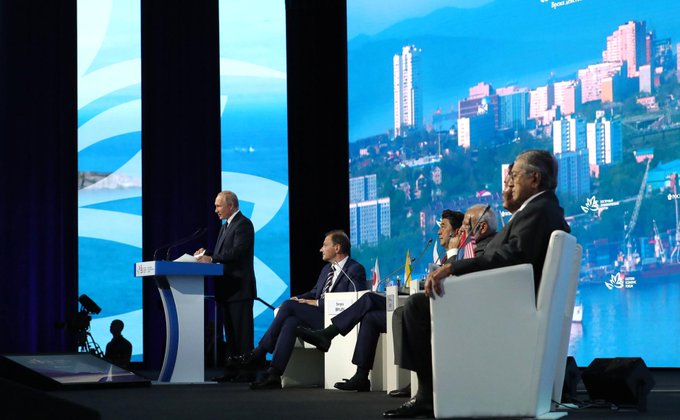
PT -- VLADIMIR PUTIN na Sessão plenária do Fórum Económico Oriental

Excertos da transcrição da sessão plenária do Fórum Económico Oriental

THE PUTIN INTERVIEWS


The Putin Interviews
by Oliver Stone (
FULL VIDEOS) EN/RU/SP/FR/IT/CH


http://tributetoapresident.blogspot.com/2018/07/the-putin-interviews-by-oliver-stone.html


TRIBUTE TO A PRESIDENT


NA PRMEIRA PESSOA

Um auto retrato surpreendentemente sincero do Presidente da Rússia, Vladimir Putin

CONTEÚDO

Prefácio

Personagens Principais em 'Na Primeira Pessoa'

Parte Um: O Filho

Parte Dois: O Estudante

Parte Três: O Estudante Universitário

Parte Quatro: O Jovem especialista

Parte Cinco: O Espia

Parte Seis: O Democrata

Parte Sete: O Burocrata

Parte Oito: O Homem de Família

Parte Nove: O Político

Apêndice: A Rússia na Viragem do Milénio


contaminação nos Açores


Subtitled in EN/PT

Click upon the small wheel at the right side of the video and choose your language.


convegno firenze 2019