GIULIETTO CHIESA

FREE JULIAN ASSANGE

WWIII + S SITE


CROATIAN   ENGLISH   GREEK   NEDERLANDS   POLSKI   PORTUGUESE   ROMANIAN  SPANISH  РУССКИЙ

What part will your country play in World War III?

By Larry Romanoff

The true origins of the two World Wars have been deleted from all our history books and replaced with mythology. Neither War was started (or desired) by Germany, but both at the instigation of a group of European Zionist Jews with the stated intent of the total destruction of Germany. The documentation is overwhelming and the evidence undeniable. (1) (2) (3) (4) (5) (6) (7) (8) (9) (10) (11)

That history is being repeated today in a mass grooming of the Western world’s people (especially Americans) in preparation for World War III – which I believe is now imminent. 

READ MORE


Saturday, August 4, 2018

REMEMBERING HIROSHIMA/RECORDANDO HIROSHIMA


Message From Hiroshima - Official Trailer from Cinema Libre Studio on Vimeo.

GUERRA NUCLEAR: O PRIMEIRO DIA
De Hiroshima até hoje:
Quem e como nos conduzem à catástrofe
Autor: Manlio Dinucci


Capítulo 1
O NASCIMENTO DA BOMBA
1.1 O bombardeamento atómico de Hiroshima e Nagasaki

«Há dezasseis horas, um avião americano deixou cair uma bomba sobre Hiroshima, uma base importante do exército japonês. [ ] É uma bomba atómica. É uma consolidação da energia fundamental do universo. A força da qual o Sol extrai a sua energia»: assim anuncia o Presidente dos Estados Unidos, Harry Truman, na declaração de 6 de Agosto de 1945.   Três dias depois, no discurso radiofónico de 9 de Agosto, explica que «a primeira bomba atómica foi lançada sobre Hiroshima, uma base militar, porque neste primeiro ataque queríamos evitar, o mais possível, o massacre de civis».

Na realidade, Hiroshima não é uma base militar, como também não é Nagasaki, a cidade japonesa sobre a qual os Estados Unidos lançaram a segunda bomba atómica, em 9 de Agosto, o mesmo dia em que o Presidente Truman pronuncia o discurso radiofónico.

A bomba atómica de urânio de 15 kiloton (igual à potência explosiva de 15 mil toneladas de TNT) lançada sobre Hiroshima, sarcasticamente designada de Little Boy (rapazinho), matou imediatamente e nos seis meses seguintes, cerca de 140.000 pessoas - civis, na esmagadora maioria. Mas outras pessoas morreram nos anos seguintes, depois dos efeitos das radiações, embora muitos dos sobreviventes, os hibakusha, tenham sofrido efeitos biológicos a longo prazo. O número total de vítimas da bomba de Hiroshima, nos decénios seguintes, é estimado em mais de meio milhão. A bomba  atómica de plutónio de cerca de 22 kiloton, lançada sobre Nagasaki, (humoristicamente denominada Fatman = gorducho), mata imediatamente e nos meses seguintes 75.000 pessoas, na grande maioria civis, aos quais se juntaram muitos outros nos anos seguintes, enquanto muitos dos sobreviventes, sofreram os efeitos biológicos a longo prazo.

A justificação oficial do bombardeamento atómico de Hiroshima e Nagasaki é que só assim os Estados Unidos podem forçar o Japão à rendição, sem ter de pagar um preço elevado em vidas americanas. Na realidade o Japão está no limite extremo e não há necessidade de recorrer à bomba atómica para impôr-lhe a rendição. A verdadeira razão é outra. Enquanto Truman está na Conferência de Potsdam (7 de Julho a 2 de Agosto de 1945), juntamente com Churchill e Stalin, é-lhe comunicado secretamente que, a 16 de Julho, foi detonada em New Mexico, a primeira bomba atómica. O Projecto Manhattan, conduzido no máximo segredo desde Junho de 1942, tinha alcançado a sua meta. Truman tem agora a possibilidade de acabar a guerra com o Japão da maneira mais favorável aos Estados Unidos, impedindo que a União Soviética participe na invasão do Japão, decidida em Potsdam e de expandir, desse modo, a sua influência à região do Pacífico.

Para isso, ordena secretamente que a bomba atómica seja utilizada o mais rápido possível.Em 24 de Julho, dois dias antes da Declaração de Potsdam, na qual se intima o Japão à rendição incondicional, são escolhidas secretamente, como possíveis objectivos, quatro cidades japonesas: Hiroshima (com mais de 250 mil habitantes), Nagasaki (cerca de 200 mil), Kokura e Niigata (cada uma com 150 mil). As condições meteorológicas mais favoráveis, em 6 de Agosto, fazem cair a primeira escolha em Hiroshima. Três dias depois, a escolha cai sobre Nagasaki.

«A decisão de destruir Hiroshima e Nagasaki foi uma decisão política e não, uma decisão militar» ( ou seja, não foi ditada pela necessidade de derrotar militarmente o Japão), escreve a jornalista americana, Diana Johnstone. «A posse demonstrada dessa arma dava a Truman uma sensação de poder sentir-se livre para romper a promessa feita aos russos e de pressionar Moscovo, na Europa, de maneira ameaçadora. As bombas de Hiroshima e Nagasaki não mataram, apenas e sem motivo, centenas de milhares de civis. Elas abriram o caminho à Guerra Fria».

Os Estados Unidos procuram tirar a máxima vantagem do facto de, naquele momento, serem os únicos a possuir a arma atómica. Depois de tê-la definido, «a maior conquista que a ciência organizada já tinha realizado na História»,Truman sublinha na declaração de 6 de Agosto que, «mesmo não sendo habitual este governo esconder os seus conhecimentos à comunidade científica mundial, nas actuais circunstâncias, não se pretende divulgar os processos técnicos de produção.»

Ele sublinha, em seguida, que «a energia atómica pode exercer uma influência eficaz para a manutenção da paz mundial». O sentido é claro: dado que os Estados Unidos não pretendem divulgar os processos técnicos de produção, isto significa que serão eles, uma vez terminada a Segunda Guerra Mundial, a garantir a «paz mundial» servindo-se do monopólio das armas nucleares.

1.2 Os efeitos da explosão nuclear sobre uma cidade

A double-flash from the past and Israel’s nuclear arsenal

A double-flash from the past and Israel’s nuclear arsenal

By Leonard Weiss, August 3, 2018


Approximate location of the double-flash observed by a US satellite in 1979.
For more than half a century, Israel has maintained a cover of silence and opacity regarding its nuclear program and arsenal, backed up by the threat of severe punishment and persecution for any Israeli (see Mordechai Vanunu) who dares publicly breach the cover. In return for this silence, plus a pledge of restraint on certain nuclear development activities, the United States has reportedly agreed in writing not to pressure Israel to sign the Nuclear Non-Proliferation Treaty or get rid of its nuclear arsenal. (See this recent New Yorker article by Adam Entous.) US policy on Israel also includes its own public silence concerning Israeli nuclear weapons. But this policy should change as a result of a new scientific study of an event that took place nearly 40 years ago, during the Carter Administration. That study makes it virtually certain that the event was an illegal nuclear test. This strengthens previous analyses concluding that Israel likely carried out a nuclear test in violation of US law and the Limited Test Ban Treaty. The response to this new study will determine whether the United States and the international community of nations are serious about nuclear arms control.
On September 22, 1979, a US Vela satellite, designed to detect clandestine nuclear tests, recorded a “flash” off the coast of South Africa that every nuclear scientist monitoring the satellite’s detectors at the time believed fit the classic description of a nuclear explosion. President Jimmy Carter’s book based on his White House diaries notes that he was immediately informed of the “flash” by his national security team; with the information came speculation that the event was an Israeli nuclear test at sea, with South African participation. Corroborative data from different sources was immediately sought and analyzed, but much of that data and analysis has remained classified to date (nearly 40 years later), despite attempts to get the government to remove the classification. Independent scientific studies of the event have reinforced the growing circumstantial evidence that the Vela event was an atmospheric nuclear test, and that Israel was the perpetrator, with possible assistance from apartheid South Africa’s navy. The US government’s position, held to this day, was to neither admit nor deny that a test took place. A panel of scientists carefully selected by the Carter White House produced a report in 1980 that did not rule out a test, but said the probability of its being something other than a test was more likely. That conclusion is now derided by nearly all independent observers who have studied and reported on the issue.

Disarmament over deterrence: Nuclear lessons from Latin America By Christopher Dunlap

Disarmament over deterrence: Nuclear lessons from Latin America

By Christopher Dunlap, August 1, 2018

Historical photos displayed at an international seminar to commemorate the 50th anniversary of the Treaty of TlatelolcoPhoto exhibition on the 50th anniversary of the Treaty of Tlatelolco, held during the OPANAL (Agency for the Prohibition of Nuclear Weapons in Latin America and the Caribbean) international seminar in February 2017. Credit: OPANAL Secretariat
In late May, the National Security Archive released newly declassified US documents from more than 50 years ago showing Mexico’s support for nuclear disarmament far beyond the boundaries of Latin America and the Caribbean. The documents reveal that Mexico’s ambassador to United Nations negotiations in Geneva sought to contribute unambiguous language on disarmament, peaceful nuclear use, and nuclear-weapon-free zones to the text of the Nuclear Non-Proliferation Treaty (NPT), finalized in 1968. The NPT bears many of the same philosophical and legal imprints as the Treaty of Tlatelolco finalized the previous year, which banned nuclear weapons development, storage, or deployment south of the Rio Grande and in the Caribbean basin.
Today the world is closer to nuclear war than at any time since the 1960s. The deterioration of United States relations with at least three nuclear hotspots across the world – North Korea, Russia, and Iran – explains a great deal of the grave assessment that “major nuclear actors are on the cusp of a new arms race.”
The vast majority of the world’s nations, however, have renounced nuclear weapons. In 2017, 122 of the United Nations’ 193 member countries voted to approve the Treaty on the Prohibition of Nuclear Weapons, which calls for complete global nuclear disarmament on humanitarian grounds. These countries believe that nuclear weapons, no matter which nations possess them, pose an unacceptable threat to human life and to an increasingly fragile planet. For them, security is disarmament. For political and military leaders in nuclear-armed countries, on the other hand, security is deterrence, in which the threat of destruction by nuclear weapons keeps the world’s strongest militaries from initiating war.

DARPA’s Prepare program: Preparing for what?


By Filippa Lentzos, Jez Littlewood, July 26, 2018
The US military—specifically, the Defense Advanced Research Projects Agency, or DARPA—announced plans in May to initiate a “gene tuning” program. Called “Prepare” (short for “Pre-emptive Expression of Protective Alleles and Response Elements”), the program aims to develop programmable modulators that temporarily boost protective genes, either before or after exposure, to biological, chemical, or radiological health threats. Inadvertently, however, the project may contribute to rising international tensions in the biological field. The program might push the limits of what is allowable under international security treaties, particularly the 1972 Biological and Toxin Weapons Convention (BTWC).
The United States, as the keeper of the largest biodefense enterprise in the world, has a special responsibility to demonstrate its compliance with the multilateral anti-bioweapons regime, whose foundation is the BTWC. Washington also has a security interest in demonstrating compliance. The United States must be sensitive to the way its biodefense activities may be perceived externally—that is, in its strategy for defending against bioweapons, the United States must factor in the role that mistrust can play in others’ attitudes and behaviors, as well as the role that its own actions can play in provoking that mistrust. It is not enough, therefore, for the United States to be self-confident about its treaty compliance; to avoid arousing international suspicion, it must proactively de-escalate threat perceptions associated with its biodefense activities.
Expansion of “gray zone” biodefense. Today, concerns about biological weapons do not simply involve possession or non-possession of “weapons.” Indeed, few analysts believe that any country is secretly stashing away weaponized pathogens, ready for launch. Instead, concerns primarily involve the degree to which states have the capacity and intent to threaten or perpetrate a biological attack. Capacity to perpetrate an attack is widespread, given the ubiquity of biotechnology. But intentions can be opaque. Security concerns therefore focus on dual-use equipment, processes, and know-how. Such concerns are particularly acute where biodefense programs are concerned.
Much biodefense work is justifiable. Such work includes development of protective masks and clothing, air and water filtration systems, detection and identification devices, and decontamination systems. Some activities, however, fall into the gray area between defensive and offensive work—the area where perceptions may differ regarding what qualifies as defensive or offensive. Activities of most concern have traditionally been those related to “threat assessment,” an area in which possible offensive applications of pathogens are investigated as a way to develop defenses and determine appropriate countermeasures.

A CRIAÇÃO DA NATO: OBJECTIVO E FINALIDADE


Excertos do livro “Guerra Nuclear – O Dia Anterior”, de Manlio Dinucci, sobre a criação e finalidade da NATO:


Em 29 de Agosto de 1949, a União Soviética efectua a sua primeira explosão experimental de um engenho de plutónio. Agora também a URSS tem a Bomba. Começa neste ponto, a corrida aos armamentos nucleares entre as duas super potências.

Naquele mesmo ano, em 4 de Abril de 1949, é fundada a NATO, compreendendo, durante a guerra fria, dezasseis países: Estados Unidos da América, Canadá, Bélgica, República Federal da Alemanha, Grã-Bretanha, Grécia, Islândia, Itália, Luxemburgo, Noruega, Holanda, Portugal, Espanha e Turquia. Através desta aliança, os EUA mantém o seu domínio sobre os aliados europeus, usando a Europa como primeira linha no confronto, também nuclear, com o Pacto de Varsóvia. Este último, (o Pacto de Varsóvia) em 14 de Maio de 1955 (seis anos depois da NATO), compreende a União Soviética, a Bulgária, a Checoslováquia, a Polónia, a República Democrática da Alemanha, Roménia, Hungria, Albânia (de 1955 a 1968).

Enquanto se inicia o confronto nuclear entre os EUA e a URSS, a Grã Bretanha e França, ambos membros da NATO, diligenciam dotar-se de armas nucleares. A primeira a conseguir é a Grã-Bretanha: enquanto colabora no programa nuclear dos Estados Unidos, inicia em 1945 um programa próprio destinado à produção da bomba de plutónio. Embora uma lei, aprovada em Washington em 1946, lhes impeça (ao menos oficialmente) de aceder às informações sobre o desenvolvimento das armas nucleares americanas, em 3 de Outubro de 1952, consegue efectuar na Austrália, a sua primeira explosão experimental.

Isto aumenta a vantagem da NATO, que aumenta posteriormente, quando, no dia 1 de Novembro do mesmo ano, os Estados Unidos fazem explodir a sua primeira bomba H (de hidrogénio). No da 1 de Março de 1954, os EUA conduzem o teste Bravo no atol de Bikini, no Pacífico, fazendo explodir uma bomba H de 17 megaton, 1.300 vezes mais potente do que a de Hiroshima. Naquele momento, os EUA têm quase 850 armas nucleares, enquanto a URSS possui cerca de 50.

A «ofensiva de desarmamento» é  lançada pela União Soviética de Gorbacev: em 15 de Janeiro de 1986, propõe não só eliminar os mísseis soviéticos e americanos de alcance médio (o que é feito sucessivamente), mas de estabelecer um programa global, em três fases, para a proibição da armas nucleares em 2000. 

Em Washington sabem, portanto, que Gorbacev quer verdadeiramente o desarmamento, que ele quer, de facto, a eliminação completa das armas nucleares. Mas sabem também que o processo da perestroika, posto em movimento por Gorbacev em 1986, provocou uma reacção em cadeia que está não só a desagregar o Pacto de Varsóvia, mas a própria União Soviética.

A «Queda do Muro de Berlim», em 9 de Novembro de 1989, assinala o início do fim. Simultaneamente, a desagregação da URSS e a profunda crise política e económica que aflige a Rússia assinalam o fim da super potência capaz de rivalizar com a americana.

Nesta altura, o mundo está numa encruzilhada. A decisão de qual dos dois caminhos escolher e seguir está substancialmente nas mãos de Washington: de um lado está a possibilidade de iniciar um verdadeiro processo de desarmamento, começando por estabelecer, consoante as linhas da proposta de Gorbachev, um programa destinado à eliminação completa das armas nucleares, que, se lançado conjuntamente por Washington e Moscovo, poderia envolver, também, as outras potências nucleares; do outro lado, está a possibilidade de aproveitar o desaparecimento da super potência rival para aumentar a superioridade estratégica, incluindo a superioridade nuclear, dos Estados Unidos da América, que permaneceu a única super potência na cena mundial. Sem um instante de hesitação, Washington tomou o segundo caminho.


A expansão da NATO para Leste, em direcção à Rússia

NATO’s “Summit Declaration” moves troops into direct confrontation with Russia (Video)


The Duran – News in Review – Episode 70.
 August 3, 2018
By

In a post examining the recent NATO summit in Brussels, Zerohedge contributor, Conn Hallinan reports that the outcome of the July 11-12 NATO meeting in Brussels got lost amid the media’s obsession with President Donald Trump’s bombast, but the “Summit Declaration” makes for sober reading.
The media reported that the 28-page document “upgraded military readiness,” and was “harshly critical of Russia,” but there was not much detail beyond that.
But details matter, because that is where the Devil hides.
One such detail is NATO’s “Readiness Initiative” that will beef up naval, air and ground forces in “the eastern portion of the Alliance.” NATO is moving to base troops in Latvia, Estonia Lithuania, the Czech Republic and Poland. Since Georgia and Ukraine have been invited to join the Alliance, some of those forces could end up deployed on Moscow’s western and southern borders.
And that should give us pause.
The Duran’s Alex Christoforou and International Affairs and Security Analyst, from Moscow, Mark Sleboda discuss the dangerous game being played by NATO, that risks provoking Russia, and pushing the world towards a nuclear confrontation.


Thursday, August 2, 2018

UK Heathrow Staff Claims to Intercept Shipment of Missile Warhead Parts for Iran

Urgent
UK Heathrow Staff Claims to Intercept Shipment of Missile Warhead Parts for Iran

UK Heathrow Staff Claims to Intercept Shipment of Missile Warhead Parts for Iran

© Sputnik /
EUROPE
Get short URL

101
MOSCOW (Sputnik) - The UK Border Force at London's Heathrow airport said on Thursday it had thwarted an alleged attempt to send missile warhead components to Iran.
According to the border force, the suspicious items were found upon inspection in the freight set to be flown off from the airport.
"We had a couple of O rings that we identified. O rings are pieces of rubber that go between tubes to stop leakage to seal them. They can be used in oil, but they can also be used for warheads and the like. Our staff stopped them from going to Iran," Monique Wrench, the UK Border Force’s deputy director at Heathrow, told the Evening Standard.
According to Wrench, the equipment looked like it was intended for an oil refinery.
"But the dots don't quite join up here," the official said, adding that the investigation was launched.
Any transactions on selling missile-related equipment or technology to Iran are prohibited under UN Security Council resolution 1737 adopted in 2006 over proliferation risks of Iran's nuclear program. The Joint Comprehensive Plan of Action, also known as the Iran nuclear deal, which presupposes lifting of some anti-Iranian trade restrictions, does not nullify sanctions related to the missile production.
DETAILS TO FOLLOW

Manifestações

2007 Speech

UKRAINE ON FIRE

Discurso do Presidente da Rússia, Vladimir Putin, na manhã do dia 24 de Fevereiro de 2022

Discurso do Presidente da Rússia, Vladimir Putin, Tradução em português


Presidente da Rússia, Vladimir Putin: Cidadãos da Rússia, Amigos,

Considero ser necessário falar hoje, de novo, sobre os trágicos acontecimentos em Donbass e sobre os aspectos mais importantes de garantir a segurança da Rússia.

Começarei com o que disse no meu discurso de 21 de Fevereiro de 2022. Falei sobre as nossas maiores responsabilidades e preocupações e sobre as ameaças fundamentais que os irresponsáveis políticos ocidentais criaram à Rússia de forma continuada, com rudeza e sem cerimónias, de ano para ano. Refiro-me à expansão da NATO para Leste, que está a aproximar cada vez mais as suas infraestruturas militares da fronteira russa.

É um facto que, durante os últimos 30 anos, temos tentado pacientemente chegar a um acordo com os principais países NATO, relativamente aos princípios de uma segurança igual e indivisível, na Europa. Em resposta às nossas propostas, enfrentámos invariavelmente, ou engano cínico e mentiras, ou tentativas de pressão e de chantagem, enquanto a aliança do Atlântico Norte continuou a expandir-se, apesar dos nossos protestos e preocupações. A sua máquina militar está em movimento e, como disse, aproxima-se da nossa fronteira.

Porque é que isto está a acontecer? De onde veio esta forma insolente de falar que atinge o máximo do seu excepcionalismo, infalibilidade e permissividade? Qual é a explicação para esta atitude de desprezo e desdém pelos nossos interesses e exigências absolutamente legítimas?

Read more

ARRIVING IN CHINA

Ver a imagem de origem

APPEAL


APPEAL TO THE LEADERS OF THE NINE NUCLEAR WEAPONS' STATES

(China, France, India, Israel, North Korea, Pakistan, Russia, the United Kingdom and the United States)

中文 DEUTSCH ENGLISH FRANÇAIS ITALIAN PORTUGUESE RUSSIAN SPANISH ROMÂNA

manlio + maria

MOON OF SHANGHAI site

LR on CORONAVIRUS

LARRY ROMANOFF on CORONAVIRUS

Read more at Moon of Shanghai

World Intellectual Property Day (or Happy Birthday WIPO) - Spruson ...


Moon of Shanghai

L Romanoff

Larry Romanoff,

contributing author

to Cynthia McKinney's new COVID-19 anthology

'When China Sneezes'

When China Sneezes: From the Coronavirus Lockdown to the Global Politico-Economic Crisis

manlio

James Bacque

BYOBLU

irmãos de armas


Subtitled in PT, RO, SP

Click upon CC and choose your language.


manlio

VP


Before the Presidential Address to the Federal Assembly.


The President of Russia delivered
the Address to the Federal Assembly. The ceremony took
place at the Manezh Central Exhibition Hall.


January
15, 2020


vp

President of Russia Vladimir Putin:

Address to the Nation

Address to the Nation.

READ HERE


brics


Imagem

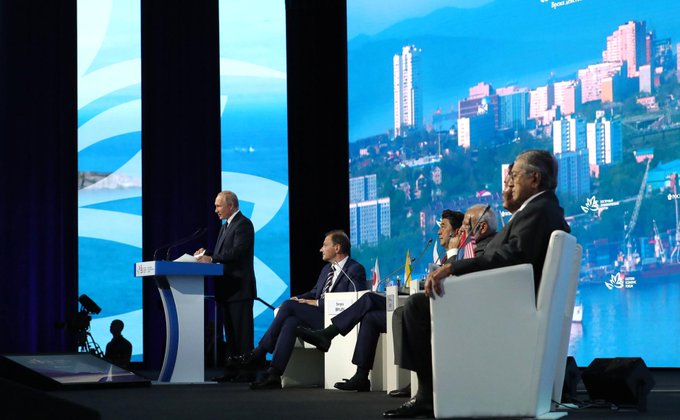
PT -- VLADIMIR PUTIN na Sessão plenária do Fórum Económico Oriental

Excertos da transcrição da sessão plenária do Fórum Económico Oriental

THE PUTIN INTERVIEWS


The Putin Interviews
by Oliver Stone (
FULL VIDEOS) EN/RU/SP/FR/IT/CH


http://tributetoapresident.blogspot.com/2018/07/the-putin-interviews-by-oliver-stone.html


TRIBUTE TO A PRESIDENT


NA PRMEIRA PESSOA

Um auto retrato surpreendentemente sincero do Presidente da Rússia, Vladimir Putin

CONTEÚDO

Prefácio

Personagens Principais em 'Na Primeira Pessoa'

Parte Um: O Filho

Parte Dois: O Estudante

Parte Três: O Estudante Universitário

Parte Quatro: O Jovem especialista

Parte Cinco: O Espia

Parte Seis: O Democrata

Parte Sete: O Burocrata

Parte Oito: O Homem de Família

Parte Nove: O Político

Apêndice: A Rússia na Viragem do Milénio


contaminação nos Açores


Subtitled in EN/PT

Click upon the small wheel at the right side of the video and choose your language.


convegno firenze 2019