GIULIETTO CHIESA

FREE JULIAN ASSANGE

WWIII + S SITE


CROATIAN   ENGLISH   GREEK   NEDERLANDS   POLSKI   PORTUGUESE   ROMANIAN  SPANISH  РУССКИЙ

What part will your country play in World War III?

By Larry Romanoff

The true origins of the two World Wars have been deleted from all our history books and replaced with mythology. Neither War was started (or desired) by Germany, but both at the instigation of a group of European Zionist Jews with the stated intent of the total destruction of Germany. The documentation is overwhelming and the evidence undeniable. (1) (2) (3) (4) (5) (6) (7) (8) (9) (10) (11)

That history is being repeated today in a mass grooming of the Western world’s people (especially Americans) in preparation for World War III – which I believe is now imminent. 

READ MORE


Showing posts with label Koreas talks. Show all posts

Friday, April 27, 2018

New era, no more war: Two Koreas agree on complete denuclearization

Two Koreas agree: 

- to completely denuclearize Korean peninsula 
- to hold multi-party talks, involving US and China 
- to have high-level military talks in May - to establish 'firm peace regime' 
- Kim said he hopes two Koreas will reunite

New era, no more war: Two Koreas agree on complete denuclearization

Get short URL
South Korean President Moon Jae-in and North Korean leader Kim Jong Un © Reuters
A new era of peace is beginning, according to a declaration signed by the leaders of North and South Korea after their first meeting in over a decade. Both nations are aiming to completely denuclearize the Korean peninsula.
"South and North Korea affirmed their shared objective of achieving a nuclear-free Korean peninsula through complete denuclearization,"reads the declaration signed by the leaders of the two countries, as cited by Yonhap.
“There will be no more war on the Korean peninsula, and a new age of peace has opened," the document adds.
The two sides also agreed to hold multi-party talks, involving the US and China, in their push for a full-scale truce. Pyongyang and Seoul are also to have high-level military talks in May.
In an ambitious statement after the signing ceremony, Kim said he hopes that the two Koreas will reunite. The states separated after the WWII and have remained hostile since the Korean War ended with an armistice, rather than a peace treaty, in 1953.
“Terminating the current state of the truce and establishing a firm peace regime is a historic task that [the two Koreas] can no longer delay," the leaders pointed out.

Friday, March 30, 2018

Xi Jinping and Kim Jong-un: Make Korea United Again!

Xi Jinping and Kim Jong-un: Make Korea United Again!
FEDERICO PIERACCINI | 30.03.2018 | WORLD / ASIA PACIFIC

Xi Jinping and Kim Jong-un: Make Korea United Again!

Kim Jong-un's visit reveals much about the tactics that will be used in the negotiations between the Korean leader and the American president; it also consolidates a historical relationship between Pyongyang and Beijing
The recent meeting in Beijing between the two supreme leaders of DPRK and China has captured global attention. The summit remained secret throughout its duration, revealed by the Chinese leader only when the visit had ended and the Korean leader was on his way back home. Rumours of the encounter continued to be denied by the Chinese foreign minister right up to Tuesday. The denials had a lot to do with the fact that a positive outcome for the meeting, this being the first one, could not be guaranteed. The final statements, the relaxed atmosphere, the many images displaying mutual smiles and acknowledgement reveal that the two leaders of the Chinese and Korean Communist parties are on the same page. Despite wishful thinking from the US, which interpreted the lack of meetings in previous years as a change in Chinese attitudes towards North Korea, the meeting highlighted positive impressions by Xi Jinping about the developments on the peninsula as well as confirmed the strategic thinking of Kim Jong-un.
Kim Jong-Un's strategy deserves particular attention. The ability to deter aggression from the United States and South Korea existed well before Pyongyang’s development of a nuclear deterrent, thanks to the enormous number of artillery guns it has directed towards Seoul. A possible conflict would have caused millions of deaths, destroyed the American forces on the peninsula (the American bases would have been the first to be eliminated, really only being there to serve as a tripwire), and upset the alliance with Seoul, which would have borne an unacceptable toll. Kim Jong-un and his father had already secured a powerful enough deterrent to ward off aggression against their country. The strategy behind developing nuclear weapons becomes more clear following the just-concluded meeting with Xi Jinping.

Friday, March 9, 2018

The inter-Korean agreement and Pyongyang's offer to Trump

Chung Eui-Yong (R), head of South Korea's presidential National Security Office, shakes hands with North Korean leader Kim Jong-Un (L) during their meeting on March 5, 2018 in Pyongyang, North Korea.
8 MARCH 2018

The inter-Korean agreement and Pyongyang's offer to Trump

Duyeon Kim

DUYEON KIM

Kim is a visiting senior research fellow at the Korean Peninsula Future Forum, a non-partisan think tank in Seoul founded and run by former South Korean National Security Advisor Chun Yung-woo....
More
North Korean leader Kim Jong-un has stepped up his peace offensive, playing a familiar game with his own particular flair. This week, South Korean presidential envoys returned to Seoul with news of having reached a six-point agreement with Pyongyang. South Korean national security advisor Chung Eui-yong then delivered the message to President Donald Trump that Kim Jong-un hopes to meet him by May—an invitation Trump accepted. The New York Times reported Thursday that White House press secretary Sarah Huckabee Sanders confirmed Trump would “meet with Kim Jong Un at a place and time to be determined. We look forward to the denuclearization of North Korea. In the meantime, all sanctions and maximum pressure must remain.”
It is certainly good news that the first-ever US-North Korea summit could take place this year. But the future remains uncertain and highly complicated because of their fundamentally opposed positions on the nuclear issue and many intertwined and complex regional issues.
Pyongyang’s latest overtures show that Kim wants to portray himself as a bold leader of a normal, peace-loving nuclear power who is willing to deal only with Washington—not Seoul—on the nuclear issue. His efforts this week are consistent with past attempts by North Korea to draw Seoul farther away from Washington, weaken the sanctions regime, and ensure its own survival. The inter-Korean agreement also fulfilled South Korean President Moon Jae-in’s wish list, granting him an early North-South summit and meeting the conditions Seoul needed to persuade the White House to begin talks with Pyongyang. The North’s acquiescence to the plan is, to be sure, a ploy designed to serve its own interests. But in spite of the deceptive cloak, the agreement posed an opportunity for the United States. It put the ball in Washington’s court, and provided a window for the Trump administration to engage and test the regime through direct negotiations.
There is much we still don’t know about how and why the plan was reached. Most important, it is as yet unclear how Pyongyang interprets the inter-Korean agreement. For now, all we have to go on is the South Korean delegation’s media briefing on the meeting’s outcomes and news of the invitation to Trump. Based on these, though, it is possible to break down the points to understand their implications. Here are the key items North and South Korea agreed to, and what they might mean for any future US-North Korea talks.
North and South Korea will hold a summit at the end of April in Panmunjom. The meeting will be the third-ever summit between the two Koreas, and the venue is notable. Whereas the 2000 and 2007 summits took place in Pyongyang, this one will take place in Panmunjom, a truce village in the demilitarized zone between the two countries, in the House of Peace, which is located on the South Korean side of the border. April’s venue is symbolic but also neutral for both Moon and Kim. Moon can avoid criticism that he is paying tribute to the North by rushing over to Pyongyang as two of his predecessors did. Kim can continue to adhere to his father’s staunch principle of avoiding a visit to Seoul. (It is said that during the 2000 summit, North Korean leader Kim Jong-il reluctantly agreed to pay a reciprocal visit to Seoul on South Korean President Kim Dae-jung’s insistence, a visit that never took place. Kim Jong-il was known to adamantly oppose setting foot in the South—the North believes that South Koreans should pay respect to their “superior” brethren.) A summit so soon means the two Koreas are planning to revive many exchanges and joint projects, a welcome development but one that will raise questions about sanctions and Washington’s pressure campaign against the North.

Manifestações

2007 Speech

UKRAINE ON FIRE

Discurso do Presidente da Rússia, Vladimir Putin, na manhã do dia 24 de Fevereiro de 2022

Discurso do Presidente da Rússia, Vladimir Putin, Tradução em português


Presidente da Rússia, Vladimir Putin: Cidadãos da Rússia, Amigos,

Considero ser necessário falar hoje, de novo, sobre os trágicos acontecimentos em Donbass e sobre os aspectos mais importantes de garantir a segurança da Rússia.

Começarei com o que disse no meu discurso de 21 de Fevereiro de 2022. Falei sobre as nossas maiores responsabilidades e preocupações e sobre as ameaças fundamentais que os irresponsáveis políticos ocidentais criaram à Rússia de forma continuada, com rudeza e sem cerimónias, de ano para ano. Refiro-me à expansão da NATO para Leste, que está a aproximar cada vez mais as suas infraestruturas militares da fronteira russa.

É um facto que, durante os últimos 30 anos, temos tentado pacientemente chegar a um acordo com os principais países NATO, relativamente aos princípios de uma segurança igual e indivisível, na Europa. Em resposta às nossas propostas, enfrentámos invariavelmente, ou engano cínico e mentiras, ou tentativas de pressão e de chantagem, enquanto a aliança do Atlântico Norte continuou a expandir-se, apesar dos nossos protestos e preocupações. A sua máquina militar está em movimento e, como disse, aproxima-se da nossa fronteira.

Porque é que isto está a acontecer? De onde veio esta forma insolente de falar que atinge o máximo do seu excepcionalismo, infalibilidade e permissividade? Qual é a explicação para esta atitude de desprezo e desdém pelos nossos interesses e exigências absolutamente legítimas?

Read more

ARRIVING IN CHINA

Ver a imagem de origem

APPEAL


APPEAL TO THE LEADERS OF THE NINE NUCLEAR WEAPONS' STATES

(China, France, India, Israel, North Korea, Pakistan, Russia, the United Kingdom and the United States)

中文 DEUTSCH ENGLISH FRANÇAIS ITALIAN PORTUGUESE RUSSIAN SPANISH ROMÂNA

manlio + maria

MOON OF SHANGHAI site

LR on CORONAVIRUS

LARRY ROMANOFF on CORONAVIRUS

Read more at Moon of Shanghai

World Intellectual Property Day (or Happy Birthday WIPO) - Spruson ...


Moon of Shanghai

L Romanoff

Larry Romanoff,

contributing author

to Cynthia McKinney's new COVID-19 anthology

'When China Sneezes'

When China Sneezes: From the Coronavirus Lockdown to the Global Politico-Economic Crisis

manlio

James Bacque

BYOBLU

irmãos de armas


Subtitled in PT, RO, SP

Click upon CC and choose your language.


manlio

VP


Before the Presidential Address to the Federal Assembly.


The President of Russia delivered
the Address to the Federal Assembly. The ceremony took
place at the Manezh Central Exhibition Hall.


January
15, 2020


vp

President of Russia Vladimir Putin:

Address to the Nation

Address to the Nation.

READ HERE


brics


Imagem

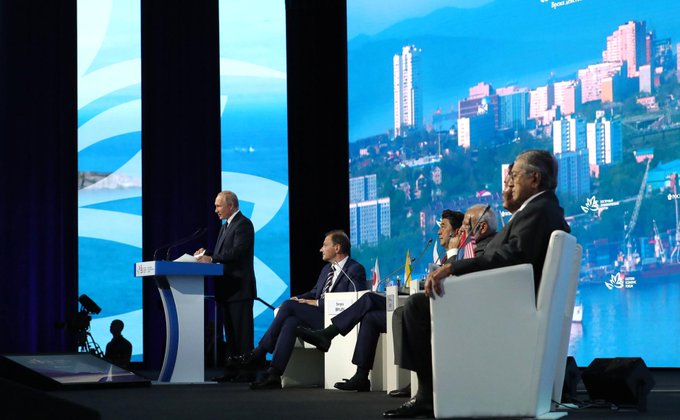
PT -- VLADIMIR PUTIN na Sessão plenária do Fórum Económico Oriental

Excertos da transcrição da sessão plenária do Fórum Económico Oriental

THE PUTIN INTERVIEWS


The Putin Interviews
by Oliver Stone (
FULL VIDEOS) EN/RU/SP/FR/IT/CH


http://tributetoapresident.blogspot.com/2018/07/the-putin-interviews-by-oliver-stone.html


TRIBUTE TO A PRESIDENT


NA PRMEIRA PESSOA

Um auto retrato surpreendentemente sincero do Presidente da Rússia, Vladimir Putin

CONTEÚDO

Prefácio

Personagens Principais em 'Na Primeira Pessoa'

Parte Um: O Filho

Parte Dois: O Estudante

Parte Três: O Estudante Universitário

Parte Quatro: O Jovem especialista

Parte Cinco: O Espia

Parte Seis: O Democrata

Parte Sete: O Burocrata

Parte Oito: O Homem de Família

Parte Nove: O Político

Apêndice: A Rússia na Viragem do Milénio


contaminação nos Açores


Subtitled in EN/PT

Click upon the small wheel at the right side of the video and choose your language.


convegno firenze 2019