GIULIETTO CHIESA

FREE JULIAN ASSANGE

WWIII + S SITE


CROATIAN   ENGLISH   GREEK   NEDERLANDS   POLSKI   PORTUGUESE   ROMANIAN  SPANISH  РУССКИЙ

What part will your country play in World War III?

By Larry Romanoff

The true origins of the two World Wars have been deleted from all our history books and replaced with mythology. Neither War was started (or desired) by Germany, but both at the instigation of a group of European Zionist Jews with the stated intent of the total destruction of Germany. The documentation is overwhelming and the evidence undeniable. (1) (2) (3) (4) (5) (6) (7) (8) (9) (10) (11)

That history is being repeated today in a mass grooming of the Western world’s people (especially Americans) in preparation for World War III – which I believe is now imminent. 

READ MORE


Wednesday, August 8, 2018

A MUST- READ AND SHARE -- Russia Is Our Friend


Russia Is Our Friend
By David Swanson | Aug 6, 2018 
Russia Is Our Friend
The Kremlin in Moscow, Russia (Pavel Kazachkov)
Russia must be a true friend indeed to have put up with the US government’s international aggression for all these years.
Last May I was in Russia when fascists held a rally in my hometown of Charlottesville, not to be confused with their larger rally which followed in August. At the May rally, people shouted “Russia is our friend.” I was on a Russian TV show called Crosstalk the next day and discussed this. I also discussed it with other Russians, actual friends in the human sense. Some of them were completely bewildered, arguing that Russia never had slavery and couldn’t be the friend of Confederate-flag-waving people whom they saw as advocates for slavery. (Anti-Russian Ukrainians have also waved Confederate flags.)
I don’t think slavery or serfdom were on the minds of the people shouting “Russia is our friend.” Rather they believed the Democratic/Liberal accusation that the Russian government had tried to help make Donald Trump President, and they approved. They may also have thought of Russia as a “white” ally in their cause of white supremacy.
I think there is a case to made that, in fact, in a very different sense, “Russia is our friend.” It’s a case that could fill volumes. I don’t make this case suffering under some delusion of the perfect saintliness of the Russian government, neither now nor at any time in history. In 2015, the Russian military approached me and asked if I would publish their propaganda under my own name. I told them to go to hell publicly. I’ve had Russian media censor my criticisms of Russia and highlight my criticisms of the United States (yet allow more criticism of Russia than big U.S. media allows criticism of U.S. foreign policy).
I make the following case because I think it is overwhelming yet fervently ignored. I’ll just note a few highlights.
While the United States and Russia were war allies during World War I, the United States, in 1917, sent funding to one side, the anti-revolutionary side of a Russian civil war, worked to blockade the Soviet Union, and, in 1918, sent U.S. troops to Murmansk, Archangel, and Vladivostok in an attempt to overthrow the new Russian government. They abandoned the effort and withdrew in April, 1920. Most people in the United States do not know this, but many more Russians do.
The threat of the communists, as an example, albeit a deeply flawed one, of taking wealth away from oligarchs was a driving force in U.S. foreign affairs from 1920 up to, all during, and long after World War II. Senator and future president Harry Truman was far from alone in wishing to help the Russians if the Germans were winning, but the Germans if the Russians were winning, so that more of both would die. Senator Robert Taft proclaimed an elite view, shared by some West Point generals, that a victory for fascism would be better than a victory for communism. Wall Street had helped to build up Nazi Germany. Without the help of IBM, General Motors, Ford, Standard Oil, and other U.S. businesses right through the war, the Nazis could not have done what they did. The U.S. government was complicit in these acts of treason, avoiding bombing U.S. factories in Germany, and even compensating U.S. businesses for damage when hit.

The ‘Forgotten’ US Shootdown of Iranian Airliner Flight 655­


By Jeremy R. Hammond | Jul 3, 2017 | Editor's Picks, Essays, Middle East, Politics, US | 35  |     
The ‘Forgotten’ US Shootdown of Iranian Airliner Flight 655­
The USS Vincennes (US Navy/Public Domain)
On the rare occasions the US mainstream media refer to the US shootdown of an Iranian airliner in 1988, they sustain the myth it was simply a "mistake".
The Israel-Palestine Conflict: A Collection of Essays by Jeremy R. Hammond
Get a FREE e-Book!
Sign up to get the FPJ Weekly newsletter, plus get a free e-book, The Israel-Palestine Conflict: A Collection of Essays by Jeremy R. Hammond.
Today marks twenty-nine years since the shootdown by the USS Vincennes of Iran Air flight 655, which killed all of the plane’s 290 civilian passengers. This shootdown of a civilian airliner by a US naval ship occurred on July 3, 1988, toward the end of the eight-year Iran-Iraq War.
This incident is, of course, something that the people of Iran well remember. Americans who rely on the US mainstream media, on the other hand, would have to be forgiven for never having heard about it.
Furthermore, in the rare instances when the media do mention it, to this day they tend to maintain official US government falsehoods about what occurred and otherwise omit relevant details that would inform Americans about what really happened.
The lack of mention of the incident or, when it is mentioned, the deceptive reporting about what occurred illustrates an institutionalized bias in the media. The consequence is that Americans seeking to understand US-Iran relations today fail to grasp a key historical event that has helped to define that relationship.
How the Mainstream Media Report the US Shootdown of Flight 655
If one does a quick Google search for relevant keywords specific to the shootdown, only a handful of US mainstream media reports turn up on first-page results.
Max Fisher in the Washington Post wrote a piece about it several years ago, appropriately titled “The Forgotten story of Iran Air Flight 655”. For context, Fisher asserted that “the Vincennes was exchanging fire with small Iranian ships in the Persian Gulf.” As explanation for how the Vincennes “mistook the lumbering Airbus A300 civilian airliner for a much smaller and faster F-14 fighter jet”, Fisher suggested it was “perhaps” due to “the heat of battle” or “perhaps because the flight allegedly did not identify itself.”
The Washington Examiner a couple years ago ran a piece with the headline “Iran says 1988 airliner shootdown is why U.S. can’t be trusted”. The author, Charles Hoskinson, stated simply that “An investigation revealed that the cruiser’s crew mistook the airliner for an attacking F-14 fighter jet while involved in a confrontation with Iranian gunboats.”
Fred Kaplan in Slate noted in a 2014 piece that the incident “is almost completely forgotten” (at least in the US). His article was appropriately subtitled “The time the United States blew up a passenger plane—and covered it up.” As a journalist who had reported on the incident at the time and challenged the US government’s official story, Kaplan noted that “American officials told various lies” intended to blame the Iranians for the tragedy.

NATO to Set Up Its First Air Base in Western Balkans

NATO to Set Up Its First Air Base in Western Balkans
PETER KORZUN | 06.08.2018 | WORLD / EUROPE

NATO to Set Up Its First Air Base in Western Balkans

NATO believes that the Western Balkans is a region of strategic importance. The summit that was held July 11-12 specifically expressed support for the Euro-Atlantic aspirations of the Balkan countries. Macedonia was officially invited to join the alliance.
On the eve of the summit, Deputy Secretary General of NATO Rose Gottemoeller stressed that NATO supported the process of reform in Kosovo, including the creation of its own regular armed forces. That idea has strong support in Washington, although by establishing its own military, Kosovo would be in gross violation of the existing international agreements. UN Security Council Resolution 1244 states explicitly that no other military presence, with the exception of KFOR and the Serbian army, shall be permitted without the mandate of the UN Security Council. The Florence Agreement (Article IV of the 1996 Dayton Peace Accords) affirms that regional stability should be maintained with the assistance of the OSCE, not NATO. The creation of a Kosovo military would mean that a regular force was being established within the territory of Serbia, which is a party to the Florence agreement. 
NATO has already allowed Kosovo to set up a professional security force, which is to join the Partnership for Peace (PfP) program and then develop into a regular armed forces that is able to meet NATO standards. This idea is being floated at a time in which the concept of the creation of Greater Albania is gradually taking shape, which would include Kosovo, parts of Macedonia such as Tetovo, the Presevo Valley in Serbia, and parts of Montenegro such as Malesija.
The EU has also gone on the offensive. Croatia joined it in 2013. Albania, Macedonia, Montenegro, and Serbia are EU candidate states. Bosnia and Herzegovina and Kosovo are signatories to Stabilization and Association Agreements with the bloc. In 2016, Bosnia and Herzegovina formally submitted an EU membership application.
Efforts to reduce the region’s energy “dependence” on Russia are underway, as an element of the policy of “squeezing Moscow out.” The Trans-Adriatic Pipeline (TAP) project is in the construction phase and will eventually stretch from the Caspian Sea to Albania and northward to other Western Balkan countries, as well as Italy. The next step is the building of a floating liquefied natural gas (LNG) terminal on Krk, a Croatian island, thus making the countries of the region pay much more for American sea-transported energy than Russia’s natural gas that is supplied by pipeline. The Krk project is to include Slovenia, Hungary, Bosnia, and Serbia.
The NATO-EU Statement on the Implementation of the Joint Declaration envisages close cooperation between the two groups, which will increase Western influence in the region. That’s what Russia opposes. It rejects the wisdom of an approach in which the region is viewed as a battlefield between the West and Russia (which is supposedly vying for influence), forcing the nations of the region to take sides. The truth is, they don’t have to. For instance, Serbia can derive significant benefits by promoting complementary relationships with the EU and the Russian-led EAEU.
The Atlantic Council’s report, titled “Balkans Forward: A New US Strategy for the Region,” which was released in late 2017, attracted a lot of attention. It calls on the West to double down on countering Russia’s influence in the region, including by means of a permanent American military presence in the Balkans that would "anchor the United States’ ability to influence developments." Camp Bondsteel in Kosovo, which was built on Serbian soil without consulting that country’s own government, is not enough. The Heritage Foundation echoes this view, offering guidelines to spur US diplomatic, economic, and military efforts to drive Russia out while bringing the US in. The think tanks from the National Committee on American Foreign Policy and the East-West Institute chimed in with their joint report, titled “Time for Action in the Western Balkans,” which was published in May.
The think tanks’ recommendations are followed by suggestions from governments. Here is the latest example. On Aug. 4, Albanian Prime Minister Edi Rama announced that NATO plans to build its first air base in the Western Balkans near the municipality of Kucove in south-central Albania. Construction is to start this year. The new facility will be used for air supply, logistic support, air patrolling, and training. The base will also be used by the Albanian air forces. The US Army’s Bondsteel base in Kosovo is used by KFOR but it lacks an airstrip for planes.
On Aug. 2, Kosovo's President Hashim Thaci said in an interview with VOA's Albanian Service, "Kosovo's border with Serbia needs to be redefined, or corrected." Whatever he meant, no mention was made of any need for Serbia’s consent or United Nations-approved procedures. Mr. Thaci feels free to make such statements because he senses the West’s support behind him.
Meanwhile, tensions in northern Kosovo are rising after the Aug. 4 deadline to establish Serb-majority municipalities in Kosovo with limited autonomous powers was missed. The Kosovo provincial government has not kept its promises. Such a move is necessary in order meet the provisions of the EU-brokered 2013 Brussels Agreement, which is intended to normalize relations between Serbia and Kosovo.
The Kosovo Serbs say they would declare autonomy if Kosovo’s rulers’ fail to produce a draft statute of the Community of Serb Municipalities (ZSO). That agreement provides for the merger of the four Serb municipalities in the north (North Mitrovica, Zvecan, Zubin Potok and Leposavic), which are subject to Kosovo law. This urban district would have powers over economic development, education, healthcare, and town planning.
On Aug. 4, Kosovo PM Ramush Haradinaj warned Serbs in the northern section of the province that their potential "attempt to proclaim autonomy" would be met with a response, obviously meaning the use of force. Serbian President Aleksandar Vucic vowed action to protect his compatriots residing in Kosovo. KFOR is in a state of combat readiness, because NATO has failed to prevent a conflict between Kosovo and Serbia.
KFOR entered Kosovo in 1999. The Albanian government of the Serbian province fully depends on the West. As recent events convincingly illustrate, after all these years, nothing has been done to solve the problems of the Serb minority or even to get closer to a solution. The ethnic divisions in Macedonia and Montenegro remain. Bosnia Herzegovina is still a divided country on the brink of armed conflict. The Western Balkans has not become a second Hong Kong or Singapore, even after some of the regional countries joined the EU. Neither the ethnic nor the religious divisions were successfully addressed after several Balkan nations joined NATO. If there is any outside security threat, it comes from the North Atlantic Alliance, which has proven its readiness to use force to reach its goals in the region. A NATO air force base in Albania will hardly make the life of ordinary people living in the Western Balkans better or more secure, but it will certainly bring the concept of Greater Albania closer to reality.

Stop Complaining and Just Delete Facebook


Put aside what you think of Alex Jones for a moment. If they can do this to him and not fear the repercussions, they can do it to anybody.

Published
 1 day ago 
on
 August 7, 2018
By
779 Views
Editor’s note: If you are one of the many readers who follow us through social media, please be sure to follow our daily email here.

I wrote just one post last week and it centered around the dangers posed to society by U.S. tech giants. I specifically called out Facebook, pointing out how company executives are currently groveling to politicians in order to prevent legislation that might deem it a monopoly and curtail its power.

I explained how U.S. politicians prefer to use the power and reach of tech giants for their own ends rather than take them down a notch. Politicians aren’t at all concerned about the outsized influence of centralized tech behemoths engineering society using secret algorithms, they just want to be in control of how this power is abused.

Meanwhile, today’s biggest news is the uniform move by three U.S. tech giants to de-platform Alex Jones and his Infowars website. The main companies involved are Apple, Facebook and Google (via YouTube), as reported in The Guardian:

All but one of the major content platforms have banned the American conspiracy theorist Alex Jones, as the companies raced to act in the wake of Apple’s decision to remove five podcasts by Jones and his Infowars website.

Facebook unpublished four pages run by Jones for “repeated violations of community standards”, the company said on Monday. YouTube terminated Jones’s account over him repeatedly appearing in videos despite being subject to a 90-day ban from the website, and Spotify removed the entirety of one of Jones’s podcasts for “hate content”…

Facebook’s and YouTube’s enforcement action against Jones came hours after Apple removed Jones from its podcast directory. The timing of Facebook’s announcement was unusual, with the company confirming the ban at 3am local time.

Put aside what you think of Alex Jones for a moment. If they can do this to him and not fear the repercussions, they can do it to anybody. This is about power, and these platforms together account for a massive share of content distribution in the U.S. Ultimately, this is just a particularly muscular and in your face example of what’s known as Silicon Valley’s cultural imperialism.

I know a lot of people think the answer is to get Congress to do something, as if those monumentally corrupt donor puppets have any interest in helping the public.

READ MORE

The ‘Magnitsky Trio’ Pushes for War with Russia with New Sanctions

The ‘Magnitsky Trio’ Pushes for War with Russia with New Sanctions


If half of what I have come to understand about the Curious Case of Bill Browder is true, then the “Magnitsky Trio” of Senators John McCain, Lindsey Graham and Ben Cardin are guilty of espionage, at a minimum.


Published
  
on
 
1,059 Views


Why?  Because they know that Browder’s story about Sergei Magnitsky is a lie.  And that means that when you tie in the Trump Dossier, Christopher Steele, Fusion GPS, the Skripal poisoning and the rest of this mess, these men are consorting with foreign governments and agencies against the sitting President.
As Lee Stranahan pointed out recently on Fault Lines, Cardin invited Browder to testify to Congress in 2017 to push through last year’s sanctions bill, a more stringent version of the expiring Magnitsky Act of 2011, which has since been used to ratchet up pressure on Russia.
Cardin knew there were problems with Browder’s story about Magnitsky’s death and yet brought him into Congress to testify to secure the vote.
That’s suborning perjury, as Lee points out.
Just the holes in Browder’s story about Magnitsky’s death are alone enough to warrant a perjury charge on him.  If you haven’t read Lucy Komisar’s detailed breakdown of Browder’s dealings then you owe it to yourself to do so.

FELIPE GONZÁLEZ, LA CIA Y EL SALIENTE PRESIDENTE SANTOS, ESTARÍAN DETRÁS DEL FALLIDO ASESINATO DE NICOLÁS MADURO.


Posted: 06 Aug 2018 01:20 PM PDT

* Felipe González llegó a Bogotá el sábado 4 de agosto a las 12:48 y el atentado fue el mismo día 17:41 horas. Rusia advierte que habrá nuevos atentados y condena el terrorismo de derecha. Gracias a un inhibidor de frecuencia ruso, los drones no llegaron a su objetivo.

** Los amigos del SEÑOR "X", han salido a justificar que acudía a la capital colombiana para asistir al traspaso del poder entre Santos y Duque, que se celebrara el 7 de agosto. Todo estaba planeado.

*** El "patriota" Felipe González adquirió la nacionalidad colombiana en el año 2014 según el tratado de extradición España - Colombia, Felipe Gonzales tendría un buen refugio.


06/08/2018

No es la primera vez que Felipe González atenta contra la soberanía del pueblo venezolano, arengando a la ultraderecha fascista venezolana y prestándose a todo tipo de apoyo; recordemos que el "valiente” González, la última vez tuvo que huir de Venezuela en el avión presidencial del presidente colombiano Santos, porque decía que lo iban a "linchar".

Felipe González, constantemente está que habla de Venezuela y no habla de la corrupción de su partido y del "PP" y "Ciudadanos", su obsesión solo es Venezuela; mal asunto Felipillo, te morirás viendo la Bandera Revolucionaria Bolivariana flamear y con el Chavismo gobernando.


VENEZUELA RESPONSABILIZA A COLOMBIA

El Presidente Maduro está contando con el apoyo de Rusia y sus servicios de información, que han prevenido de nuevos atentados de los fascistas venezolanos, por lo que el Gobierno de Maduro responsabiliza a Colombia de cualquier "nueva agresión" tras atentado frustrado el día 4 de agosto.

 "Hacemos responsable al Gobierno de Colombia de cualquier nueva agresión o intento de propiciar desde su territorio o desde los espacios fronterizos cualquier provocación contra la Patria de Bolívar", expresó la cancillería venezolana en un comunicado.

Gracias a la instalación de un inhibidor ruso, los drones no llegaron a su objetivo, y pudieron ser abatidos por francotiradores fuera del perímetro del palco presidencial.


RUSIA CONDENA EL TERRORISMO EN VENEZUELA

"Condenamos resueltamente el atentado contra el presidente de República Bolivariana de Venezuela perpetrado el 4 de agosto en el que siete personas resultaron heridas", afirmó una declaración difundida por el Ministerio de Asuntos Exteriores de Rusia, en el cual también se expresa la solidaridad con el pueblo venezolano y los deseos por la pronta mejoría de los heridos por el ataque.

La cancillería rusa consideró "categóricamente inaceptable el empleo de métodos terroristas como instrumentos de lucha política". Según Moscú, es evidente que este tipo de acciones busca "desestabilizar la situación en el país después del reciente congreso del Partido Socialista Unido de Venezuela, que definió las medidas prioritarias para la recuperación de la economía nacional".

"Estamos convencidos de que la superación de las discrepancias políticas se puede alcanzar únicamente por medios pacíficos y democráticos", subraya la declaración, que concluye con un mensaje de solidaridad con el pueblo venezolano. En el momento del atentado, perpetrado con ayuda de dos drones que lanzaron una carga explosiva, Maduro pronunciaba un discurso en Caracas para conmemorar el 81 aniversario de la Guardia Nacional Bolivariana...

Tuesday, August 7, 2018

The Saker: O que os anglo-sionistas podem fazer contra o Irã

The Saker: O que os anglo-sionistas podem fazer contra o Irã

3/8/2018, The Saker, Unz Review e The Vineyard of the Saker


Traduzido pelo Coletivo Vila Vudu


Nos últimos dias, a Internet só fala de um boato – sinceramente: dos mais idiotas –, sobre os EUA terem pedido ajuda da Austrália para prepararem um ataque ao Irã. Desnecessário dizer, as 'notícias' não explicam quais capacidades teria a Austrália, que faltariam aos EUA, mas... Mesmo assim, a 'notícia' foi repetida em tantos lugares (vejam aqui, aqui e aqui), que é impossível ignorá-la. Numa dessas matérias, Eric Margolis descreveu as características que poderia ter o tal ataque. Cito-o na íntegra:


Esboço de um possível ataque dos anglo-sionistas contra o Irã 

EUA e Israel certamente evitarão massiva campanha em solo, excessivamente cara, contra o Irã, que é país vasto e montanhoso e que sobreviveu à guerra que fez um milhão de mortos, durante oito anos, com o Iraque, iniciada em 1980. Essa guerra assassina terrível foi instigada por EUA, Grã-Bretanha, Kuwait e Arábia Saudita para derrubar o então novo governo islâmico popular do Irã.
O Pentágono planejou guerra aérea de alta intensidade contra o Irã, à qual Israel e os sauditas podem muito bem se integrar. O plano fala de mais de 2.300 ataques aéreos contra alvos iranianos estratégicos: pistas de pouco e bases navais, depósitos de armas e de petróleo, óleo e derivados, nodos de telecomunicação, radar, fábricas, quartéis e outras instalações militares, portos, represas e usinas, aeroportos, bases de mísseis e unidades dos Guardas Revolucionários.
As defesas aéreas do Irã vão de frágeis a inexistentes. Décadas de embargos militares e comerciais impostos pelos EUA contra o Irã deixaram o país tão decrépito e frágil quanto era o Iraque quando os EUA invadiram o país, em 2003. Os tanques e canhões moda anos 70s, estão detonados e não atiram direito; os velhos mísseis AA britânicos e soviéticos são praticamente imprestáveis, e os antigos jatos MiG e chineses estão bons para o museu, sobretudo os antiquados F-14 Tomcasts fabricados nos EUA, cópias chinesas dos obsoletos MiG-21, e um punhado de praticamente imprestáveis Phantoms F-4 da guerra do Vietnã.

Manifestações

2007 Speech

UKRAINE ON FIRE

Discurso do Presidente da Rússia, Vladimir Putin, na manhã do dia 24 de Fevereiro de 2022

Discurso do Presidente da Rússia, Vladimir Putin, Tradução em português


Presidente da Rússia, Vladimir Putin: Cidadãos da Rússia, Amigos,

Considero ser necessário falar hoje, de novo, sobre os trágicos acontecimentos em Donbass e sobre os aspectos mais importantes de garantir a segurança da Rússia.

Começarei com o que disse no meu discurso de 21 de Fevereiro de 2022. Falei sobre as nossas maiores responsabilidades e preocupações e sobre as ameaças fundamentais que os irresponsáveis políticos ocidentais criaram à Rússia de forma continuada, com rudeza e sem cerimónias, de ano para ano. Refiro-me à expansão da NATO para Leste, que está a aproximar cada vez mais as suas infraestruturas militares da fronteira russa.

É um facto que, durante os últimos 30 anos, temos tentado pacientemente chegar a um acordo com os principais países NATO, relativamente aos princípios de uma segurança igual e indivisível, na Europa. Em resposta às nossas propostas, enfrentámos invariavelmente, ou engano cínico e mentiras, ou tentativas de pressão e de chantagem, enquanto a aliança do Atlântico Norte continuou a expandir-se, apesar dos nossos protestos e preocupações. A sua máquina militar está em movimento e, como disse, aproxima-se da nossa fronteira.

Porque é que isto está a acontecer? De onde veio esta forma insolente de falar que atinge o máximo do seu excepcionalismo, infalibilidade e permissividade? Qual é a explicação para esta atitude de desprezo e desdém pelos nossos interesses e exigências absolutamente legítimas?

Read more

ARRIVING IN CHINA

Ver a imagem de origem

APPEAL


APPEAL TO THE LEADERS OF THE NINE NUCLEAR WEAPONS' STATES

(China, France, India, Israel, North Korea, Pakistan, Russia, the United Kingdom and the United States)

中文 DEUTSCH ENGLISH FRANÇAIS ITALIAN PORTUGUESE RUSSIAN SPANISH ROMÂNA

manlio + maria

MOON OF SHANGHAI site

LR on CORONAVIRUS

LARRY ROMANOFF on CORONAVIRUS

Read more at Moon of Shanghai

World Intellectual Property Day (or Happy Birthday WIPO) - Spruson ...


Moon of Shanghai

L Romanoff

Larry Romanoff,

contributing author

to Cynthia McKinney's new COVID-19 anthology

'When China Sneezes'

When China Sneezes: From the Coronavirus Lockdown to the Global Politico-Economic Crisis

manlio

James Bacque

BYOBLU

irmãos de armas


Subtitled in PT, RO, SP

Click upon CC and choose your language.


manlio

VP


Before the Presidential Address to the Federal Assembly.


The President of Russia delivered
the Address to the Federal Assembly. The ceremony took
place at the Manezh Central Exhibition Hall.


January
15, 2020


vp

President of Russia Vladimir Putin:

Address to the Nation

Address to the Nation.

READ HERE


brics


Imagem

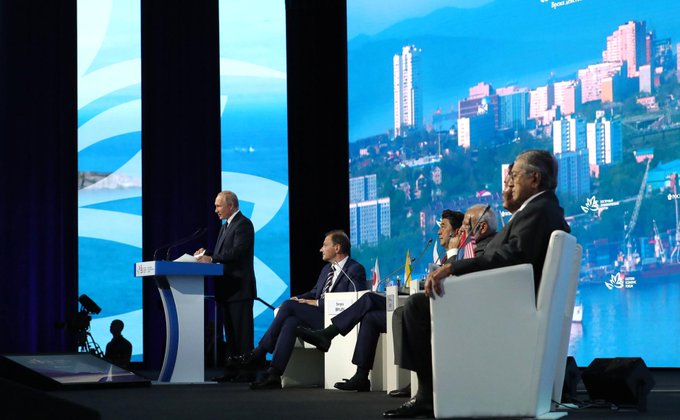
PT -- VLADIMIR PUTIN na Sessão plenária do Fórum Económico Oriental

Excertos da transcrição da sessão plenária do Fórum Económico Oriental

THE PUTIN INTERVIEWS


The Putin Interviews
by Oliver Stone (
FULL VIDEOS) EN/RU/SP/FR/IT/CH


http://tributetoapresident.blogspot.com/2018/07/the-putin-interviews-by-oliver-stone.html


TRIBUTE TO A PRESIDENT


NA PRMEIRA PESSOA

Um auto retrato surpreendentemente sincero do Presidente da Rússia, Vladimir Putin

CONTEÚDO

Prefácio

Personagens Principais em 'Na Primeira Pessoa'

Parte Um: O Filho

Parte Dois: O Estudante

Parte Três: O Estudante Universitário

Parte Quatro: O Jovem especialista

Parte Cinco: O Espia

Parte Seis: O Democrata

Parte Sete: O Burocrata

Parte Oito: O Homem de Família

Parte Nove: O Político

Apêndice: A Rússia na Viragem do Milénio


contaminação nos Açores


Subtitled in EN/PT

Click upon the small wheel at the right side of the video and choose your language.


convegno firenze 2019