GIULIETTO CHIESA

FREE JULIAN ASSANGE

WWIII + S SITE


CROATIAN   ENGLISH   GREEK   NEDERLANDS   POLSKI   PORTUGUESE   ROMANIAN  SPANISH  РУССКИЙ

What part will your country play in World War III?

By Larry Romanoff

The true origins of the two World Wars have been deleted from all our history books and replaced with mythology. Neither War was started (or desired) by Germany, but both at the instigation of a group of European Zionist Jews with the stated intent of the total destruction of Germany. The documentation is overwhelming and the evidence undeniable. (1) (2) (3) (4) (5) (6) (7) (8) (9) (10) (11)

That history is being repeated today in a mass grooming of the Western world’s people (especially Americans) in preparation for World War IIIwhich I believe is now imminent

READ MORE


Showing posts with label EU. Show all posts

Friday, July 19, 2024

REPORT OF PRIME MINISTER VIKTOR ORBÁN TO CHARLES MICHEL, PRESIDENT OF THE EUROPEAN COUNCIL


REPORT OF PRIME MINISTER VIKTOR ORBÁN TO CHARLES MICHEL, PRESIDENT OF THE EUROPEAN COUNCIL


  • 18/07/2024
  • SOURCE: CABINET OFFICE OF THE PRIME MINISTER

Dear President,

Please find below a summary evaluation of my recent discussions with leaders of Ukraine, Russia, China, Türkiye and President Donald J. Trump, as well as a few suggestions for your consideration.

PT -- RELATÓRIO DO PRIMEIRO-MINISTRO VIKTOR ORBÁN A CHARLES MICHEL, PRESIDENTE DO CONSELHO EUROPEU


RELATÓRIO DO PRIMEIRO MINISTRO VIKTOR ORBÁN A CHARLES MICHEL, PRESIDENTE DO CONSELHO EUROPEU


18/07/2024

FONTE: GABINETE DO PRIMEIRO-MINISTRO


Senhor Presidente,


Por favor, leia a seguir uma avaliação sumária das minhas conversações recentes com os dirigentes da Ucrânia, Rússia, China, Turquia e  com o Presidente Donald J. Trump, bem como algumas sugestões para a sua apreciação.


Monday, September 26, 2022

Orban -- Hungary will ask the people if they want sanctions against Russia

Hungary will ask the people if they want sanctions against Russia: Orban

HOLY

26.09.2022

Author:Objectively


Viktor Orban

Hungary must prepare for a protracted war in neighboring Ukraine, Prime Minister Viktor Orbán said, sharply criticizing European Union sanctions on Russia that he said had backfired on the EU by driving up energy prices.

Orban, long at odds with the EU over some of his policies seen in Brussels as anti-democratic, called for a ceasefire to end the war and said sanctions against Russia were hurting the European economy.

Orban, who was re-elected for a fourth consecutive term in April, now faces rising inflation, denting consumer confidence and the prospect of a recession next year.

He told parliament it was no surprise governments were falling in Europe, referring to Italy's election on Sunday, after which Giorgia Meloni looks set to lead Italy's most right-wing government since World War II.

"We can safely say that as a result of the sanctions, Europeans have become poorer, while Russia has not fallen to its knees," Orban said. "This weapon backfired, with Europe shooting itself in the foot."

"We are waiting for an answer, all of Europe is waiting for an answer from Brussels about how long we will continue to do this," he said, adding that it was time to "discuss sanctions with the US."

Orban, whose government is in talks with the European Commission to secure billions of euros in EU funds blocked because of "EC concerns about the rule of law in Hungary", said his government would launch a "national consultation", asking Hungarians what they think on the sanctions against Russia.

SOURCE: Reuters

Thursday, December 26, 2019

Brexit, Macron and Russia: Will 2020 be as Difficult for EU as 2019 Was?


2019 – Year when Macron Pushed EU Away from US
December 24, 2019
2019 has been a difficult year for the European Union (EU) and it appears 2020 will be no different with many challenges and issues remaining unresolved after a turbulent year. The most obvious issue is the lingering Brexit saga that was not achieved and questions remain whether it is likely to be achieved by UK Prime Minister Boris Johnson with the looming January 31 deadline.
The modality of divorce between the UK and its 27 ex-partners will be discussed for months as there still needs to be the discussion of trade agreements, which effectively has become a secondary issue. There are the issues of fishing quotas, tariffs and other economic issues. These will likely go to the background as the British have not considered these questions yet, and of course there are issues on the preservation of the “United” Kingdom with Scotland pushing for a second independence referendum and a United Ireland free of British colonialism becoming a real prospect.
Of course, there are also the issues of borders and security, something that must be a serious consideration during this ugly divorce. The EU loses vital intelligence if the financial and commercial separation does not also consider these areas. EU technocrats in Brussels may be suffering from the loss of the British market, but it would be more dangerous to weaken military and security ties.
Another worrisome issue for the EU would be the inevitable strengthening of commercial and diplomatic ties between the UK and their former colony, the United States.  It is expected the British and Americans will intensify their relations against Russia and China.

Monday, December 23, 2019

Seth Ferris -- All Those Missiles Pointed at Russia: Who Are They Trying to Hit?


22.12.2019 Author: Seth Ferris
All Those Missiles Pointed at Russia: Who Are They Trying to Hit?
Column: Politics
Region: Europe
7642w3
As the Serbs never tire of pointing out, international diplomacy is often driven by irrational prejudice. Whenever Serbs try and create a country of their own, which includes all the predominantly Serb population areas, the rest of the world thinks this is a bad thing and does everything it can to prevent it. When asked why it is so bad, no one seems to know – the usual excuse is “protection of minorities”, though this never applies to the protection of Serb minorities in the rest of former Yugoslavia.
The same applies to the Russian Federation. Its neighbours have longstanding grievances against it, dating from pre-Soviet times, and do not want to live under its shadow any more. Therefore they claim they need want protection from somebody else, and the West is happy to provide it for its own, not necessarily honourable, reasons.
This mind-set is a very common element of Post-Empire Syndrome. One reason the Orthodox Church has gained a lasting presence in Uganda and Kenya is that it is not associated with the old colonial power (the UK). However in parts of the post-Soviet realm, such as Lithuania, Orthodoxy is regarded as a relic of Soviet domination, despite the millions of Russians and others martyred by the Soviets for refusing to give it up.
But does this mean that Russia needs to be surrounded by bases armed with missiles pointed at it? It is true that modern Russia wants a loosely recognised “sphere of influence” that comes close to corresponding to the old Soviet republics – the very ones that fought long and hard to be rid of the Soviet. So bases in these countries might reassure their inhabitant, at least that is the story line that some might want us to think!
But if Russia is really that much of a threat, will missiles pointed at it do any good? Does the West really want to destroy the whole planet, as it will have to do to destroy 150 million Russians?

Monday, May 27, 2019

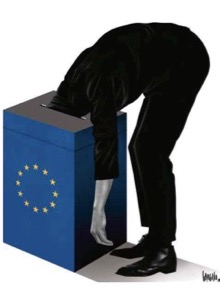
THIERRY MEYSSAN Analyse des élections du Parlement européen


Au lendemain des élections, chaque parti en propose une interprétation qui lui est favorable. Toute lecture objective ne peut que froisser les uns ou les autres. Toutefois, les chiffres ne sont pas discutables.

 | DAMAS (SYRIE)  


JPEG - 15.3 ko
Le résultat des élections du Parlement européen ne correspond pas du tout à ce qui avait été anticipé —y compris par nous—. Cette analyse se fonde sur les résultats provisoires, le lundi 27 mai à 10h GMT.
1— La participation a bondi, par rapport au scrutin précédent de 2014, de 43 à 51 %
Certes, plusieurs États avaient organisé d’autres scrutins le même jour, mais cela n’explique pas ce saut. Plusieurs interprétations sont possibles. La seule chose sûre est que les électeurs considèrent que l’Union —et non pas le Parlement— est un enjeu plus important pour leur avenir que par le passé.
2— Les partis de la Première Guerre froide arrivent en tête au Parlement, mais sont violemment rejetés en France et au Royaume-Uni au profit des libéraux
La situation de ces pays est différente. La France avait déjà amorcé sa mue avec l’élimination de la droite et de la gauche de la Première Guerre froide au 2ème tour de l’élection présidentielle de 2017. Elle confirme la fin des Républicains (8 %) et des Socialistes (6 %).
Le Royaume-Uni répond à une autre logique pour arriver à le même conclusion. Ce pays, dont la culture juridique est totalement différente de celle de l’Union et a façonné celle des États-Unis, avait décidé, sous Barack Obama et en accord avec lui, de quitter l’UE pour rejoindre l’Alena [1]. Mais lorsqu’il vota le Brexit, les États-Unis amorcèrent, avec Donald Trump, leur virage d’une politique impérialiste à une politique jacksonienne. Désemparée, la classe dirigeante britannique ne parvint pas à trouver de nouveaux partenaires et bloqua le Brexit. Les Travaillistes n’obtiennent que 14 % et les Conservateurs 8 %, tandis que les Brexiters les submergent à 31 %.
Ce jeu de massacre profite à l’Alliance des démocrates et des libéraux pour l’Europe (ADLE), représentée en France par La République en marche (22 %) et au Royaume-Uni par les Lib-Dems (18 %).
Si la droite (PPE, 178 sièges) et la gauche (S&D, 149 sièges) restent les principales couleurs au Parlement européen, elles sont talonnées par les Libéraux (ADLE, 111 sièges). Compte tenu des précédents historiques, on peut s’attendre à ce que la France et le Royaume-Uni fassent école dans le reste de l’Union et que, au prochain scrutin, le PPE et les S&D disparaissent au profit des Libéraux.
3— Faible poussée de l’objectif identitaire
L’Italien Matteo Salvini avait l’ambition de fonder une alliance des partis opposés au système. En définitive, il n’a pu regrouper que les partis identitaires autour du rejet commun du modèle anglo-saxon de « société multiculturelle » (c’est-à-dire d’une société morcelée dans laquelle chaque communauté culturelle dispose, non plus des mêmes références nationales, mais de ses propres codes et références).
L’affirmation du modèle de société européenne contre le modèle anglo-saxon deviendra parfaitement compatible avec les institutions de l’Union si le Royaume-Uni réalise son Brexit. C’est tout à fait à tort que l’on présente la coalition de Salvini comme « euro-sceptique » ou « d’extrême-droite ».
En définitive, l’Europe des nations et des libertés (ENL) ne progresse que de 16 %, passant de 50 à 58 sièges sur 751.
4— Échec de l’idée de souveraineté européenne
Tout exposé de la main-mise anglo-saxonne sur l’Union, telle que stipulée par les Traités, ou du caractère européen de la culture russe, ont été relégués hors du champ médiatique. 
Laissons de côté la rhétorique sur l’« Union puissance », face à la Chine, à la Russie et aux USA, que tous savent n’être qu’un propos de tribune. Les électeurs ont compris qu’une Nouvelle Guerre froide se met en place, mais ils considèrent que l’Otan était le meilleur allié durant la Première Guerre froide et qu’ils doivent se positionner à ses côtés durant la Seconde. Cependant l’absence de débat public sur ce thème révèle une mauvaise conscience, comme s’ils pensaient leur choix à la fois prudent et lâche.
5— En Allemagne et en France, substitution de buts de la « société civile » aux questions politiques
L’expression anglo-saxonne « société civile » désigne des associations qui, de part leur statut, ne sont pas associées à la politique, mais défendent d’autres causes. C’est très exactement le cas des questions environnementales, qui sont souvent transnationales, mais toujours subordonnées aux questions politiques. Ainsi, même si l’on supprimait toutes les voitures et tous les camions dans l’Union, la baisse de Co2 serait infime par rapport à la quantité produite par les bateaux et les avions nécessaires à la globalisation économique. Ou encore, même si l’on protégeait, non pas dans l’Union, mais dans le monde, toutes les espèces en voie de disparition, cela ne préserverait pas la biodiversité détruite par les guerres. D’ailleurs, en situation de guerre, toutes les réglementations environnementales seraient oubliées. 
La poussée des Verts, en Allemagne (20 %) et en France (13 %), traduit donc une impuissance des électeurs en matière politique. Puisqu’on ne peut agir contre l’impérialisme et la globalisation économique, rendons-nous utiles d’une autre manière.
Les forces se mettent en place pour la Nouvelle Guerre froide.
[1The Impact on the U.S. Economy of Including the United Kingdom in a Free Trade Arrangement With the United States, Canada, and Mexico, United States International Trade Commission, 2000.

Manifestações

2007 Speech

UKRAINE ON FIRE

Discurso do Presidente da Rússia, Vladimir Putin, na manhã do dia 24 de Fevereiro de 2022

Discurso do Presidente da Rússia, Vladimir Putin, Tradução em português


Presidente da Rússia, Vladimir Putin: Cidadãos da Rússia, Amigos,

Considero ser necessário falar hoje, de novo, sobre os trágicos acontecimentos em Donbass e sobre os aspectos mais importantes de garantir a segurança da Rússia.

Começarei com o que disse no meu discurso de 21 de Fevereiro de 2022. Falei sobre as nossas maiores responsabilidades e preocupações e sobre as ameaças fundamentais que os irresponsáveis políticos ocidentais criaram à Rússia de forma continuada, com rudeza e sem cerimónias, de ano para ano. Refiro-me à expansão da NATO para Leste, que está a aproximar cada vez mais as suas infraestruturas militares da fronteira russa.

É um facto que, durante os últimos 30 anos, temos tentado pacientemente chegar a um acordo com os principais países NATO, relativamente aos princípios de uma segurança igual e indivisível, na Europa. Em resposta às nossas propostas, enfrentámos invariavelmente, ou engano cínico e mentiras, ou tentativas de pressão e de chantagem, enquanto a aliança do Atlântico Norte continuou a expandir-se, apesar dos nossos protestos e preocupações. A sua máquina militar está em movimento e, como disse, aproxima-se da nossa fronteira.

Porque é que isto está a acontecer? De onde veio esta forma insolente de falar que atinge o máximo do seu excepcionalismo, infalibilidade e permissividade? Qual é a explicação para esta atitude de desprezo e desdém pelos nossos interesses e exigências absolutamente legítimas?

Read more

ARRIVING IN CHINA

Ver a imagem de origem

APPEAL


APPEAL TO THE LEADERS OF THE NINE NUCLEAR WEAPONS' STATES

(China, France, India, Israel, North Korea, Pakistan, Russia, the United Kingdom and the United States)

中文 DEUTSCH ENGLISH FRANÇAIS ITALIAN PORTUGUESE RUSSIAN SPANISH ROMÂNA

manlio + maria

MOON OF SHANGHAI site

LR on CORONAVIRUS

LARRY ROMANOFF on CORONAVIRUS

Read more at Moon of Shanghai

World Intellectual Property Day (or Happy Birthday WIPO) - Spruson ...


Moon of Shanghai

L Romanoff

Larry Romanoff,

contributing author

to Cynthia McKinney's new COVID-19 anthology

'When China Sneezes'

When China Sneezes: From the Coronavirus Lockdown to the Global Politico-Economic Crisis

manlio

James Bacque

BYOBLU

irmãos de armas


Subtitled in PT, RO, SP

Click upon CC and choose your language.


manlio

VP


Before the Presidential Address to the Federal Assembly.


The President of Russia delivered
the Address to the Federal Assembly. The ceremony took
place at the Manezh Central Exhibition Hall.


January
15, 2020


vp

President of Russia Vladimir Putin:

Address to the Nation

Address to the Nation.

READ HERE


brics


Imagem

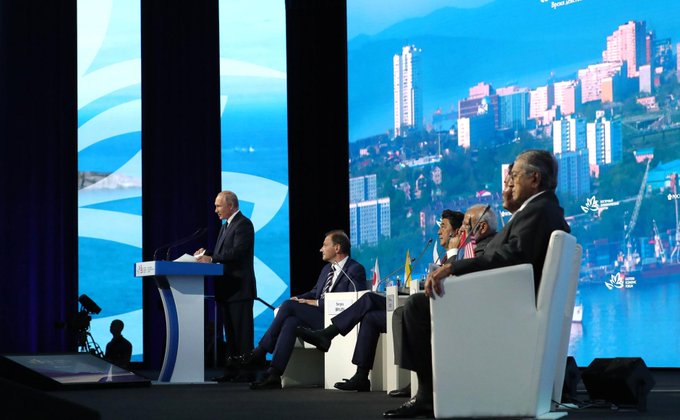
PT -- VLADIMIR PUTIN na Sessão plenária do Fórum Económico Oriental

Excertos da transcrição da sessão plenária do Fórum Económico Oriental

THE PUTIN INTERVIEWS


The Putin Interviews
by Oliver Stone (
FULL VIDEOS) EN/RU/SP/FR/IT/CH


http://tributetoapresident.blogspot.com/2018/07/the-putin-interviews-by-oliver-stone.html


TRIBUTE TO A PRESIDENT


NA PRMEIRA PESSOA

Um auto retrato surpreendentemente sincero do Presidente da Rússia, Vladimir Putin

CONTEÚDO

Prefácio

Personagens Principais em 'Na Primeira Pessoa'

Parte Um: O Filho

Parte Dois: O Estudante

Parte Três: O Estudante Universitário

Parte Quatro: O Jovem especialista

Parte Cinco: O Espia

Parte Seis: O Democrata

Parte Sete: O Burocrata

Parte Oito: O Homem de Família

Parte Nove: O Político

Apêndice: A Rússia na Viragem do Milénio


contaminação nos Açores


Subtitled in EN/PT

Click upon the small wheel at the right side of the video and choose your language.


convegno firenze 2019