GIULIETTO CHIESA

FREE JULIAN ASSANGE

WWIII + S SITE


CROATIAN   ENGLISH   GREEK   NEDERLANDS   POLSKI   PORTUGUESE   ROMANIAN  SPANISH  РУССКИЙ

What part will your country play in World War III?

By Larry Romanoff

The true origins of the two World Wars have been deleted from all our history books and replaced with mythology. Neither War was started (or desired) by Germany, but both at the instigation of a group of European Zionist Jews with the stated intent of the total destruction of Germany. The documentation is overwhelming and the evidence undeniable. (1) (2) (3) (4) (5) (6) (7) (8) (9) (10) (11)

That history is being repeated today in a mass grooming of the Western world’s people (especially Americans) in preparation for World War IIIwhich I believe is now imminent

READ MORE


Showing posts with label North Korea. Show all posts

Thursday, January 30, 2020

Will killing of Iran’s Soleimani influence North Korea’s “strategic weapon” plans?


Will killing of Iran’s Soleimani influence North Korea’s “strategic weapon” plans?


By Duyeon Kim, January 9, 2020
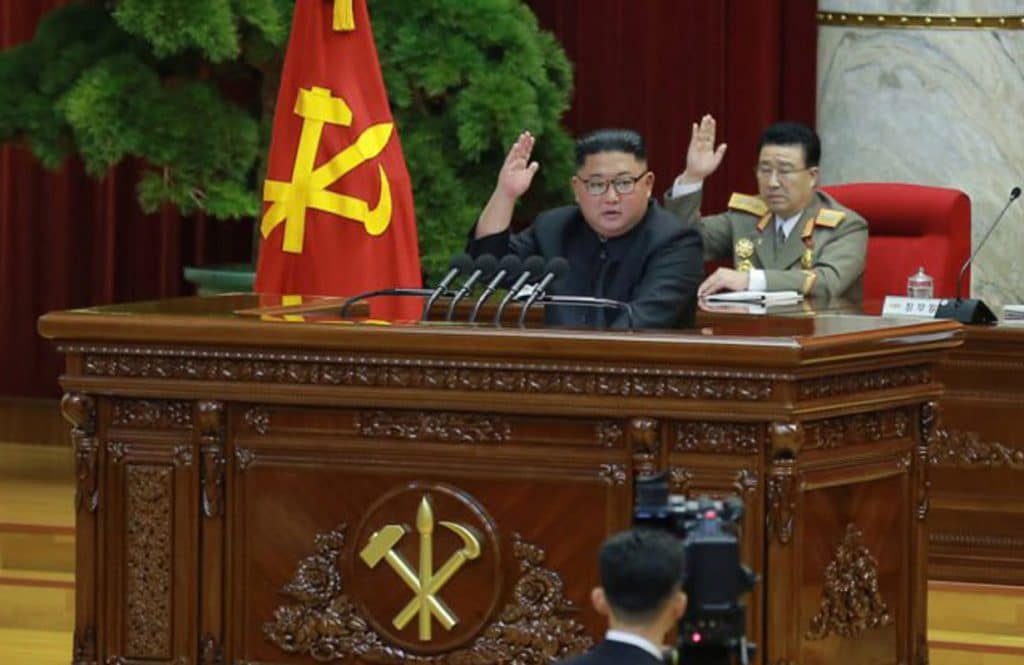
Kim Jong Un, giving his plenary speech. Photo credit: KCNA
It’s anybody’s guess as to what North Korean leader Kim Jong Un is thinking and feeling in reaction to the US killing of General Qasem Soleimani, head of the Iran’s Quds Force. In Kim’s mind, does the killing make it seem less likely that US President Donald Trump’s “fire and fury” rhetoric and escalatory actions of 2017 were a bluff? Does the regime regard Soleimani’s death as a warning not to provoke Washington this year with more weapons tests? Will Pyongyang be more cautious this year than in the past, or will it see Washington’s preoccupation with the Middle East as an opportunity to accelerate perfecting (including testing) its nuclear weapons capability? Will the killing further confirm in the North Korean leader’s eyes his rationale of having nuclear weapons to guard against what he views as US aggression?

Wednesday, December 25, 2019

Finian Cunningham -- Why Trump is Winding Up Tensions with North Korea


Resultado de imagem para pictures of kim jong un at strategic culture institute
December 25, 2019
© Photo: Flickr / whitehouse
After 18 months of on-off diplomacy with North Korea, the Trump administration seems determined now to jettison the fragile talk about peace, reverting to its earlier campaign of “maximum pressure” and hostility. It’s a retrograde move risking a disastrous war.
In a visit to China this week, South Korean President Moon Jae-in and Chinese leader Xi Jinping both urged for greater momentum in the diplomatic process with North Korea, saying that renewed tensions benefit no-one. The two leaders may need to revise that assertion. Tensions greatly benefit someone – Washington.
Why Trump is winding up tensions again with Pyongyang appears to involve a two-fold calculation. It gives Washington greater leverage to extort more money from South Korea for the presence of US military forces on its territory; secondly, the Trump administration can use the tensions as cover for increasing its regional forces aimed at confronting China.

Saturday, December 7, 2019

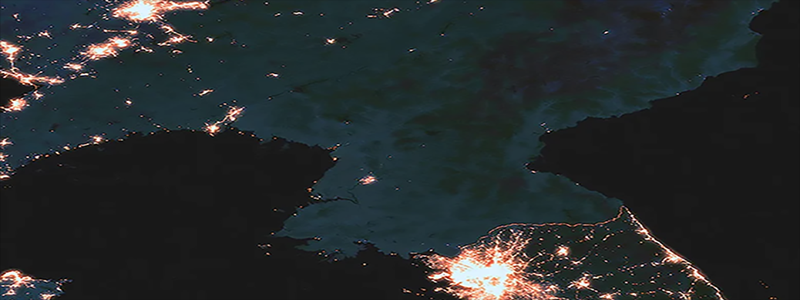
North Korea Denuclearization Digest


North Korean ICBMs on Display
This periodic e-newsletter will provide readers with updates and analyses on diplomatic and denuclearization efforts on the Korean peninsula. To receive these by email, subscribe to our regular updates list.


Friday, October 19, 2018

Trump infuriated & insulted South Koreans when he said “they do nothing without our approval”

Trump infuriated and insulted South Koreans when he said “they do nothing without our approval.”
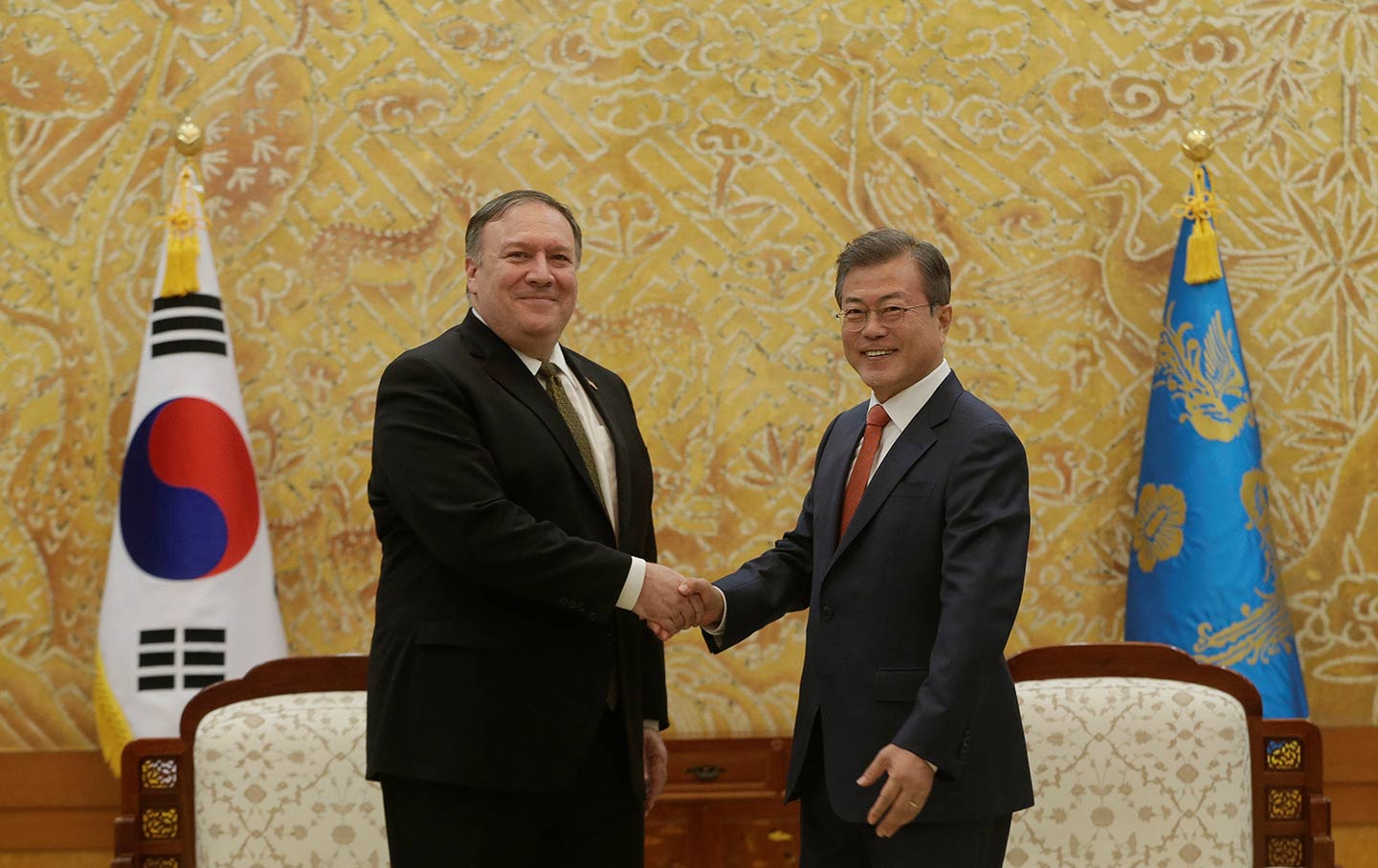
pompeo-moon-handshake-rtr-img
South Korean President Moon Jae-in shakes hands with US Secretary of State Mike Pompeo during a meeting in Seoul, South Korea, on October 7, 2018. (Pool via Reuters / Ahn Young-joon)
Ready To Fight Back?
Sign up for Take Action Now and get three actions in your inbox every week.
You will receive occasional promotional offers for programs that support The Nation’s journalism. You can read our Privacy Policy here.
As the two Koreas continue to move their peace process forward in the wake of their highly successful September summit in Pyongyang, the Trump administration, along with military-industrial think tanks and journalists who influence US policy, have shifted their collective indignation away from North Korean leader Kim Jong-un and toward South Korean President Moon Jae-in.

Monday, June 4, 2018

Politics and History of U.S.-DPRK Relations

Politics and History of U.S.-DPRK Relations

DPRK has long tradition of struggle against imperialist military intervention

Region: 
Theme: 
In-depth Report: 

In order to acquire an appreciation of the events surrounding United States-DPRK relations it is first necessary to place the upcoming summit meeting between Marshall Kim Jong un and President Donald Trump in Singapore within a politico-historical context.
There has never been a peace treaty signed after the armistice agreement of 1953 which ended the direct military engagement which lasted from June 25, 1950 to July 27, 1953. This war popularly known in the U.S. as the “Korean Conflict,” was a costly intervention for Washington.
Tens of thousands of Pentagon, British and Republic of Korea puppet troops were killed in battle and several hundred thousands more were wounded and injured. The battle was viewed in the capitalist world as the opening of the post-World War II effort to roll back and destroy the socialist camp. 
For its was the Red Army which broke the back of the Nazi forces in a series of battles between 1942-43 in Moscow, Stalingrad and other areas inside the Union of Soviet Socialist Republics (USSR). The founder of the DPRK and the leader of the Korean Communist Party, later the Workers Party of Korea (WPK), Kim Il Sung, served alongside the Soviet and Chinese Communist Party comrades in both mainland China and northern Korea. 
The Korean Peninsula had been subjected to Japanese interference and domination dating back to the later decades of the 19th century. The Korea-Japan Treaty of 1876 was followed by similar agreements of 1905 and 1910 annexing the peninsula.
Korea was occupied by Japanese imperialism for four decades until the conclusion of World War II and the defeat of Tokyo. During the years of 1945-48 there was the consolidation of socialist state rule and the formation of the DPRK. 
All the while the U.S. under President Harry Truman was seeking to place surrogate leaders in the southern region of the Peninsula many of whom were former operatives of the Japanese rulers. Trade unionists, radicals, socialists and national revolutionary elements were targeted by the U.S.-backed regime in Seoul.

Wednesday, May 30, 2018

BREAKING: Russian Foreign Minister Sergei Lavrov to visit North Korea tomorrow on invitation from Pyongyang


BREAKING: Russian Foreign Minister Sergei Lavrov to visit North Korea tomorrow on invitation from Pyongyang

The manner in which any peace arrangement is concluded is of much interest for the Russians


As reported by the Russian Ministry of Foreign Affairs, the Russian Foreign Minister, Sergei Lavrov, will be travelling to Pyongyang for a visit with his North Korean counterpart tomorrow.
The agenda is set to cover relations between the two nations, as well as covering areas of regional and international concern.
The North Korean Foreign Minister, Ri Yong-ho, has recently visited Moscow, following which the invitation for Lavrov to journey to Pyongyang was given.
The South China Morning Post reported yesterday events leading up to the visit:
The report did not say when Lavrov would arrive in North Korea or the reason behind the visit.
News of Lavrov’s visit follows comments by Russian President Vladimir Putin calling for restraint to keep North Korean leader Kim Jong-un at the negotiating table, and comes as plans for a historic meeting between Kim and US President Donald Trump appear to be progressing.
Vladimir Putin said on Friday that finding a solution to the North Korea nuclear tensions is of great importance to Russia and says North Korea’s sovereignty should be guaranteed.
A full denuclearisation of North Korea” should involve giving “North Korea a guarantee of their sovereignty and inviolability”, Putin said.
“If you don’t behave aggressively and if you don’t corner North Korea, the result that we need will be achieved faster than many would think, and at less cost.”

Monday, May 28, 2018

Peace Negotiator” Mike Pompeo: There is a CIA Plot to Assassinate Kim Jong-un?

Peace Negotiator” Mike Pompeo: There is a CIA Plot to Assassinate Kim Jong-un?

Region: 
Theme: 
In-depth Report: 

In May of last year, the DPRK accused both the CIA (headed by Mike Pompeo) and the ROK’s National Intelligence Service (NIS) of “a failed plot to assassinate its leader Kim Jong-un with a biochemical bomb at a military parade in Pyongyang.”
Neither the CIA nor the White House responded to these accusations.
While press reports acknowledged the CIA’s “long history” of political assassinations, the DPRK’s accusations were casually dismissed.
According to The Guardian (March 5, 2017)
“The CIA has a long history of helping to kill leaders around the world. US intelligence agency has since 1945 succeeded in deposing or killing a string of leaders, but was forced to cut back after a Senate investigation in the 1970s”

Wednesday, May 16, 2018

North Korea abandons talks with South, Trump amidst US and ROK joint military drills


After all, how are you bolstering your sincere intention for seeking peace, when you’re practicing killing them?
by FRANK SELLERSMay 16, 2018, 01:19
Just ahead of upcoming peace talks between South Korea, the US, and North Korea, the Republic of Korea and the US conduct military scenario drills rehearsing conflict against the North.
These drills are being perceived by the Democratic People’s Republic of Korea as a provocation. CGTN reports:
The Democratic People’s Republic of Korea cancelled talks with the Republic of Korea in response to military drills carried out between ROK and the United States, Yonhap reported Wednesday (local time).
According to the report, DPRK’s Central News Agency (KCNA) stated that the air force drills being carried out between ROK and the United States are a “rehearsal for invasion of the North and a provocation.”
The talks scheduled for Wednesday were planned to discuss follow up actions following the historic summit that took place between DPRK’s leader Kim Jon Un and ROK’s president Moon Jae-in.
The DPRK has also threatened to pull out of the upcoming Trump summit over the military drills.

Thursday, April 26, 2018

FEDERICO PIERACCINI -- Sophisticated North Korean Diplomacy Rewards Kim Jong-un

Sophisticated North Korean Diplomacy Rewards Kim Jong-un

Sophisticated North Korean Diplomacy Rewards Kim Jong-un

Preparations for the meeting between Kim Jong-un and Donald Trump are for the moment continuing without a hitch. The next step will be the historic meeting between Moon Jae-in of South Korea and his North Korean counterpart. On the table are several possibilities. Pyongyang's strategy seems to be much more refined than it may seem.
The news surrounding the negotiations on the North Korean peninsula continues to appear promising, with all the parties involved remaining relatively optimistic. Important words coming from Pyongyang have been heard in recent weeks. The North Korean leadership has recently established some guidelines regarding internal social and economic development over the coming years. Once complete nuclear deterrence has been achieved, the objective then becomes the development of the economy and an improvement in the material wellbeing of North Koreans. The renunciation of its nuclear status is part of a broader plan that brings with it some essential requirements, such as the reunification of the two Koreas, a peace treaty with the United States, and the withdrawal of foreign troops from the peninsula. The possibility of achieving economic wellbeing for North Koreans is subject to the success of meeting these requirements. In this sense, the planned meeting between Moon Jae-in (President of South Korea) and Kim Jong-un opens up new possibilities, given the good will of the leadership of both countries to resolve their long-standing problems. Proceeding according to the timeline presented above, the meeting between the two leaders should take place in May, paving the way for the much more critical meeting between Donald Trump and Kim Jong-un in a place yet to be decided, but one which would have high symbolic value.
Avoiding excessive optimism, despite the obvious improvements in tone, rhetoric and actions compared to a year ago, the overall US strategy in the region should be considered. We have learned in recent months that the incumbent of the Oval Office has little influence over the dictates of the foreign-policy establishment, the deep state -- call it what you like. This is a toxic concoction of industrialists, politicians, think-tank experts, former politicians, soldiers, and philanthropists dedicated solely to the preservation of the role of American primacy, with aspirations to global hegemony, dictated by the (wrong) belief that America is an exceptional country (see parts123, and 4). In this sense, as highlighted by the Nuclear Posture Review, Washington has to deal with two peer competitors (China and Russia) and two minor opponents (Iran and North Korea) and plans its actions in the long term. The US troops stationed in South Korea reflect the desire of policy-makers to surround the Heartland and its periphery to contain the two powers that occupy this geographical space: Russia and China.

Monday, March 12, 2018

The Role of the UN in the Unending Korean War. “United Nations Command” as Camouflage

Relevant article selected from the GR archive, first published on Global Research and Ronda Hauben’s blogsite in  September 2013.
Some Background
The story of the Korean War is a story not often told. Yet sixty years after the agreement to end the military hostilities on July 27, 1953, there is not yet a peace treaty to end the war.
This article on the occasion of the 60th Anniversary of the Armistice Agreement is intended as a contribution to the body of research and study needed to find the underlying cause of the bottleneck impeding the negotiation of a peace treaty so a breakthrough can be made.
Korea, which had been one nation for over 1000 years, had been forcibly divided at the end of WWII. By the UN legitimating an election in the South of Korea in May 1948 which was boycotted by many Koreans and from which all North Koreans and many South Koreans were excluded, a formal structural division was created which continues until today. (1) The significant aspect of the UN supported election was that it led to an official government structure for only the southern part of Korea, thus solidifying the division of Korea. The government structure created in the South by the election was a repressive government structure. One view of the military conflict that became known as the Korean War was that it was a civil war that was trying to restore Korea as one country.
The US Government response to the fighting which broke out in June 1950 in Korea was to perpetuate support for the repressive government that the US and UN had put in place as the Republic of Korea (more commonly known as South Korea). This is the context in which the United Nations Security Council resolutions of June and July 1950 authorizing UN participation in the Korean War took place.
The question that led me to begin this study was:
What Was the Role of the UN in the Korean War and What Should be the Role of the UN in Bringing an End to the War?
It is important to take into account that before any action was taken on the part of the UN on June 27, 1950 authorizing intervention in the Korean War, the US had decided and began to send military support to the South Korean side of the conflict. The independent journalist, I.F. Stone in his book, “The Hidden History of the Korean War,” describes this US action as forcing the UN Security Council to support the US Government action in Korea.(2)
Stone writes:
“When Truman ‘ordered the United States air and sea forces to give the Korean Government troops cover and support’ he was in effect imposing military sanctions before they had been authorized by the Security Council. The Council had to vote sanctions or put itself in the position of opposing the action taken by the United States. For governments dependent on American bounty and themselves fearful of Soviet expansion, that was too much to expect, though again Yugoslavia had the courage to vote ‘No,’ an act of principle for which it got no credit from the Soviet bloc while antagonizing the United States to which it owed its Council seat.”

Manifestações

2007 Speech

UKRAINE ON FIRE

Discurso do Presidente da Rússia, Vladimir Putin, na manhã do dia 24 de Fevereiro de 2022

Discurso do Presidente da Rússia, Vladimir Putin, Tradução em português


Presidente da Rússia, Vladimir Putin: Cidadãos da Rússia, Amigos,

Considero ser necessário falar hoje, de novo, sobre os trágicos acontecimentos em Donbass e sobre os aspectos mais importantes de garantir a segurança da Rússia.

Começarei com o que disse no meu discurso de 21 de Fevereiro de 2022. Falei sobre as nossas maiores responsabilidades e preocupações e sobre as ameaças fundamentais que os irresponsáveis políticos ocidentais criaram à Rússia de forma continuada, com rudeza e sem cerimónias, de ano para ano. Refiro-me à expansão da NATO para Leste, que está a aproximar cada vez mais as suas infraestruturas militares da fronteira russa.

É um facto que, durante os últimos 30 anos, temos tentado pacientemente chegar a um acordo com os principais países NATO, relativamente aos princípios de uma segurança igual e indivisível, na Europa. Em resposta às nossas propostas, enfrentámos invariavelmente, ou engano cínico e mentiras, ou tentativas de pressão e de chantagem, enquanto a aliança do Atlântico Norte continuou a expandir-se, apesar dos nossos protestos e preocupações. A sua máquina militar está em movimento e, como disse, aproxima-se da nossa fronteira.

Porque é que isto está a acontecer? De onde veio esta forma insolente de falar que atinge o máximo do seu excepcionalismo, infalibilidade e permissividade? Qual é a explicação para esta atitude de desprezo e desdém pelos nossos interesses e exigências absolutamente legítimas?

Read more

ARRIVING IN CHINA

Ver a imagem de origem

APPEAL


APPEAL TO THE LEADERS OF THE NINE NUCLEAR WEAPONS' STATES

(China, France, India, Israel, North Korea, Pakistan, Russia, the United Kingdom and the United States)

中文 DEUTSCH ENGLISH FRANÇAIS ITALIAN PORTUGUESE RUSSIAN SPANISH ROMÂNA

manlio + maria

MOON OF SHANGHAI site

LR on CORONAVIRUS

LARRY ROMANOFF on CORONAVIRUS

Read more at Moon of Shanghai

World Intellectual Property Day (or Happy Birthday WIPO) - Spruson ...


Moon of Shanghai

L Romanoff

Larry Romanoff,

contributing author

to Cynthia McKinney's new COVID-19 anthology

'When China Sneezes'

When China Sneezes: From the Coronavirus Lockdown to the Global Politico-Economic Crisis

manlio

James Bacque

BYOBLU

irmãos de armas


Subtitled in PT, RO, SP

Click upon CC and choose your language.


manlio

VP


Before the Presidential Address to the Federal Assembly.


The President of Russia delivered
the Address to the Federal Assembly. The ceremony took
place at the Manezh Central Exhibition Hall.


January
15, 2020


vp

President of Russia Vladimir Putin:

Address to the Nation

Address to the Nation.

READ HERE


brics


Imagem

PT -- VLADIMIR PUTIN na Sessão plenária do Fórum Económico Oriental

Excertos da transcrição da sessão plenária do Fórum Económico Oriental

THE PUTIN INTERVIEWS


The Putin Interviews
by Oliver Stone (
FULL VIDEOS) EN/RU/SP/FR/IT/CH


http://tributetoapresident.blogspot.com/2018/07/the-putin-interviews-by-oliver-stone.html


TRIBUTE TO A PRESIDENT


NA PRMEIRA PESSOA

Um auto retrato surpreendentemente sincero do Presidente da Rússia, Vladimir Putin

CONTEÚDO

Prefácio

Personagens Principais em 'Na Primeira Pessoa'

Parte Um: O Filho

Parte Dois: O Estudante

Parte Três: O Estudante Universitário

Parte Quatro: O Jovem especialista

Parte Cinco: O Espia

Parte Seis: O Democrata

Parte Sete: O Burocrata

Parte Oito: O Homem de Família

Parte Nove: O Político

Apêndice: A Rússia na Viragem do Milénio


contaminação nos Açores


Subtitled in EN/PT

Click upon the small wheel at the right side of the video and choose your language.


convegno firenze 2019