


| ||||||||
|
WWIII + S SITE
CROATIAN ENGLISH GREEK NEDERLANDS POLSKI PORTUGUESE ROMANIAN SPANISH РУССКИЙ
What part will your country play in World War III?
The true origins of the two World Wars have been deleted from all our history books and replaced with mythology. Neither War was started (or desired) by Germany, but both at the instigation of a group of European Zionist Jews with the stated intent of the total destruction of Germany. The documentation is overwhelming and the evidence undeniable. (1) (2) (3) (4) (5) (6) (7) (8) (9) (10) (11)
That history is being repeated today in a mass grooming of the Western world’s people (especially Americans) in preparation for World War III – which I believe is now imminent.
Wednesday, June 26, 2019
Self-Made Iran Crisis Goes from Bad to Worse


NL -- Manlio Dinucci -- "DE KUNST VAN OORLOG" -- De Europese Unie in de nucleaire strategie van het Pentagon
"DE KUNST VAN OORLOG"
De Europese Unie in de nucleaire strategie
van het Pentagon
door: Manlio Dinucci
De NAVO-Ministers van Defensie (Elisabetta Trenta, M5S, voor
Italië, en Ank Bijleveld, voor Nederland) werden op 26 en 27 juni in Brussel
bijeengeroepen om de nieuwe maatregelen van "afschrikking" tegen
Rusland, die is beschuldigd, goed te keuren - zonder bewijs van wat dan ook -
van het schenden van het INF-verdrag. In feite betekent dit dat ze in de pas
zullen lopen achter de Verenigde Staten, die zich op 2 augustus definitief
terugtrekt uit het Verdrag en zich opmaakt om in Europa grondgebonden
middellange afstandsraketten (een bereik van 500-5.500 kilometer) in te zetten,
vergelijkbaar met die uit de jaren tachtig (de Pershing II en de kruisraketten)
die werden geëlimineerd (met de Sovjet-SS-20's) door het Verdrag dat in 1987
werd ondertekend door presidenten Gorbachov en Reagan.
De belangrijkste Europese mogendheden, steeds meer verdeeld
binnen de EU, worden opnieuw gegroepeerd in de NAVO onder Amerikaans bevel om
hun gemeenschappelijke strategische belangen te ondersteunen. Bij de UNO
verwierp deze zelfde Europese Unie - waarvan 21 van haar 27 leden deel uitmaken
van het Bondgenootschap (net als het Verenigd Koninkrijk, hoewel het de EU
verlaat) - het Russische voorstel om het INF-verdrag te handhaven. Op een zo
belangrijk punt wordt de Europese publieke opinie opzettelijk in een staat van
onwetendheid gehouden door hun regeringen en de belangrijkste media. Op deze
manier merken we niet het toenemende gevaar dat ons allemaal bedreigt - de
groeiende mogelijkheid dat we op een dag onder het gebruik van nucleaire wapens
zullen lijden.
Dit wordt bevestigd door het meest
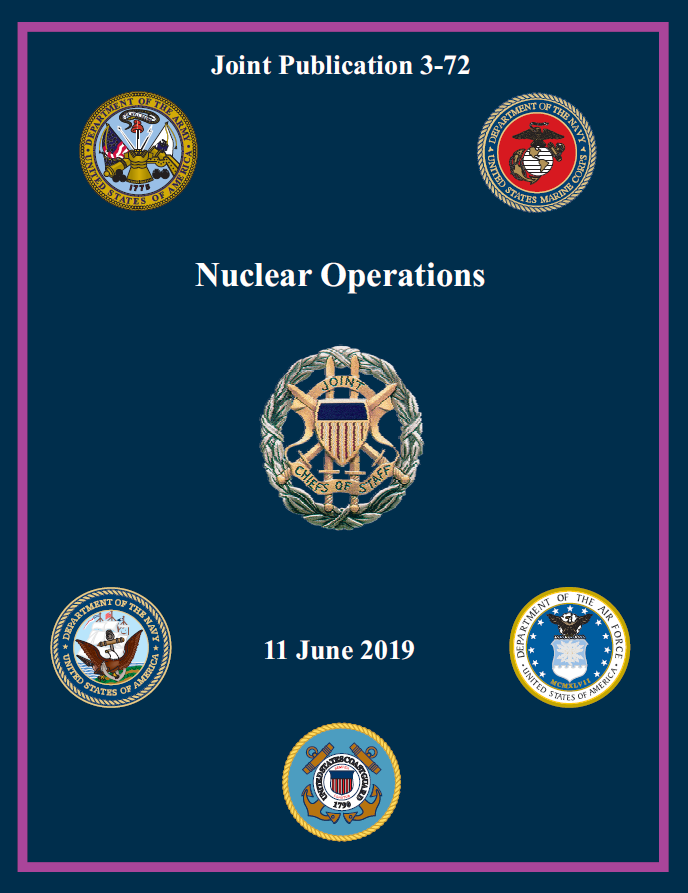
recente strategische document van de Amerikaanse strijdkrachten, NucleaireOperaties (11 juni), geschreven onder leiding van de Voorzitter van de Joint
Chiefs of Staff. Aangezien «onze nucleaire strijdkrachten de VS het vermogen
bieden om onze eigen nationale doelstellingen na te streven», benadrukt het
document dat zij «variërend, flexibel en aanpasbaar» moeten zijn voor «een
breed scala van tegenstanders, bedreigingen en contexten». Ondanks Russische
waarschuwingen dat het gebruik van zelfs maar een kernwapen met laag vermogen
een kettingreactie zou veroorzaken die zou kunnen leiden tot grootschalige
nucleaire conflicten, begint de Amerikaanse doctrine zich te oriënteren op
basis van een gevaarlijk concept - «flexibiliteit».
Het strategisch document bevestigt
dat «Amerikaanse nucleaire strijdkrachten ons de middelen geven om geweld toe
te passen op een breed scala aan doelen op het moment en met de middelen
waarover de President heeft beslist». Die doelen (specificeert hetzelfde
document) zijn in werkelijkheid gekozen door de inlichtingendiensten, die hun
kwetsbaarheid voor een nucleaire aanval evalueren, en ook de effecten van
radioactieve neerslag berekenen. Het gebruik van kernwapens - benadrukt het
document - «kan de voorwaarden scheppen voor beslissende resultaten. In het
bijzonder zou het gebruik van een kernwapen de context van een gevecht
fundamenteel veranderen door de omstandigheden te creëren die de commandanten
in staat zouden stellen de confrontatie te winnen ».
Kernwapens zouden de VS ook in staat
stellen "hun bondgenoten en partners gerust te stellen" die,
vertrouwend op deze wapens, "het idee zouden opgeven eigen nucleaire
wapens te bezitten en aldus zouden deelnemen aan het militaire doel van de
Verenigde Staten, dat non-proliferatie is. ».
Het document geeft echter aan dat «de
VS en bepaalde geselecteerde NAVO-bondgenoten in staat zouden zijn om vliegtuigen
te houden die in staat zijn om zowel nucleaire als conventionele wapens te
dragen». Dit is een erkenning dat vier landen van de EU die officieel
niet-nucleair zijn - Italië, Duitsland, België, Nederland - en ook Turkije, in
strijd met het non-proliferatieverdrag, niet alleen Amerikaanse kernwapens
opslaan (B-61-bommen die vanaf 2020 zullen worden vervangen door de meer
destructieve B61-12), maar bereid zijn om ze te gebruiken bij een nucleaire
aanval onder leiding van het Pentagon.
Dit alles wordt geheim gehouden door
onze regeringen en parlementen, televisies en kranten, met de schuldige stilte
van de overgrote meerderheid van politici en journalisten, die niettemin elke
dag herhalen hoe belangrijk «veiligheid» is voor ons Italianen en andere Europeanen
van de Unie. Het wordt blijkbaar voor ons gegarandeerd door de opstelling van
andere kernwapens door de VS.
Il manifesto, 25 June 2019
Nederlandse
vertaling: Martien
EN -- Manlio Dinucci -- The Art of War --The European Union in the Pentagon's nuclear strategy
« THE ART OF
WAR »
by Manlio Dinucci
The NATO Ministers
for Defence (Elisabetta Trenta, M5S, for Italy, and Penny Mordaunt for UK) were
convened in Brussels on 26 and 27 June to approve the new measures of
« dissuasion » against Russia, which has been accused - with no proof
whatsoever - of having violated the INF Treaty. Basically, this means they will
fall into step behind the United States, which, by withdrawing definitively
from the Treaty on 2 August, is preparing to deploy in Europe ground-based
intermediate range nuclear missiles (a range of between 500 and 5,500 kilometres),
similar to those from the 1980's (the Pershing II and the cruise missiles)
which were eliminated (with the Soviet SS-20's) by the Treaty signed in
1987 by Presidents Gorbachev and Reagan.
The major European
powers, increasingly divided within the EU, are re-grouped in NATO under US
command in order to support their common strategic interests. At the UNO, this
same European Union – of which 21 of its 27 members are part of the Alliance
(as is the United Kingdom although it is leaving the EU) - rejected the Russian
proposition to maintain the INF Treaty. On a matter
of such importance, European public opinion is deliberately left in a
state of ignorance by their governments and the major medias. In this way we do
not notice the growing danger which is threatening us all – the growing
possibility that we may one day suffer the use of nuclear weapons.
This is confirmed
by the latest strategic document from the US Armed Forces, Nuclear Operations (11 June), written under the direction of the President of the
Joint Chiefs of Staff. Given that « our nuclear forces offer the USA the
capacity to pursue our own national objectives », the document underlines that they must be « diversified, flexible and adaptable » to a « wide range of adversaries, threats and contexts ». Despite Russian warnings that the use of even one low-power nuclear weapon would begin a chain
reaction which could lead to large-scale nuclear conflict, the US doctrine is
beginning to orient itself on the basis of a dangerous concept - « flexibility ».
The strategic
document affirms that « US nuclear forces give us the means to apply force
to a wide range of targets at the time and with the means decided by the
President ». Those targets (specifies the same document) are in truth
chosen by the Intelligence agencies, who evaluate their vulnerability to a
nuclear attack, and also calculate the effects of radioactive fallout. The use
of nuclear weapons - emphasises the document - « can create the conditions
for decisive results. In particular, the use of a nuclear weapon would
fundamentally transform the context of a battle by creating the conditions
which would enable the commanders to win the confrontation ».
Nuclear weapons
would also enable the USA to « reassure their allies and partners »
who, trusting in these weapons, « would give up the idea of possessing their
own nuclear weapons, thus participating in the objective of the United States,
which is non-proliferation ».
However, the
document indicates that « The USA and certain selected NATO allies would
be able to keep aircraft capable of carrying both nuclear and conventional
weapons ». This is an admission that four countries of the EU which are
officially non-nuclear - Italy, Germany, Belgium, Holland – and also Turkey, in
violation of the non-proliferation Treaty, are not only storing US nuclear
weapons (B-61 bombs which from 2020 will be replaced by the more destructive
B61-12), but are prepared to use them in a nuclear attack under command of the
Pentagon.
All of this is
kept secret by our governments and parliaments, televisions and newspapers,
with the guilty silence of the vast majority of politicians and journalists,
who nonetheless repeat day after day how important « security » is
for we Italians and other Europeans of the Union. It will apparently be
guaranteed for us by the US deployment of other nuclear weapons.
Il manifesto, 25 June 2019
Translation : Pete Kimberley
RO -- Manlio Dinucci -- Arta Razboiului -- Uniunea Europeana în strategia nucleara a Pentagonului
Arta Razboiului
Uniunea Europeana în
strategia nucleara a Pentagonului
Ministrii apărării din NATO (din Italia, Elisabetta Trenta,
M5S, din
România, Gabriel-Beniamin LEŞ) au fost chemați la
Bruxelles la 26 și 27
iunie pentru a aproba noile măsuri de
"descurajare" împotriva
Rusiei, acuzata, fără nici un fel de dovadă, că a încălcat
Tratatul INF.
În
principiu, acestia se vor alinia cu Statele Unite, care, retragîndu-se
definitiv din Tratat de la 2 August, se pregăteste să instaleze în Europa
rachete nucleare cu rază medie
de acțiune (între 500 și 5.500 km) cu baza la sol, asemanatoare
celor din deceniul anilor 80 (Pershing II și
rachetele de croazieră) care
au fost eliminate (împreună cu SS-20 sovietice) prin Tratatul semnat în 1987 de către Președinții Gorbaciov și
Reagan.
Principalele
puteri europene, divizate din ce în ce mai mult în cadrul UE, se reunesc în
NATO sub comanda SUA pentru a-și susține interesele strategice comune.Aceeași Uniune Europeană - din care 21 din cei 27 de membri ai NATO
(asa cum face parte Marea Britanie, care părăseste UE) - a respins la Națiunile Unite propunerea rusa de a menține Tratatul INF. Pe o
chestiune atât de importantă, opinia
publică europeană este lăsată în mod deliberat, în întuneric,
de guverne și de mass-media. Astfel,
nu suntem conștienți de pericolul tot mai mare care pluteste
peste noi: crește posibilitatea ca, într-o zi, armele nucleare să fie folosite.
Confirmă acest lucru, ultimul
document strategic al Forțelor Armate ale
Statelor Unite ale Americii, "Nuclear Operations" (11 iunie),
redactat sub conducerea Presedintelui
Comisiei Comune a Statului
Major reunit.Având în vedere că "forțele nucleare oferă SUA capacitatea de a-și atinge obiectivele naționale", documentul subliniază că acestea trebuie să fie "diversificate, flexibile și adaptabile" la "o gamă largă de adversari, amenințări și contexte".
În timp ce Rusia avertizează că, chiar
utilizarea unei singure arme nucleare cu putere redusă, ar declanșa o reacție în lanț care ar putea conduce la un conflict nuclear pe scară largă, doctrina americană fiind ghidată pe baza unui concept
periculos de "flexibilitate". "Obiectivele" (lamureste același document) alese efectiv de agențiile de informații/serviciile secrete,
care evaluează vulnerabilitatea la un atac nuclear, de
asemenea, prezicînd efectele ploii radioactive.
Folosirea armelor nucleare, subliniaza documentul - "poate crea condițiile pentru rezultate decisive: în mod specific, utilizarea unei arme nucleare va schimba
fundamental cadrul unei bătălii, creînd circumstanțele care le vor permite comandanților să prevaleze în conflict". De asemenea, armele nucleare permit SUA "să-și protejeze aliații și partenerii",
care, bazându-se pe acestea, "renunță la posesia propriilor arme nucleare, contribuind la
scopurile non-proliferării celor din Statele Unite".
Cu toate acestea, documentul clarifică faptul că "SUA și cîțiva aliați selectionați din NATO dețin avioane cu capacitate dublă, capabile să transporte arme
nucleare sau convenționale". Recunoaște, astfel, că patru țări europene
non-nucleare - Italia, Germania, Belgia, Olanda - și Turcia, încălcând Tratatul de Ne-proliferare, nu numai că găzduiesc arme nucleare
americane (bombele B-61, care începînd din 2020, vor fi înlocuite cu B61-12, mai
mortale), dar sunt pregătiti să le folosească într-un atac nuclear sub comanda Pentagonului.
Toate acestea sunt omise de guverne și parlamente, televiziuni și ziare, cu complicitatea tăcută a marii majoritati a
politicienilor și jurnaliștilor, care, dimpotrivă, ne repetă zilnic, cât de importanta este pentru noi, italienii și europenii, "securitatea". Acest lucru este garantat de Statele Unite, instalând în
Europa alte arme nucleare.
il manifesto, 25 iunie 2019
Tradus: Light Journalist
La 19 Iunie 2019, Duma a aprobat
Decretul-Lege prezidential referitor la suspendarea Tratatului de Forte Nucleare
cu Raza Media de Actiune (Tratatul INF). Motivul este clar: Washington a
hotarît anterior sa se retraga unilateral.
Decretul-Lege are doar trei
articole:
- Primul este suspendarea tratatului INF
- Al doilea permite ca Presedintele sa-l continue, daca va fi necesar,
- Al treilea spune ca Deccretul-Lege intra în vigoare în ziua în care va fi adus la cunostinta publicului
Monday, June 24, 2019
PT – Manlio Dinucci – A Arte da Guerra -- A União Europeia na estratégia nuclear do Pentágono
A Arte da Guerra
A União Europeia na estratégia nuclear do Pentágono
Os Ministros da Defesa da NATO (de Itália, Elisabetta Trenta,
M5S, de Portugal, João Gomes Cravinho) foram convocados para reunir em Bruxelas, em 26 e 27 de Junho, a fim de
aprovar as novas medidas de “dissuasão” contra a Rússia, acusada, sem qualquer
prova, de ter violado o Tratado INF.
Fundamentalmente, irão alinhar-se com os Estados Unidos que,
retirando-se definitivamente do Tratado, em 2 de Agosto, preparam-se para
instalar na Europa, mísseis nucleares de alcance intermédio (entre 500 e 5.500
km) com base no solo, semelhantes aos da década dos anos 80 (os Pershing II e mísseis de cruzeiro) que foram eliminados (juntamente com os SS-20 soviéticos)
pelo Tratado assinado em 1987 pelos Presidentes Gorbachev e Reagan.
As principais potências europeias, cada vez mais divididas dentro da UE, reúnem-se na NATO sob o comando USA para apoiar os seus interesses estratégicos comuns.
As principais potências europeias, cada vez mais divididas dentro da UE, reúnem-se na NATO sob o comando USA para apoiar os seus interesses estratégicos comuns.
A mesma União Europeia - da qual 21 dos 27 membros fazem
parte da NATO (assim como faz parte a Grã-Bretanha, de saída da UE) - rejeitou nas
Nações Unidas, a proposta russa de manter o Tratado INF. Sobre uma questão de
tal importância, a opinião pública europeia é deixada, deliberadamente, no escuro pelos governos e pelos principais
meios de comunicação mediática. Assim, não se avisa sobre o perigo crescente
que paira sobre nós: aumenta a possibilidade que, um dia, se venha a usar armas
nucleares.
Confirma-o, o último documento estratégico das Forças Armadas
dos EUA, “Nuclear Operations” (11 de Junho), redigido sob a direcção do Presidente da Comissão Conjunta dos Chefes do Estado-Maior reunida. Dado que “as forças nucleares fornecem aos EUA
a capacidade de atingir os seus objectivos nacionais", o documento salienta
que as mesmas devem ser “diversificadas, flexíveis e adaptáveis” a “uma ampla
gama de adversários, ameaças e contextos”.
Enquanto a Rússia adverte que mesmo o uso de uma única arma
nuclear de baixa potência desencadearia uma reacção em cadeia que poderia levar
a um conflito nuclear em grande escala, a doutrina dos EUA está-se orientando
com base num conceito perigoso de “flexibilidade”. 'Alvos (esclarece o mesmo documento) realmente escolhidos pelas agências de inteligência/serviços
secretos, que avaliam a vulnerabilidade a um ataque nuclear, prevendo também os
efeitos da chuva radioactiva.
O uso de armas nucleares – sublinha o documento – “pode criar as condições para resultados decisivos: especificamente, o uso de uma arma nuclear
mudará fundamentalmente o quadro de uma batalha criando as circunstâncias que
permitem aos comandantes prevalecer no conflito”. As armas nucleares também
permitem aos EUA “salvaguardar os seus
aliados e parceiros" que, confiando neles, “renunciam à posse das suas
próprias armas nucleares, contribuindo para os propósitos de não-proliferação
dos EUA".
No entanto, o documento deixa claro que “os EUA e alguns
aliados selecionados da NATO mantêm aviões de capacidade dupla capazes de
transportar armas nucleares ou convencionais”. Admite, assim, que quatro países
europeus não nucleares - Itália, Alemanha, Bélgica, Holanda – e a Turquia,
violando o Tratado de Não-Proliferação, não só hospedam armas nucleares
americanas (as bombas B-61 que, a partir de 2020, serão substituídas pelas B61-12, mais
mortíferas), mas estão preparados para usá-las num ataque nuclear sob
comando do Pentágono.
Tudo isto é omitido pelos governos e parlamentos, televisões
e jornais, com o silêncio cúmplice da grande maioria dos políticos e
jornalistas, que, pelo contrário, nos repetem, quotidianamente, como é importante
para nós, italianos e europeus, a “segurança”. Garantem-na os Estados Unidos, instalando na Europa, outras armas nucleares.
il manifesto, 25 de Junho de 2019
il manifesto, 25 de Junho de 2019
Em 19 de
Junho de 2019, a Duma aprovou o Decreto-Lei presidencial sobre a suspensão do
Tratado de Forças Nucleares de Alcance Intermédio (Tratado INF). A razão é
óbvia: Washington decidiu anteriormente retirar-se unilateralmente.
O
Decreto-Lei só tem três artigos:
- O primeiro é suspender o
tratado INF,
- O segundo permite que o
Presidente o prossiga, se necessário,
- O terceiro diz que o
Decreto-Lei entra em vigor no dia em que for tornado público.
FR – Manlio Dinucci – L’Art de la Guerre -- L’Union européenne dans la stratégie nucléaire du Pentagone
L’Art de la Guerre
L’Union européenne dans la stratégie nucléaire du Pentagone
Les ministres de la Défense de
l’OTAN (pour l’Italie Elisabetta Trenta, M5S, pour la France, Florence Parly, LREM) ont été convoqués à Bruxelles le 26 et 27 juin pour approuver
les nouvelles mesures de “dissuasion” contre la Russie, accusée sans aucune
preuve d’avoir violé le traité FNI. En substance ils se mettront en rang
derrière les États-Unis qui, en se retirant définitivement du Traité le 2 août,
se préparent à déployer en Europe des missiles nucléaires à portée
intermédiaire (entre 500 et 5500 km) avec base à terre, analogues à ceux des
années 80’ (les Pershing II et les missiles de croisière) qui furent éliminés (avec les SS-20
soviétiques) par le Traité signé en 1987 par les présidents Gorbachev et
Reagan.
Les plus grandes puissances européennes, de plus en plus divisées à l’intérieur de l’Ue, se re-compactent dans l’OTAN sous commandement USA pour soutenir leurs intérêts stratégiques communs. Cette même Union européenne -dont 21 des 27 membres font partie de l’OTAN (comme en fait partie la Grand-Bretagne sortante de l’Ue)- a rejeté aux Nations Unies la proposition russe de conserver le Traité FNI. Sur une question d’une telle importance l’opinion publique européenne est laissée volontairement dans l’ignorance par les gouvernements et les grands médias. Ainsi ne perçoit-on pas le danger croissant qui nous menace : la possibilité augmente qu’on arrive un jour à l’emploi d’armes nucléaires.
Les plus grandes puissances européennes, de plus en plus divisées à l’intérieur de l’Ue, se re-compactent dans l’OTAN sous commandement USA pour soutenir leurs intérêts stratégiques communs. Cette même Union européenne -dont 21 des 27 membres font partie de l’OTAN (comme en fait partie la Grand-Bretagne sortante de l’Ue)- a rejeté aux Nations Unies la proposition russe de conserver le Traité FNI. Sur une question d’une telle importance l’opinion publique européenne est laissée volontairement dans l’ignorance par les gouvernements et les grands médias. Ainsi ne perçoit-on pas le danger croissant qui nous menace : la possibilité augmente qu’on arrive un jour à l’emploi d’armes nucléaires.
C’est ce que confirme le dernier
document stratégique des Forces armées USA, “Nuclear Operations” (11 juin), rédigé sous la direction du
président du Comité joint des chefs d’états-majors. Étant entendu
que “les forces nucléaires fournissent aux USA la capacité de poursuivre leurs
propres objectifs nationaux”, le document souligne qu’elles doivent être
“diversifiées, flexibles et adaptables” à une “vaste gamme d’adversaires,
menaces et contextes”. Alors que la Russie prévient que même l’usage d’une
seule arme nucléaire de basse puissance amorcerait une réaction en chaîne qui
pourrait porter à un conflit nucléaire à grande échelle, la doctrine
étasunienne est en train de s’orienter sur la base d’un dangereux concept de
“flexibilité”.
Le document stratégique affirme que “les forces nucléaires USA fournissent les moyens d’appliquer la force à une vaste gamme de cibles en des temps et moyens choisis par le Président”. Cibles (spécifie le même document) en réalité choisis par les agences de renseignement, qui évaluent leur vulnérabilité à une attaque nucléaire, en prévoyant aussi les effets de la retombée radioactive. L’utilisation d’armes nucléaires -souligne le document- “peut créer les conditions de résultats décisifs : en particulier, l’utilisation d’une arme nucléaire changera fondamentalement le cadre d’une bataille en créant les conditions qui permettent aux commandants de l’emporter dans le conflit”.
Les armes nucléaires permettent en
outre aux USA de “rassurer leurs alliés et partenaires” qui, se fiant à ces
armes, “renoncent à la possession de leurs propres armes nucléaires, en
contribuant aux objectifs étasuniens de non-prolifération”.
Le document indique cependant que
“les USA et certains alliés de l’OTAN sélectionnés conserveront des avions à
double capacité pouvant transporter des armes nucléaires ou conventionnelles”.
Il admet ainsi que quatre pays européens officiellement non-nucléaires -Italie,
Allemagne, Belgique, Pays-Bas- et la Turquie, violant le Traité de
non-prolifération, non seulement hébergent des armes nucléaires USA (les bombes
B-61 qui à partir de 2020 seront remplacées par les plus meurtrières B61-12),
mais sont préparés à les utiliser dans une attaque nucléaire sous commandement
du Pentagone.
Tout cela est tu par
gouvernements et parlements, télévisions et journaux, avec le silence complice
de l’écrasante majorité des politiciens et des journalistes, qui par contre
nous répètent tous les jours combien est importante, pour nous, Italiens et
européens, la “sécurité”. Elle nous est garantie par les États-Unis déployant
en Europe d’autres armes nucléaires.
Édition de mardi 25 juin 2019 de il manifesto
Traduit de l’italien par Marie-Ange Patrizio
Subscribe to:
Posts (Atom)
Discurso do Presidente da Rússia, Vladimir Putin, na manhã do dia 24 de Fevereiro de 2022
Discurso do Presidente da Rússia, Vladimir Putin, Tradução em português

Presidente da Rússia, Vladimir Putin: Cidadãos da Rússia, Amigos,
Considero ser necessário falar hoje, de novo, sobre os trágicos acontecimentos em Donbass e sobre os aspectos mais importantes de garantir a segurança da Rússia.
Começarei com o que disse no meu discurso de 21 de Fevereiro de 2022. Falei sobre as nossas maiores responsabilidades e preocupações e sobre as ameaças fundamentais que os irresponsáveis políticos ocidentais criaram à Rússia de forma continuada, com rudeza e sem cerimónias, de ano para ano. Refiro-me à expansão da NATO para Leste, que está a aproximar cada vez mais as suas infraestruturas militares da fronteira russa.
É um facto que, durante os últimos 30 anos, temos tentado pacientemente chegar a um acordo com os principais países NATO, relativamente aos princípios de uma segurança igual e indivisível, na Europa. Em resposta às nossas propostas, enfrentámos invariavelmente, ou engano cínico e mentiras, ou tentativas de pressão e de chantagem, enquanto a aliança do Atlântico Norte continuou a expandir-se, apesar dos nossos protestos e preocupações. A sua máquina militar está em movimento e, como disse, aproxima-se da nossa fronteira.
Porque é que isto está a acontecer? De onde veio esta forma insolente de falar que atinge o máximo do seu excepcionalismo, infalibilidade e permissividade? Qual é a explicação para esta atitude de desprezo e desdém pelos nossos interesses e exigências absolutamente legítimas?
ARRIVING IN CHINA


APPEAL

sister site

MOON OF SHANGHAI site

LR on CORONAVIRUS

L Romanoff

VP

The President of Russia delivered
the Address to the Federal Assembly. The ceremony took
place at the Manezh Central Exhibition Hall.
January
15, 2020
vp


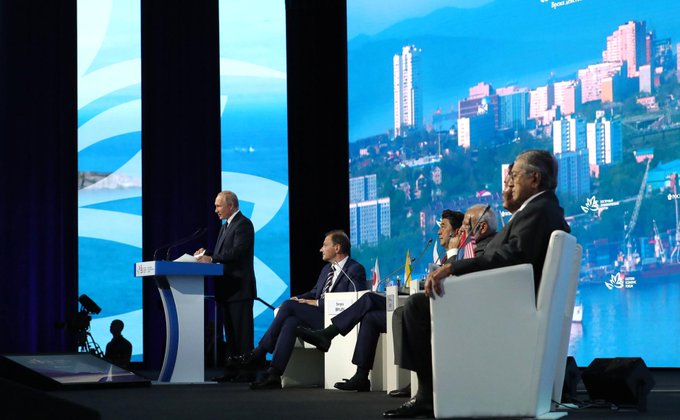
PT -- VLADIMIR PUTIN na Sessão plenária do Fórum Económico Oriental
Excertos da transcrição da sessão plenária do Fórum Económico Oriental
THE PUTIN INTERVIEWS

The Putin Interviews
by Oliver Stone (FULL VIDEOS) EN/RU/SP/FR/IT/CH
http://tributetoapresident.blogspot.com/2018/07/the-putin-interviews-by-oliver-stone.html
TRIBUTE TO A PRESIDENT

NA PRMEIRA PESSOA
Um auto retrato surpreendentemente sincero do Presidente da Rússia, Vladimir Putin
CONTEÚDO
Prefácio
Personagens Principais em 'Na Primeira Pessoa'
Parte Três: O Estudante Universitário
Parte Quatro: O Jovem especialista
Parte Cinco: O Espia
Parte Seis: O Democrata
Parte Sete: O Burocrata
Parte Oito: O Homem de Família
Parte Nove: O Político
Apêndice: A Rússia na Viragem do Milénio